
1. Treatment goals — name them first
Endometriosis treatment goals vary by patient: pain control, fertility preservation, fertility achievement, prevention of disease progression, prevention of recurrence, restoration of quality of life. Different goals lead to different treatment paths. Naming the goal explicitly is the first step before any intervention.
2. The four treatment modalities
Hormonal medical management — first-line for symptomatic control. Excisional surgery — when warranted by anatomy or fertility. IVF — when fertility is the primary goal and surgery is not. Multimodal pain management — for chronic pain dimensions beyond surgical correction. Most patients benefit from a combination, sequenced over time.
3. ESHRE 2022 framework
The European Society of Human Reproduction and Embryology 2022 Endometriosis Guideline is the contemporary international standard. Key principles: individualisation, fertility-preservation-first thinking, evidence-based decisions, surgery only when it changes management, hormonal suppression as foundation for long-term care, and IVF integration with surgical decisions rather than sequential silos.
4. The surgery-or-IVF-first decision
For fertility-seeking patients with endometriosis, the surgery-versus-IVF-first decision is high-stakes. ESHRE 2022 generally favours IVF first for asymptomatic small endometriomas in IVF-bound patients. Symptomatic deep disease often warrants surgery first. Hydrosalpinx is always addressed before IVF. Each decision is individualised based on stage, symptoms, age, ovarian reserve, prior surgery history.
5. Hormonal management options
Combined oral contraceptive (continuous) for most patients. Progestin-only options (dienogest, Mirena IUS) for endo with adenomyosis or COCP contraindications. GnRH antagonists/agonists with add-back for severe disease or pre-surgical shrinkage. Aromatase inhibitors in selected refractory cases. Treatment continues long-term — endometriosis is chronic.
6. Surgical interventions
Excisional laparoscopic surgery is the gold standard when surgery is indicated. 3D Karl Storz precision technique. Nerve-sparing dissection. Conservative ovarian cystectomy preserving reserve. Multidisciplinary approach for bowel/bladder involvement. Hysterectomy reserved for completed family with refractory disease.
7. Pain management beyond surgery
Central sensitisation in long-standing endometriosis requires more than surgical correction. Pelvic floor physiotherapy, neuropathic pain agents, mindfulness-based pain rehabilitation, mental health support. Multimodal approach for chronic pelvic pain that persists despite hormonal and surgical treatment.
8. Long-term follow-up
Endometriosis is chronic. Annual review minimum. Symptom monitoring, hormonal treatment review, fertility planning updates, mental health screening, quality of life assessment. Recurrence monitoring with periodic imaging. Open access for symptom changes. Care relationship spans decades, not isolated treatment episodes.
Aligned with current international evidence, not habit.
Treatment options — when each is used
| Option | When it is used | Key trade-off |
|---|---|---|
| Monitoring | Minimal symptoms, no fertility pressure | Disease may progress |
| Hormonal medical therapy | First-line for pain | Suppresses, not curative; contraceptive |
| GnRH analogues + add-back | Pain failing first-line | Short-term; menopausal effects |
| Excision surgery | Failed medical therapy, DIE, fertility | Reserve risk, possible recurrence |
| IVF | Fertility with reserve or age factors | Cost; does not treat pain |
Frequently Asked Questions
What is the evidence-based treatment for endometriosis?
Do I need surgery for endometriosis?
Will hormonal treatment cure endometriosis?
Surgery first or IVF first for fertility?
How often will I need surgery?
Can lifestyle changes treat endometriosis?
How long will treatment last?
What if treatment is not working?
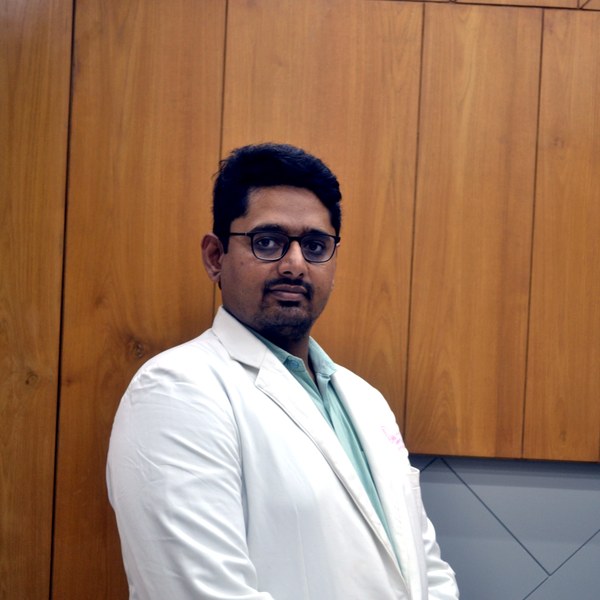
Dr Patel leads endometriosis diagnosis and surgery at Balaji Horizon with an evidence-based, ovarian-sparing philosophy aligned to ESHRE and ESGE — integrating pain, fertility and long-term disease control into a single plan, rather than treating the disease in isolation.
Imaging-led diagnosis, medical-first management, and precise surgery only when it is the right step — planned around your pain and fertility goals.
Dr. Priyadatt Patel
Senior Gynecologist · Advanced Laparoscopic Surgeon · IVF and Endometriosis Programme Lead
MS OBGyn · Pregnancy Care · Advanced Gynaecological Ultrasound · Fertility Preservation
ESHRE / ESGE / AAGL / ASRM guideline-aligned practice. 3D Karl Storz precision technique. Fertility-preservation-first philosophy. Evidence-based decisions, honest counselling, long-term outcomes orientation.
Science City Road, Ahmedabad 380060
Mon–Sat 11:00–20:00 · +91 97234 31544
Naranpura, Ahmedabad
Mon–Sat 08:30–10:30 · +91 70460 02566