
Menstrual Disorders – Heavy Bleeding, Pain, Irregularity
Comprehensive evaluation and management of common menstrual disorders – heavy bleeding (menorrhagia), painful periods (dysmenorrhoea), and irregular cycles.
Causes and management
Not every irregular or heavy cycle needs an appointment. Our guide on when to see a gynaecologist sets out which patterns are worth acting on and which usually settle on their own.
Defined by impact on quality of life, not strict volume measurements. Causes include hormonal imbalance, fibroids, polyps, adenomyosis, bleeding disorders, and IUCD effects. Treatment options range from medical (NSAIDs, tranexamic acid, hormonal therapy, Mirena) to surgical (endometrial ablation, hysteroscopy, hysterectomy).
Primary vs secondary dysmenorrhoea
Primary dysmenorrhoea: pain without identifiable pathology, often responsive to NSAIDs and hormonal therapy. Secondary dysmenorrhoea: caused by endometriosis, adenomyosis, fibroids, or other pathology – needs targeted evaluation.
PCOS and other causes
PCOS is the most common cause in reproductive-age women. Thyroid dysfunction, hyperprolactinaemia, hypothalamic dysfunction, and premature ovarian insufficiency are other possibilities. Structured evaluation includes hormones, glucose, and ultrasound.
Menstrual disorders
| Pattern | Possible cause |
|---|---|
| Heavy bleeding | Fibroids, adenomyosis |
| Irregular cycles | PCOS, thyroid |
| Painful periods | Endometriosis |
| Absent periods | PCOS, low reserve, other |
Frequently asked
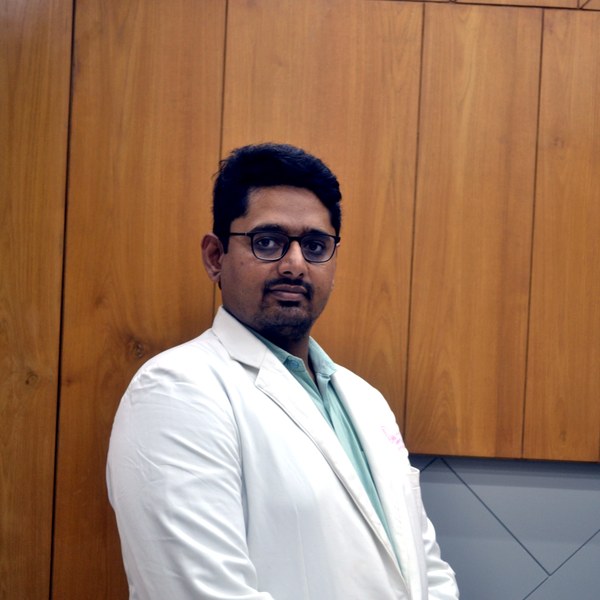
Dr Patel provides evidence-based gynaecological care at Balaji Horizon — from medical management to advanced minimal-access surgery — with a precision, organ- and fertility-sparing philosophy and honest counselling on every option.
Evidence-based gynaecology and minimal-access surgery — with a clear, honest plan built around your priorities.
Getting to the cause of menstrual problems
Heavy, painful, irregular or absent periods are common, but they are symptoms, not diagnoses. Good care means finding the underlying cause rather than simply suppressing the bleeding — the right treatment depends entirely on what is driving it.
Common underlying causes
These include hormonal patterns such as PCOS or thyroid disorders, structural causes such as fibroids, polyps or adenomyosis, and — importantly — endometriosis, which is frequently missed for years. A focused history, examination, ultrasound and selected blood tests usually identify the cause.
Treatment matched to the cause and your goals
Options range from medical management (including hormonal treatments and the Mirena system for heavy bleeding) to targeted surgery when a structural cause needs it. Whether you are trying to conceive shapes the choice, so we plan treatment around your fertility goals, not against them.
When to seek review
Periods that soak through protection hourly, last more than seven days, stop unexpectedly, or come with severe pain deserve assessment. Pain that disrupts your life is not something to “put up with” — it is a reason to be seen.
When a period problem deserves investigation, not reassurance
Three patterns should always be evaluated rather than normalised: bleeding heavy enough to flood through protection or produce repeated clots, cycles that have changed character for more than three months, and any bleeding after intercourse, between periods or after menopause. The work-up is straightforward — history, examination, haemoglobin and thyroid testing, and a good pelvic ultrasound — and it usually lands on a treatable cause: fibroids, polyps, adenomyosis, ovulation disorders or, commonly, no structural disease at all, which opens effective medical options. The treatment ladder for heavy bleeding is laid out honestly on our heavy menstrual bleeding page — surgery sits at the top of that ladder, not the bottom.
Related procedure: Hysteroscopy in Ahmedabad — diagnostic & operative — a uterus-sparing, day-care option to evaluate and treat abnormal uterine bleeding, polyps and submucous fibroids.
Dr. Priyadatt Patel
Senior Gynecologist · Advanced Laparoscopic Surgeon · IVF and Endometriosis Programme Lead
MS OBGyn · Pregnancy Care · Advanced Gynaecological Ultrasound · Fertility Preservation
ESHRE / ESGE / AAGL / ASRM guideline-aligned practice. 3D Karl Storz precision technique. Fertility-preservation-first philosophy. Evidence-based decisions, honest counselling, long-term outcomes orientation.
323, Satyamev Eminence, Beside Saptak Bungalows & AUDA Water Tank, Science City Road, Sola, Ahmedabad 380060
Open 24 hours (emergencies & labour) · OPD Mon–Sat 11:00–20:00 · +91 97234 31544
Naranpura, Ahmedabad
Mon–Sat 08:30–10:30 · +91 70460 02566