
Endometriosis Treatment — Individualised Care Decisions
Endometriosis treatment is a series of individualised decisions, not a fixed algorithm. The same patient may benefit from medical management at one point in life, fertility-preserving surgery at another, and definitive surgery at a third. Treatment depends on the type and depth of disease, current pain burden, fertility goals, age, ovarian reserve, and prior surgical history. Aggressive surgery is rarely the answer to a patient’s first consultation; over-medical management is rarely the answer to a patient with deep infiltrating disease. The right framework is precision with judgment — medical when medical works, surgical when surgery is justified, and never more than the patient needs.
Our approach to treatment
At Balaji Horizon, treatment planning begins where diagnosis ends. The same diagnostic imaging that confirms disease also informs the operative plan — so surgery, when needed, is single-stage and definitive rather than repeated diagnostic-then-therapeutic procedures. Surgical decisions favour fertility preservation, ovarian reserve protection, and avoidance of repeat surgery wherever clinically possible. Medical options are sequenced from the safest and most evidence-based forward; older approaches are not used simply because they are familiar. If a plan has already been proposed elsewhere — particularly one involving hysterectomy, ovarian surgery, or a repeat procedure after failed surgery — when to get a second opinion for endometriosis sets out the situations in which a review is worth the time.
Medical therapy
Hormonal options — combined pill, progestins, dienogest, or GnRH analogues with add-back — to control pain and suppress disease activity. Usually first-line when conception is not being pursued immediately.
Surgical management
Precision laparoscopic excision for confirmed deep disease, endometriomas, or fertility goals — prioritising complete treatment while protecting ovarian reserve and avoiding repeat surgery.
Fertility-integrated care
When conception is the priority, surgery and IVF are planned together and correctly sequenced — safeguarding egg reserve and shortening time to pregnancy.
Find your likely treatment direction
Select what applies to you. This is educational orientation — your specialist tailors the actual plan to your scans, ovarian reserve and goals.
How we plan treatment
- Precision first — investigation and mapping before any intervention.
- Fertility-preserving — ovarian reserve protected; surgery and IVF sequenced together.
- Avoid repeat surgery — recurrence is often managed without re-operating.
- Individualised — the plan follows your scans, pain and goals, not a fixed algorithm.
Medical management
First-line options for pain include non-steroidal anti-inflammatories and combined hormonal contraception (continuous regimens). Second-line options include progestogens (dienogest, norethisterone, levonorgestrel-IUS). GnRH analogues — with add-back hormone replacement — remain an option for selected cases. The evidence base (ESHRE 2022) supports a stepwise approach, calibrated to side-effect tolerance and fertility plans. Each hormonal option here — combined oral contraception, progestin-only therapy, the levonorgestrel-releasing intrauterine system, and the GnRH agonist and antagonist classes — is compared, with its trade-offs, in hormone therapy options for endometriosis.
Surgical management
When surgery is indicated, 3D laparoscopic excision is the technique of choice for most patients. Karl Storz IMAGE1 S 3D imaging improves depth perception and dissection precision in the deep pelvis. Excision (not ablation) of visible disease is preferred where feasible. For DIE involving bowel or bladder, multidisciplinary planning is essential — and increasingly, the entire surgery is staged with colorectal or urological colleagues present from incision. What laparoscopic surgery for endometriosis actually involves — when it is indicated, the difference between excision and ablation, and what recovery looks like — is set out in laparoscopic surgery for endometriosis. Because the operative plan follows the disease map rather than a template, it also helps to know where endometriosis lesions are typically found, from the ovaries and uterosacral ligaments to extrapelvic sites.
Fertility-integrated treatment decisions
For patients with fertility goals, the decision is rarely surgery-or-IVF in isolation. Endometrioma surgery before IVF can reduce ovarian reserve. Repeated surgery for deep disease can have cumulative impact on the pelvis. The integrated decision — when to operate, when to proceed to IVF, when to do both in sequence — is the most important conversation in modern endometriosis care. The biology behind that trade-off — endometrioma, disease stage, and the surgery-before-IVF question — is explained in endometriosis and infertility. Where ovarian reserve is already the limiting factor, fertility preservation in endometriosis covers who should consider freezing eggs or embryos, and when.
Treatment topics covered
Laparoscopic Endometriosis Excision Surgery | Ahmedabad
Explore →Medical Management of Endometriosis — Hormonal Options
Explore →Multimodal Pain Management in Endometriosis
Explore →Recurrent Endometriosis — Why It Happens and What to Do
Explore →Repeat Surgery in Endometriosis — When (and When Not)
Explore →Guidelines we follow
- ESHRE 2022 Guideline on Endometriosis — treatment recommendations
- ESGE consensus on operative pathways for deep infiltrating disease
- AAGL practice guidelines on the management of endometriosis
- Cochrane reviews on medical and surgical management
Where this fits
Treatment decisions follow diagnosis and depend on disease type. For fertility-integrated planning, see endometriosis and fertility. For day-to-day life around treatment, see living with endometriosis.
For a specialist consultation, contact Balaji Horizon Women’s Hospital.
WhatsApp the hospital · +91 97234 31544 · Science City Road, Ahmedabad 380060
Treatment for endometriosis should be individualised and may include analgesics, hormonal therapy, surgery, or a combination, depending on age, fertility goals, symptoms, and disease distribution.
CONTINUE READING
Explore the Endometriosis Programme
Endometriosis Treatment is one element of the broader endometriosis programme led by Dr. Priyadatt Patel. The main endometriosis pillar covers the full diagnostic, treatment, and long-term management framework.
Free Patient Guide
The Endometriosis Decision Guide
A short clinical primer on diagnostic delay, the four decisions you may face, and what to bring to your specialist consultation. Aligned with ESHRE 2022, ASRM, FIGO guidance.
Reviewed by Dr. Priyadatt Patel — read in 20–25 minutes
Free — delivered to your inbox
Treatment building blocks
| Block | Role |
|---|---|
| Medical therapy | First-line pain control |
| Surgery | Selected indications |
| Fertility care | IVF / preservation |
| Pain & MDT | Chronic pain and support |
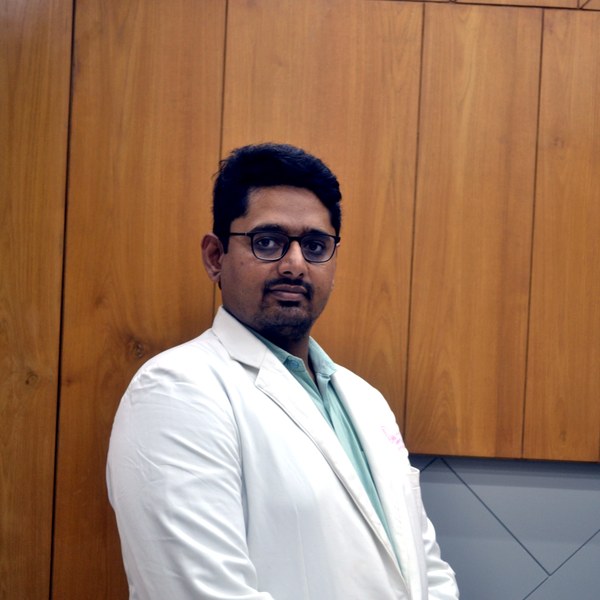
Dr Patel leads endometriosis diagnosis and surgery at Balaji Horizon with an evidence-based, ovarian-sparing philosophy aligned to ESHRE and ESGE — integrating pain, fertility and long-term disease control into a single plan, rather than treating the disease in isolation.
Imaging-led diagnosis, medical-first management, and precise surgery only when it is the right step — planned around your pain and fertility goals.
Frequently asked questions
Is medication or surgery better for endometriosis?
Neither is universally better. The right choice depends on your symptoms, fertility goals, the type and depth of disease, and any previous treatment. ESHRE 2022 supports a stepwise, individualised approach — medical management for pain when pregnancy is not immediately sought, and surgery when there is a clear indication such as failed medical therapy, a large endometrioma, or deep disease.
What are the first-line medical treatments?
Combined hormonal contraceptives or progestogens such as dienogest are first-line for endometriosis-associated pain, with anti-inflammatories for symptom relief. GnRH analogues with add-back therapy are reserved for selected cases. Options are sequenced from the safest and most evidence-based forward.
When is surgery recommended?
When pain persists despite medical therapy, for large or growing endometriomas, for deep disease involving the bowel or bladder, or in specific fertility situations. Where surgery is needed, careful excision of disease is preferred over ablation wherever feasible.
Does treating endometriosis improve fertility?
It can, but the relationship is individualised. Surgery improves natural conception for some women, yet repeated ovarian surgery can reduce ovarian reserve — so fertility planning, including whether IVF is the better route, is built into the decision from the start rather than added later.
Will endometriosis come back after treatment?
Recurrence is possible after both medical and surgical treatment. Hormonal suppression after surgery reduces the recurrence of pain and endometriomas. Endometriosis is best understood as a long-term condition to be managed, not a one-time problem to be fixed.
Can endometriosis be cured?
There is no permanent cure, but symptoms and disease can be controlled effectively over the long term with individualised medical and surgical care. The goal is durable control with the least intervention necessary.
Is a hysterectomy necessary for endometriosis?
Usually not. Hysterectomy is reserved for specific situations and does not by itself remove endometriosis — excision of the disease is what matters. It is considered only after careful, individualised discussion.
How is the right treatment chosen for me?
Through individualised assessment — symptom burden, the type and depth of disease on imaging and mapping, fertility goals, age, ovarian reserve, and prior surgery — balancing effective control against the risk of over-treatment.
Dr. Priyadatt Patel
Senior Gynecologist · Advanced Laparoscopic Surgeon · IVF and Endometriosis Programme Lead
MS OBGyn · Pregnancy Care · Advanced Gynaecological Ultrasound · Fertility Preservation
ESHRE / ESGE / AAGL / ASRM guideline-aligned practice. 3D Karl Storz precision technique. Fertility-preservation-first philosophy. Evidence-based decisions, honest counselling, long-term outcomes orientation.
323, Satyamev Eminence, Beside Saptak Bungalows & AUDA Water Tank, Science City Road, Sola, Ahmedabad 380060
Open 24 hours (emergencies & labour) · OPD Mon–Sat 11:00–20:00 · +91 97234 31544
Naranpura, Ahmedabad
Mon–Sat 08:30–10:30 · +91 70460 02566