

Fertility Preservation in Ahmedabad — Egg, Embryo & Ovarian Tissue Freezing
Fertility preservation is the practice of safeguarding reproductive potential before age, surgery, or medical treatment reduces it. At Balaji Horizon, Dr. Priyadatt Patel offers individualised oocyte, embryo, and ovarian tissue cryopreservation under ART Act 2021 compliance — for women facing cancer treatment, planning surgery for endometriosis, or making proactive choices about future fertility.
What is Fertility Preservation?
Fertility preservation includes any medical or surgical strategy used to retain the option of future biological parenthood. The three established techniques in women’s healthcare are oocyte cryopreservation (egg freezing), embryo cryopreservation (embryo banking after IVF fertilisation), and — for highly selected cases — ovarian tissue cryopreservation.
Modern vitrification techniques have made egg and embryo freezing reliable: post-thaw survival rates exceed 95%, and pregnancy outcomes from frozen oocytes/embryos are now equivalent to fresh cycles for most age groups. This is not experimental — it is mainstream reproductive medicine, with clear ASRM and ESHRE guidance.
The biological truth is uncomfortable but important: fertility declines with age, and the decline accelerates after 35. Preservation does not stop ageing — but it captures the quality available today against the lower quality of tomorrow. For the right patient at the right time, it is one of the most useful tools in reproductive medicine.
Who Should Consider Fertility Preservation?
Oncofertility — Before Cancer Treatment
Chemotherapy, pelvic radiotherapy, and certain surgical procedures can reduce or eliminate ovarian function. Pre-treatment fertility preservation should be discussed with every reproductive-age woman receiving gonadotoxic therapy. Time-sensitive — usually requires 2-4 weeks before treatment begins.
Endometriosis — Before Ovarian Surgery
Endometrioma surgery reduces ovarian reserve. Bilateral surgery, repeat surgery, and pre-existing low AMH significantly increase that risk. In selected cases — particularly bilateral endometriomas, advanced age, or known prior reserve loss — oocyte freezing before surgery is increasingly recommended. See endometriosis programme →
Elective / Social Egg Freezing
For women not currently planning pregnancy but wanting to preserve the option for later. Most appropriate in late 20s to mid-30s — earlier yields more eggs of better quality but the use rate is lower; later means fewer eggs and lower per-egg pregnancy probability. Realistic expectations matter.
Early or Premature Ovarian Insufficiency Risk
Family history of early menopause, autoimmune conditions, prior ovarian surgery, Turner syndrome carriers, BRCA mutation carriers (planning risk-reducing oophorectomy) — all candidates for earlier-than-typical preservation discussion.
Diminished Ovarian Reserve Diagnosis
Newly diagnosed low AMH for age — preservation while ovaries still respond to stimulation, regardless of immediate pregnancy plans. May involve dual stimulation (DuoStim) in a single cycle to maximise oocyte yield.
Methods of Fertility Preservation
Oocyte Cryopreservation (Egg Freezing)
Stimulation of the ovaries (8–12 days of injections), oocyte retrieval under short anaesthesia, vitrification of mature eggs. No partner or sperm required. Eggs remain viable in storage for years. When ready to conceive, eggs are thawed, fertilised (usually with ICSI), and embryos are transferred. The default modern preservation choice for most candidates.
Embryo Cryopreservation (Embryo Banking)
Same stimulation + retrieval; eggs are fertilised with partner or donor sperm at the time of retrieval; embryos cultured to blastocyst stage; vitrified at day 5/6. Slightly better established survival and pregnancy rates than egg freezing, but requires a sperm decision at the time of freezing — relevant for partnered couples planning the future.
Ovarian Tissue Cryopreservation
Surgical removal and freezing of ovarian cortex tissue. Reserved for pre-pubertal patients or when chemotherapy cannot wait for stimulation. After treatment, the tissue can be re-implanted to restore function. Specialised — performed in limited centres with specific oncofertility expertise.
Realistic Expectations
Egg freezing is reliable but not magic. Age at the time of freezing is the strongest predictor of future success. The single best decision for anyone considering preservation is to do it earlier rather than later — and to bank enough oocytes to make a difference.
Approximate live-birth probability per mature egg frozen
| Under 35 | 6–8% per egg |
| 35–37 | 5–6% per egg |
| 38–40 | 3–4% per egg |
| Over 40 | 1–2% per egg |
Multiply per-egg probability by number of mature eggs frozen to estimate cumulative chance. For most women under 38, banking 15–20 mature eggs offers a meaningful (~70%+) cumulative live-birth probability when ready to use them. We discuss your individual numbers transparently.
Fertility preservation — overview
| Option | For whom |
|---|---|
| Egg freezing | Age, before surgery, medical reasons |
| Embryo freezing | With a partner |
| Ovarian tissue freezing | Selected cases |
Our IVF practice follows international reproductive-medicine standards.
Continue Reading
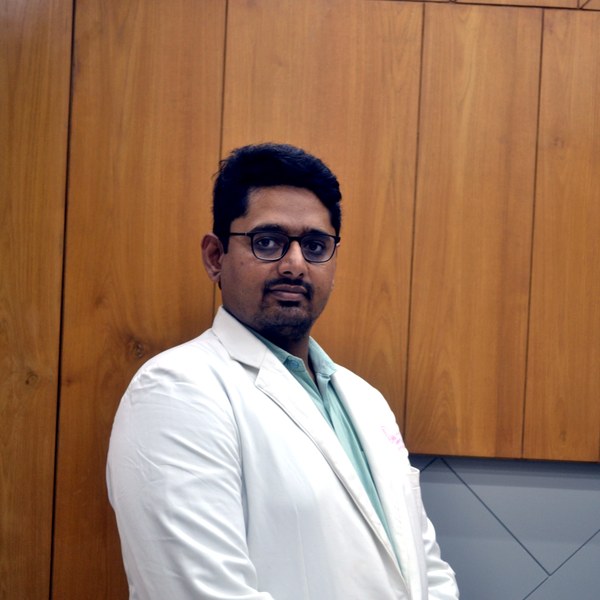
Dr Patel leads fertility care at Balaji Horizon, integrating reproductive surgery and IVF into a single plan — ethical, evidence-based and individualised, with realistic expectations and no overpromising of success.

Individualised IVF and fertility planning with honest, evidence-based counselling — and realistic expectations from the very first consultation.
Egg Freezing in Ahmedabad — How Many Eggs, What It Costs & Who Is Eligible
Beyond the biology of preservation, three practical questions decide whether and when egg freezing makes sense for you: how many eggs you realistically need, what a cycle costs and what you are paying for, and whether you are eligible under Indian law. This section answers all three honestly, so you can plan with clear numbers rather than guesswork.
How many eggs should you freeze? It depends on your age
The per-egg table above shows that each frozen egg is worth less as you get older. The flip side is that older patients need to bank more eggs to reach the same chance of a baby. Published counselling models give a realistic target for a roughly 70–75% chance of at least one live birth:
Approximate counselling estimates synthesised from published predictive models (Goldman et al., 2017; Cobo et al., 2018). They are planning guides, not guarantees: your individual target depends on AMH, antral follicle count and how your ovaries actually respond — which is why we calculate a personalised number after your baseline assessment rather than quoting a single figure to everyone. For most women under 38, banking 15–20 mature eggs (sometimes over 1–2 cycles) is a reasonable goal.
What egg freezing costs — and what you are actually paying for
Cost is the question patients ask most and clinics answer least clearly. There is no single price because a cycle has several separately-priced parts, and medication — the biggest variable — depends on your ovarian reserve and the dose you need. Here is the honest structure:
| What you pay for | Notes |
|---|---|
| Stimulation medication | The largest and most variable item; higher doses (lower reserve / older age) cost more. |
| Monitoring | Serial ultrasound + oestradiol over 8–12 days. |
| Egg retrieval + anaesthesia | Day-care procedure under short anaesthesia. |
| Vitrification (freezing) | Lab freezing of mature eggs. |
| Annual storage | A recurring yearly fee for as long as eggs are stored. |
| Later thaw & transfer | A separate future cost when you use the eggs (thaw, ICSI, embryo transfer) — not part of the freezing cycle. |
As an indicative market range, one egg-freezing cycle in India commonly totals about shared privately at consultation lakh including medication, with an annual storage fee of roughly shared privately at consultation. Ahmedabad generally sits discussed privately at consultation. These are general ranges to set expectations — not a fixed quote. We give you an itemised, written estimate for your specific protocol at consultation, and we are clear about what a second cycle would add if your first does not reach your egg target. See the full IVF & fertility cost guide →
Who can freeze eggs in India? (ART Act 2021)
Egg freezing in India is governed by the Assisted Reproductive Technology (Regulation) Act, 2021. The key points for patients:
- Eligibility: ART services, including oocyte cryopreservation, are available to a woman between 21 and 50 years of age — as a married woman or as a single woman. Earlier within that window means better egg quality and yield.
- Consent: Freezing and any future use require your written, informed consent, recorded for each step.
- Regulated storage: Eggs are stored under licensed ART-bank protocols with defined documentation and traceability.
- Honest framing: Freezing preserves an option, not a promise — the Act regulates the process, but no clinic can guarantee a future baby. Eligibility is not the same as suitability; we assess both.
How much does egg freezing cost in Ahmedabad?
A cycle has several priced parts (medication, monitoring, retrieval + anaesthesia, vitrification) plus a yearly storage fee. As an indicative range, a cycle in India commonly totals about shared privately at consultation lakh including medication, with storage roughly shared privately at consultation a year; Ahmedabad usually sits at or below metro pricing. Using the eggs later (thaw, ICSI, transfer) is a separate future cost. We provide an itemised written quote at consultation. Cost guide →
Is there an age limit for egg freezing in India?
Under the ART (Regulation) Act 2021, the woman must be between 21 and 50 years old, whether married or single. Biologically, though, the useful window is earlier — egg quality and the number retrieved per cycle fall with age, so freezing in your late 20s to mid-30s gives a much stronger result than waiting until the legal upper limit.
Can I freeze my eggs if I have endometriosis or low AMH?
Often this is the strongest reason to consider it. Endometrioma surgery can lower ovarian reserve, and a low AMH means fewer eggs per cycle — so preserving while the ovaries still respond can be valuable. ESHRE advises individualised counselling about preservation before surgery for bilateral endometriomas or repeat surgery. Low AMH does not rule egg freezing out; it shapes the realistic target and may mean more than one cycle. Endometriosis & fertility →
How many stimulation cycles will I need?
It depends on your age and reserve and how many eggs you aim to bank. Many women under 38 reach a reasonable target in 1–2 cycles; women with lower reserve or who are older may need more to accumulate enough eggs. We estimate this for you from your AMH and antral follicle count before you start, so there are no surprises.
Medically reviewed by Dr Priyadatt Patel — MBBS, MS (Obstetrics & Gynaecology); Senior Gynecologist · Advanced Laparoscopic Surgeon · IVF and Endometriosis Programme Lead, IVF & Reproductive Surgery Lead, Balaji Horizon Women’s Hospital, Ahmedabad. Last reviewed: 20 June 2026.
Guidance basis: ASRM practice & ethics opinions on oocyte cryopreservation (2021, 2023); ESHRE guideline on female fertility preservation (2020) and endometriosis guideline (2022); Assisted Reproductive Technology (Regulation) Act, 2021. Educational information only — individual decisions are made in consultation.
Dr. Priyadatt Patel
Senior Gynecologist · Advanced Laparoscopic Surgeon · IVF and Endometriosis Programme Lead
MS OBGyn · Pregnancy Care · Advanced Gynaecological Ultrasound · Fertility Preservation
ESHRE / ESGE / AAGL / ASRM guideline-aligned practice. 3D Karl Storz precision technique. Fertility-preservation-first philosophy. Evidence-based decisions, honest counselling, long-term outcomes orientation.
Science City Road, Ahmedabad 380060
Mon–Sat 11:00–20:00 · +91 97234 31544
Naranpura, Ahmedabad
Mon–Sat 08:30–10:30 · +91 70460 02566