IVF & Endometriosis Programme · Balaji Horizon
IVF for Endometriosis in Ahmedabad
In short — Endometriosis can reduce fertility through distorted anatomy, inflammation and reduced ovarian reserve. The central question is usually sequencing: surgery first, IVF first, or both. Repeat ovarian surgery can lower reserve further, so the plan weighs pain, disease mapping, age and reserve together rather than treating surgery and IVF as rivals.
These are weighed together. There is no fixed order that suits everyone.
What we weigh
- Your age
- Ovarian reserve (AMH, AFC)
- Pain burden
- Disease map on imaging
- Previous surgery
- Tubal and male factors
- How much time you have
Routes we consider
Repeat ovarian surgery can reduce ovarian reserve. That risk is part of the decision, not an afterthought. Individualised planning — not an algorithm.
Endometriosis can make conceiving harder — through reduced ovarian reserve, distorted pelvic anatomy and an inflamed environment — but it does not mean IVF cannot work. At Balaji Horizon Women’s Hospital in Ahmedabad, IVF for endometriosis is planned around your individual disease, age and ovarian reserve, by a team that treats the endometriosis and the fertility together rather than in separate rooms. If you are weighing whether to operate first or go straight to IVF, our detailed guide to surgery or IVF first in endometriosis walks through that decision; this page explains how the IVF itself is tailored when endometriosis is part of the picture.
Endometriosis and the wish to conceive often meet at a difficult crossroads. The right path is rarely “operate on everything” or “go straight to IVF” — it depends on your reserve, your pain, your age, and your goals. This is the decision we help you make clearly.
Book a fertility consultation
Share your reports on WhatsApp →
If you have endometriosis and are trying to conceive, you have probably been given conflicting advice — one clinic urging surgery, another pushing straight to IVF. Both can be right, and both can be wrong, depending on your individual situation. The honest answer is that endometriosis-related fertility is one of the most nuanced decisions in reproductive medicine, and it deserves more than a default protocol.
At Balaji Horizon, this intersection is led by Dr. Priyadatt Patel — an endometriosis specialist and advanced laparoscopic surgeon who also leads the IVF programme. That dual perspective matters: the decision should not be made by a surgeon who only operates, or by an IVF unit that never considers the disease itself.
How endometriosis affects fertility
Endometriosis can reduce fertility through several mechanisms — distorted pelvic anatomy, inflammation that affects egg and embryo quality, reduced ovarian reserve (especially with ovarian endometriomas), and impaired implantation. The degree of impact varies enormously between individuals; many women with endometriosis conceive naturally, while others need help. Severity of pain does not reliably predict severity of fertility impact.
The central question: does surgery help fertility here?
Surgery for endometriosis can improve fertility in selected situations — but it can also harm it. This is the part that is too often glossed over.
When surgery may help
Where anatomy is significantly distorted, where pain is a major burden, or in specific early-stage situations where evidence supports a fertility benefit. Removing or draining a large endometrioma is sometimes appropriate before IVF.
When surgery may harm
Operating on ovarian endometriomas removes healthy ovarian tissue and can lower egg reserve — repeated surgery compounds this. For some patients, especially with reduced reserve or prior operations, IVF first is the wiser, fertility-protecting choice.
Our guiding principle: protect ovarian reserve. A second operation on an ovary is a decision to make very carefully, not a reflex — because eggs cannot be replaced.
IVF when you have endometriosis
IVF bypasses several of the ways endometriosis interferes with conception, which is why it is often an effective route. Endometriosis does not mean IVF “won’t work” — outcomes depend mainly on age and ovarian reserve, much as they do for other patients. Where reserve is reduced, approaches for a lower egg count and, in some cases, fertility preservation (freezing eggs before further ovarian surgery) become part of the conversation. Stimulation and planning are individualised rather than templated.
How the IVF cycle itself is adapted
- Stimulation protocol. Antagonist and long agonist protocols give similar results in endometriosis, so the choice follows your ovarian reserve, response and timing. Months of GnRH-agonist pre-treatment before IVF is no longer advised routinely, because there is no clear evidence that it improves live birth [Source: ESHRE Endometriosis guideline, 2022].
- Endometriomas. Removing an endometrioma before IVF does not improve the chance of a live birth and can lower ovarian reserve, so it is not done routinely. Surgery before IVF is considered for pain, for a cyst that blocks access to the follicles, or when a cyst looks atypical on scan [Source: ESHRE Endometriosis guideline, 2022].
- Blocked, fluid-filled tubes (hydrosalpinx). These lower IVF success; removing or blocking the tube before transfer improves the chance of pregnancy.
- Adenomyosis alongside endometriosis. Adenomyosis is associated with lower implantation and higher miscarriage rates in IVF. Some clinics use a period of hormonal suppression before a frozen transfer; the evidence for this comes mainly from observational studies, so it is discussed case by case. See endometriosis and adenomyosis.
- Fresh or frozen transfer. Freezing embryos and transferring in a later cycle is sometimes chosen, for example after a strong response or when adenomyosis needs managing first; it is not routinely required for endometriosis itself.
What goes into your individualised plan
- Ovarian reserve (AMH, antral follicle count) and your age — the single biggest factors.
- Disease mapping — location and extent on imaging, and whether anatomy is distorted.
- Pain burden — how much symptoms affect your life, independent of fertility.
- Surgical history — previous operations raise the threshold for operating again.
- Your priorities and timeline — how soon you wish to conceive, and your own preferences after a clear explanation.
Let’s map the right sequence for you
A calm, evidence-based discussion of surgery, IVF, and fertility preservation — tailored to your reserve and goals.
The endometriosis fertility pathway
| Step | Consideration |
|---|---|
| Assess reserve | AMH / antral follicle count |
| Surgery vs IVF | Decided by reserve and goals |
| Fertility preservation | If reserve is at risk |
Our IVF practice follows international reproductive-medicine standards — honest, individualised, no overpromising.
When IVF is the right step, it is delivered through our IVF centre in Ahmedabad, with your endometriosis and fertility plans designed together rather than in separate rooms.
Frequently asked questions
Should I have endometriosis surgery before trying IVF?
Not always. Surgery helps fertility in some situations and can reduce ovarian reserve in others, particularly with endometriomas or repeat operations. The decision depends on your reserve, age, pain, disease mapping and surgical history — it should be individualised, not assumed.
Does endometriosis mean IVF won’t work for me?
No. IVF bypasses several of the ways endometriosis interferes with conception. Outcomes depend mainly on age and ovarian reserve rather than on endometriosis alone. We give realistic, individual guidance rather than blanket figures.
Will repeated surgery affect my chance of a baby?
It can. Each operation on an ovary may remove some healthy tissue and lower egg reserve. This is why we are cautious about repeat ovarian surgery and, where reserve is a concern, may recommend fertility preservation or IVF first to protect your future options.
What is the Endometriosis Fertility Index (EFI)?
The EFI is a validated 0-10 score calculated at the time of laparoscopy for endometriosis. It combines age, duration of infertility, prior pregnancy history and the operative findings – how the tubes and ovaries look and function – to estimate the chance of natural conception after surgery.
What does my EFI score mean?
Higher scores (8-10) predict a good chance of natural conception in the one to two years after surgery. Mid-range scores (5-7) suggest a fair chance, where a time-limited natural attempt is often reasonable. Low scores (0-4) predict a low natural conception rate, and moving to IVF earlier is usually the wiser use of fertile time.
How does the EFI guide the choice between trying naturally and IVF?
It gives the decision a timetable. With a high EFI we typically allow six to twelve months of trying naturally before reassessing. With a low EFI – or when age or ovarian reserve is already a concern – we discuss IVF sooner rather than losing fertile time.
Is the EFI useful if I have not had surgery?
No. The EFI can only be calculated during laparoscopy, because half of the score comes from what is seen at surgery. Without surgery, decisions are guided by age, AMH and antral follicle count, tubal status and symptoms instead.
This page is for general education and does not replace individual medical advice. The right plan for endometriosis and fertility depends on your specific situation and should be decided with a qualified specialist after evaluation. Guidance reflects bodies such as ESHRE, ASRM and NICE. © Balaji Horizon Women’s Hospital, Ahmedabad.
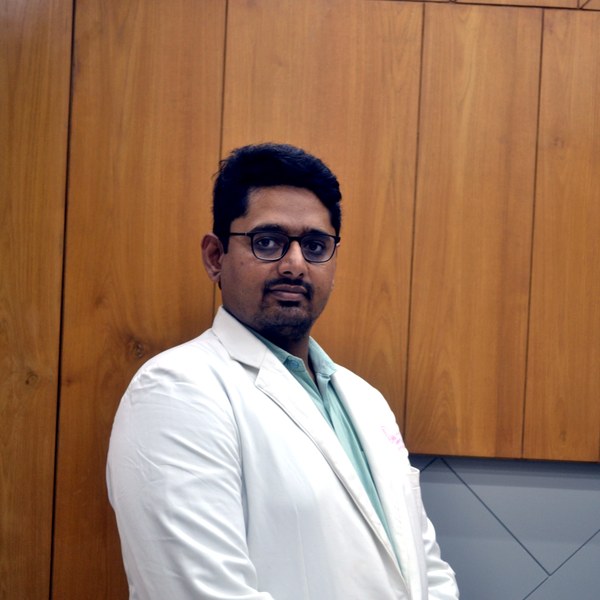
Dr Patel leads fertility care at Balaji Horizon, integrating reproductive surgery and IVF into a single plan — ethical, evidence-based and individualised, with realistic expectations and no overpromising of success.
Individualised IVF and fertility planning with honest, evidence-based counselling — and realistic expectations from the very first consultation.
Planning your care · evidence-based
Surgery, IVF, or trying naturally: how we sequence your care — and where the Endometriosis Fertility Index fits
There is no single right answer for everyone. The choice between operating, going straight to IVF, or trying to conceive for a defined window depends on your age, ovarian reserve, how the disease is distributed, sperm quality, and — after any surgery — your Endometriosis Fertility Index (EFI). We weigh these together, fertility first, so that precision surgery is used when it genuinely helps and your ovarian reserve and time are protected when it does not.
The Endometriosis Fertility Index (EFI): a fertility forecast after surgery
The EFI is a validated scoring system, developed and tested on more than 800 women, that estimates your chance of conceiving without IVF in the months after endometriosis surgery. It runs from 0 (poorest outlook) to 10 (best outlook) and combines two things:
- Surgical findings — chiefly the “least function score”, a measure of how well the tubes, fimbriae and ovaries are working at the end of the operation. This is the single most influential part of the score.
- Your history — age, how long you have been trying, and whether you have conceived before.
Because the surgical part is recorded during the operation, the EFI is calculated after a staging laparoscopy — not before. The European guideline body ESHRE recommends using the EFI precisely because it is validated, reproducible and helps identify who is likely to conceive naturally and who is better served by moving sooner to IVF.
In external validation, every extra EFI point raised the relative chance of natural conception by about a third. A high EFI is reassuring — you can reasonably try for a defined window. A low EFI is a signal that your time is usually better spent moving toward IVF than waiting or re-operating.
Matching the route to you: trying naturally, surgery first, or IVF first
Modern guidance (NICE, updated November 2024) sets out a tailored fertility pathway rather than one fixed sequence. Broadly, three routes fit different situations:
| Route | Usually most appropriate when… |
|---|---|
| Try naturally for a defined window (expectant) | You are younger with good ovarian reserve, a favourable EFI after surgery, milder disease and no major sperm factor. We agree a time limit and review — we do not wait indefinitely. |
| Surgery first | Pain is a major problem; deep disease involves the bowel, bladder or ureter; an endometrioma genuinely blocks egg collection; or disease is minimal–mild, where excision or ablation can itself improve the chance of natural conception. |
| IVF first / sooner | Ovarian reserve is already low (low AMH / antral follicle count), you are 37 or older and time matters most, there has been previous ovarian surgery, there is a significant sperm factor, or a fair trial of conceiving has not worked. |
An important nuance: when there is already a clear reason to do IVF, operating on an endometrioma first is, in ESHRE’s words, “obsolete” for the purpose of improving IVF success — surgery in that setting is reserved for controlling pain, not for boosting egg numbers. This is part of our comprehensive endometriosis programme.
Protecting your ovarian reserve: why we think twice about repeat surgery
Removing an endometrioma (cystectomy) can lower ovarian reserve, and a second operation for recurrence tends to lower it further while offering a smaller gain in natural conception than the first operation did. For that reason, when recurrence appears and the goal is a baby, current guidance (ESHRE 2022; NICE 2024) generally favours moving to IVF rather than re-operating — reserving repeat surgery for genuine pain or anatomical problems.
This is fertility-first thinking in practice: we use surgery where it adds value, and we protect your eggs and your time where another operation would cost more than it returns. Where reserve is already a concern, we also discuss fertility preservation (egg or embryo freezing) before it falls further.
More questions about the EFI and sequencing
What is a good EFI score, and how is it worked out?
Can my EFI be calculated before surgery?
I have a high EFI — does that mean I should avoid IVF?
How long should we try to conceive after surgery before considering IVF?
Evidence & sources
- Adamson GD, Pasta DJ. Endometriosis fertility index: the new, validated endometriosis staging system. Fertil Steril. 2010;94(5):1609–15. doi:10.1016/j.fertnstert.2009.09.035
- Tomassetti C, et al. External validation of the endometriosis fertility index (EFI) for predicting non-ART pregnancy after surgery. Hum Reprod. 2013;28(5):1280–8. doi:10.1093/humrep/det017
- ESHRE Endometriosis Guideline Development Group. ESHRE guideline: endometriosis. Hum Reprod Open. 2022;2022(2):hoac009. doi:10.1093/hropen/hoac009
- NICE. Endometriosis: diagnosis and management (NG73), updated November 2024. nice.org.uk/guidance/ng73
Prepared by the Balaji Horizon endometriosis & IVF team and clinically reviewed by Dr. Priyadatt Patel (MBBS, MS — Obstetrics & Gynaecology), aligned with ESHRE (2022) and NICE NG73 (2024). This is general information about how decisions are made, not a personal prognosis or a substitute for individual consultation.
Unsure about the order of treatment? See: Endometriosis surgery or IVF first?
When surgery is indicated. Deep or recurrent endometriosis sometimes needs operative treatment. Where excision is clearly indicated, see our approach to advanced fertility-preserving laparoscopic excision in Ahmedabad — chosen only on clear indication, prioritising ovarian-reserve preservation.
Dr. Priyadatt Patel
Senior Gynecologist · Advanced Laparoscopic Surgeon · IVF and Endometriosis Programme Lead
MS OBGyn · Pregnancy Care · Advanced Gynaecological Ultrasound · Fertility Preservation
ESHRE / ESGE / AAGL / ASRM guideline-aligned practice. 3D Karl Storz precision technique. Fertility-preservation-first philosophy. Evidence-based decisions, honest counselling, long-term outcomes orientation.
323, Satyamev Eminence, Beside Saptak Bungalows & AUDA Water Tank, Science City Road, Sola, Ahmedabad 380060
Open 24 hours (emergencies & labour) · OPD Mon–Sat 11:00–20:00 · +91 97234 31544
Naranpura, Ahmedabad
Mon–Sat 08:30–10:30 · +91 70460 02566