
Surgery or IVF First in Endometriosis-Associated Infertility? An Evidence-Based Decision Framework
One of the most consequential decisions in endometriosis fertility care — and one where the wrong default can quietly cost ovarian reserve. Here is how the choice is actually made.
Ovarian reserve is decisive
Plan surgery & IVF together
There is no single correct order. Whether to operate before IVF or proceed directly to IVF in endometriosis-associated infertility depends on age, ovarian reserve (AMH and antral follicle count), pain burden, endometrioma size and laterality, prior surgery, and tubal status. ESHRE cautions that repeat ovarian surgery measurably reduces ovarian reserve, so in women with low reserve or advancing age, IVF-first — or fertility preservation first — is frequently the more rational path, reserving surgery for specific indications. The decision should be individualised and, ideally, made with a clinician who manages both the surgery and the IVF.
The variables that actually decide it
AMH and antral follicle count, read against age, are the single biggest input. Low reserve shifts the balance firmly toward IVF-first and away from cyst surgery.
Severe pain not controlled medically is itself an indication to operate, independent of fertility.
A large unilateral cyst obstructing access differs entirely from small bilateral cysts, where surgery risks both ovaries.
A second operation on an operated ovary carries a real risk of premature ovarian insufficiency — often a reason not to re-operate.
A hydrosalpinx should be dealt with before IVF; coexisting adenomyosis changes the plan.
If ICSI is needed anyway for a male factor, surgery to improve natural conception may add little. Time available matters too.
When surgery before IVF is reasonable
- A large endometrioma mechanically obstructing follicle access or egg retrieval
- Severe pain not controlled by adequate medical therapy
- Suspicious features on imaging that need histological diagnosis
- Hydrosalpinx — where treating the tube improves IVF outcomes
- Deep infiltrating disease causing bowel or bladder dysfunction that needs addressing
- A first operation in a young woman with good reserve and clear symptoms
When IVF first — or freezing eggs first — is the better path
- Low ovarian reserve or advancing age, where every follicle counts
- Bilateral endometriomas, where surgery threatens both ovaries
- A previously operated ovary, where repeat surgery risks insufficiency
- An asymptomatic endometrioma in a woman ready for IVF — cystectomy is not proven to improve IVF success
- A coexisting male factor that will require ICSI regardless
- Where fertility preservation should precede any planned ovarian surgery
A practical decision matrix
| Clinical scenario | Usual initial direction | Why |
|---|---|---|
| Young, good reserve, large painful unilateral endometrioma, no prior surgery | Consider surgery first | Relieves pain and access; reserve cost is acceptable in this profile |
| Low AMH, older, or bilateral endometriomas | IVF first (consider freezing) | Protects reserve; surgery risks premature ovarian insufficiency |
| Hydrosalpinx present | Treat the tube before IVF | Hydrosalpinx fluid lowers implantation; salpingectomy improves outcomes |
| Asymptomatic endometrioma, ready for IVF | Usually IVF, no surgery | Cystectomy is not proven to improve IVF success and costs reserve |
| Deep disease with bowel/bladder dysfunction | Planned multidisciplinary surgery | Function and symptoms take priority; fertility planned around it |
| Imaging suspicious for malignancy | Surgery first | Diagnosis and safety override the fertility sequence |
This matrix is for education and orientation, not self-diagnosis. Your plan should be individualised after a proper assessment.
The ovarian-reserve caution at the centre of it all
The reason this decision is so weighty is that ovarian surgery is not reserve-neutral. Removing an endometrioma takes some normal ovarian tissue with it, and a second operation on the same ovary — or surgery on both ovaries — can tip a woman toward premature ovarian insufficiency. Because IVF success is driven heavily by the number and quality of eggs available, an operation that relieves pain but halves the egg yield can be a poor trade for someone whose priority is a baby. This is precisely why ESHRE discourages repeat ovarian surgery aimed only at improving fertility, and why we counsel on AMH before any planned cystectomy.
Fertility preservation: the third option people forget
When surgery is necessary but reserve is fragile, freezing eggs before the operation can protect future chances — particularly in young women facing bilateral disease or a second procedure. Raising this option early, rather than after reserve has already fallen, is part of responsible counselling and is increasingly woven into endometriosis fertility planning.
Why one team should own both decisions
When the surgeon and the fertility clinician are different people with different incentives, the sequence can drift toward whichever intervention each performs. Endometriosis fertility care works best when a single team weighs the surgery and the IVF against each other and owns the trade-off. At Balaji Horizon, the endometriosis surgery and the reproductive planning are managed in an integrated way, so the order of steps is chosen for the patient’s outcome — not for the convenience of a referral.
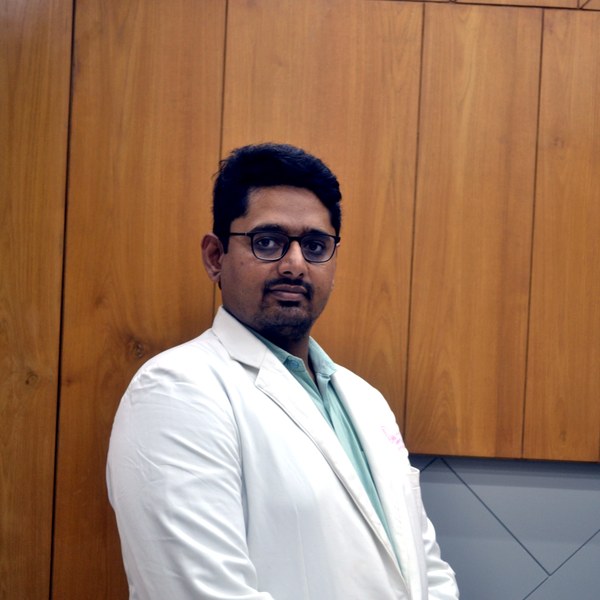
Dr Patel manages endometriosis surgery and IVF planning together, so the surgery-versus-IVF sequence is decided on ovarian reserve, age and goals — not on who performs which step. Fertility preservation is discussed early where reserve is at risk, with an ovarian-sparing, ESHRE-aligned philosophy throughout.
ESHRE Endometriosis Guideline (2022) and
ASRM guidance on endometriosis and infertility.
Explore related topics
IVF for endometriosis
ESHRE 2022 explained
Repeat surgery — when (and when not)
IVF with low AMH
Endometrioma (chocolate cyst)
Frequently asked questions
Should I have surgery before starting IVF?
It depends on your profile. Surgery first is reasonable for a large painful endometrioma, severe pain, a hydrosalpinx, suspicious imaging, or deep disease causing dysfunction. If reserve is low, the cysts are bilateral, or the ovary has already been operated on, IVF first — sometimes with egg freezing — is usually safer for your fertility.
Does removing an endometrioma improve IVF success?
Not reliably. For an asymptomatic cyst, removing it is not proven to raise IVF success and it reduces ovarian reserve. Surgery before IVF is therefore reserved for pain, suspicion of malignancy, or when the cyst blocks safe egg collection.
Will endometriosis surgery affect my egg numbers?
It can. Removing ovarian cysts takes some normal tissue with them, and repeat or bilateral surgery can lower reserve significantly, occasionally causing premature ovarian insufficiency. This is why AMH is checked and counselled before any planned ovarian surgery.
Can I freeze my eggs before endometriosis surgery?
Yes, and it is worth discussing early — especially with bilateral disease or a planned second operation. Freezing eggs before surgery protects future chances if the operation reduces ovarian reserve.
An integrated assessment of your ovarian reserve, disease and goals — so surgery and IVF are sequenced for your outcome.
Surgery first or IVF first? (endometriosis)
When endometriosis affects fertility, the order of treatment matters — and the wrong order can reduce ovarian reserve.
| Situation | Often favours | Why |
|---|---|---|
| Good ovarian reserve, pain dominant, no prior surgery | Surgery may help first | Can improve pain and natural-conception chances |
| Low AMH / reduced reserve | IVF (often) before surgery | Surgery on endometriomas can further lower reserve |
| Endometrioma + planning IVF | Individualised — sometimes IVF/freezing first | Protect eggs before any ovarian surgery |
| Repeat/large disease, prior operations | Caution with re-operation | Each surgery risks more reserve loss |
| Advanced age | Time-sensitive — IVF earlier | Egg quality declines with age |
There is no one-size answer — sequencing is individualised to reserve, age, pain and goals (ESHRE).
Dr. Priyadatt Patel
Senior Gynecologist · Advanced Laparoscopic Surgeon · IVF and Endometriosis Programme Lead
MS OBGyn · Pregnancy Care · Advanced Gynaecological Ultrasound · Fertility Preservation
ESHRE / ESGE / AAGL / ASRM guideline-aligned practice. 3D Karl Storz precision technique. Fertility-preservation-first philosophy. Evidence-based decisions, honest counselling, long-term outcomes orientation.
323, Satyamev Eminence, Beside Saptak Bungalows & AUDA Water Tank, Science City Road, Sola, Ahmedabad 380060
Open 24 hours (emergencies & labour) · OPD Mon–Sat 11:00–20:00 · +91 97234 31544
Naranpura, Ahmedabad
Mon–Sat 08:30–10:30 · +91 70460 02566