The ESHRE 2022 Endometriosis Guideline: What Changed and What It Means
The 2022 guideline from the European Society of Human Reproduction and Embryology reshaped first-line endometriosis care — away from automatic surgery and toward earlier diagnosis, medical therapy first, and fertility-aware, individualised decisions. Here is what changed, in plain language.
Medical therapy first
Protect ovarian reserve
The 2022 ESHRE Endometriosis Guideline reorganised first-line care around three shifts: diagnosis no longer requires laparoscopy — clinical assessment plus expert imaging can establish it in most cases; medical therapy is first-line for pain in most patients; and surgical and fertility decisions must be individualised, with explicit attention to preserving ovarian reserve and avoiding unnecessary repeat surgery. For patients, the practical message is that good endometriosis care now starts earlier, less invasively, and with a clearer plan.
A trained sonographer using the IDEA protocol can map disease non-invasively. Diagnostic laparoscopy is reserved for when it changes management.
Combined hormonal therapy or progestins (e.g. dienogest) are first-line for pain in most patients, with GnRH analogues plus add-back as second-line.
Indicated for specific situations, not as a routine first step — and weighed carefully against its effect on the ovaries.
1. Diagnosis no longer starts in the operating theatre
For decades, laparoscopy was treated as the only way to be “sure” of endometriosis — a stance that added years of delay and an operation before any treatment could begin. ESHRE 2022 explicitly moved away from this. A careful history, examination and expert imaging (transvaginal ultrasound, with MRI where needed) can establish the diagnosis in most women, and treatment can begin on that basis. Importantly, the guideline also makes clear that normal imaging does not exclude endometriosis — superficial disease is often invisible on scans — so empirical medical treatment remains appropriate when the clinical picture fits. Diagnostic laparoscopy is now reserved for situations where the result will genuinely change the plan. See how expert endometriosis ultrasound works →
2. Medical therapy is first-line for pain
For pain, the guideline positions hormonal medical therapy as the first step in most patients: combined hormonal contraceptives or progestins such as dienogest, used continuously to suppress cyclical activity. Where these are insufficient, GnRH analogues with hormonal “add-back” are a second-line option that protects bone and reduces menopausal side-effects. Anti-inflammatories help symptomatically. The deliberate emphasis is on controlling disease activity over the long term rather than reaching for surgery early — while recognising that medication suppresses, but does not cure, the disease, and that choices must fit a woman’s fertility plans and tolerance.
3. Surgery is selective — and ovarian reserve is protected
Surgery keeps an important role — for pain that fails medical therapy, for deep disease affecting bowel or bladder, and in selected fertility situations — but ESHRE 2022 frames it as a considered decision, not a default. The guideline is particularly careful about ovarian endometriomas (chocolate cysts): removing them measurably reduces ovarian reserve, so the decision to operate must weigh symptom relief and cancer-risk concerns against the cost to future egg numbers, with AMH counselling beforehand. Repeat surgery is discouraged where it threatens the ovary without a clear benefit. This is the heart of the modern philosophy: do the right operation once, in the right hands, rather than several diminishing ones.
4. Fertility decisions are integrated, not sequential
The fertility chapter is where the guideline is most nuanced. Hormonal medical therapy does not improve natural fertility and only delays conception, so it is not used for that purpose. Surgery to remove an endometrioma before IVF is not routinely recommended purely to improve IVF outcomes — it is reserved for pain, suspicion of malignancy, or access problems at egg collection. Tools such as the Endometriosis Fertility Index help counsel realistically, and fertility preservation (egg freezing) should be discussed early, especially before ovarian surgery or in advanced disease. The recurring principle: the surgery, the IVF and the fertility timeline should be planned together. Read our surgery-or-IVF-first decision framework →
The recommendations, by number
This is the part most summaries leave out: the recommendation numbers and their strength, so a colleague can cite the guideline rather than take a paraphrase on trust. Wording inside quotation marks is verbatim; the rest is a plain-language reading.
| Rec. | What ESHRE recommends | Strength |
|---|---|---|
| 4 | Do not use biomarkers — in blood, endometrial tissue, menstrual or uterine fluid — to diagnose endometriosis. | Strong |
| 5 | Use imaging (ultrasound or MRI) in the diagnostic work-up, while knowing that a negative finding “does not exclude endometriosis, particularly superficial peritoneal disease”. | Strong |
| 6 | Where imaging is negative, or empirical treatment was unsuccessful or inappropriate, consider offering laparoscopy for diagnosis and treatment. | Good practice point |
| 7 | Confirm laparoscopic findings by histology — though negative histology “does not entirely rule out the disease”. | Good practice point |
| 25 | When surgery is performed, clinicians may consider excision instead of ablation to reduce endometriosis-associated pain. | Weak |
| 46 | Let age, the patient’s own priorities and the Endometriosis Fertility Index guide whether and when to operate. | — |
| 55 | Do not routinely perform surgery before ART to improve live birth rates in rASRM stage I/II disease. | — |
| 64 | Where an endometrioma needs surgery, perform cystectomy rather than drainage and electrocoagulation, taking the risk of reduced ovarian reserve into account. | — |
The grades are easy to skim past, and they matter. A strong recommendation means the guideline group judged that most patients should receive that action. A weak recommendation — Recommendation 25 on excision is one — means the evidence is limited enough that different patients will reasonably choose differently. A good practice point is consensus, not trial evidence.
On the diagnostic route itself, the guideline declines to pick a winner. Its group statement is that both diagnostic laparoscopy and imaging combined with empirical treatment can be considered, that there is no evidence of superiority of either approach, and that the pros and cons should be discussed with the patient. In a clinic that single sentence does more work than any of the numbered recommendations, because it moves the decision from protocol to conversation.
What the guideline does not say
| A common assumption… | What ESHRE 2022 actually says |
|---|---|
| “Everyone with endometriosis needs surgery.” | No. Medical therapy is first-line for most; surgery is for specific indications. |
| “A normal scan rules out endometriosis.” | No. Superficial disease is often invisible; empirical treatment can still be appropriate. |
| “Remove the endometrioma before IVF to boost success.” | Not routinely — surgery is reserved for pain, malignancy concern or access issues. |
| “Pregnancy cures endometriosis.” | No — it may ease symptoms temporarily, but it is not a treatment. |
What it means for you
If you have symptoms suggestive of endometriosis, you should not have to wait years or undergo an operation simply to get a name for your pain. You can expect a thorough history, an expert scan, and a frank conversation about medical options — with surgery considered when it is genuinely the right tool, and your fertility and ovarian reserve protected throughout. At Balaji Horizon this is exactly how care is structured: evidence-based, conservative where appropriate, and precise when surgery is truly indicated.
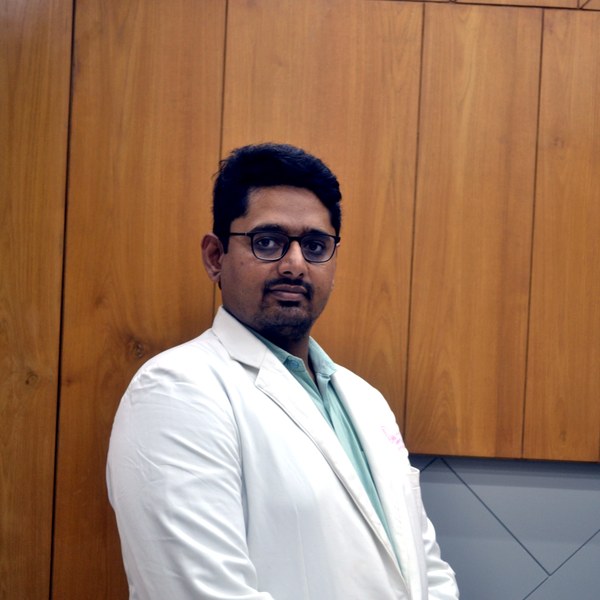
Dr Patel practises in line with the ESHRE 2022 framework — imaging-led diagnosis, medical therapy first, and ovarian-sparing surgery only when clearly indicated. Because he manages both the surgery and the fertility planning, the trade-offs the guideline describes are owned by one clinician rather than divided across specialties.
The full guideline is open-access:
ESHRE Endometriosis Guideline (2022).
See also
ASRM and
NICE NG73.
Explore related topics
Expert ultrasound (IDEA)
Treatment decision framework
Surgery or IVF first?
Repeat surgery — when (and when not)
Why diagnosis takes 7–10 years
Frequently asked questions
Do I still need a laparoscopy to be diagnosed with endometriosis?
Usually not. ESHRE 2022 supports diagnosis through clinical assessment and expert imaging, with treatment started on that basis. Laparoscopy is reserved for cases where it will change management. A normal scan does not, however, exclude the condition.
Is medication or surgery the first treatment?
For pain, medical therapy is first-line in most patients — combined hormonal therapy or progestins such as dienogest, with GnRH analogues plus add-back as second-line. Surgery is reserved for specific indications or when medical therapy fails.
Should an endometrioma be removed before IVF?
Not routinely, and not simply to improve IVF success. Removing an endometrioma reduces ovarian reserve, so surgery before IVF is reserved for pain, suspicion of malignancy, or when the cyst blocks access at egg collection. The decision is individualised with AMH counselling.
Does the guideline say pregnancy cures endometriosis?
No. Pregnancy may temporarily ease symptoms in some women but is not a treatment, and symptoms commonly return afterwards. It should never be advised as a cure.
Imaging-led diagnosis, medical therapy first, and ovarian-sparing surgery only when it is genuinely the right step.
Dr. Priyadatt Patel
Senior Gynecologist · Advanced Laparoscopic Surgeon · IVF and Endometriosis Programme Lead
MS OBGyn · Pregnancy Care · Advanced Gynaecological Ultrasound · Fertility Preservation
ESHRE / ESGE / AAGL / ASRM guideline-aligned practice. 3D Karl Storz precision technique. Fertility-preservation-first philosophy. Evidence-based decisions, honest counselling, long-term outcomes orientation.
323, Satyamev Eminence, Beside Saptak Bungalows & AUDA Water Tank, Science City Road, Sola, Ahmedabad 380060
Open 24 hours (emergencies & labour) · OPD Mon–Sat 11:00–20:00 · +91 97234 31544
Naranpura, Ahmedabad
Mon–Sat 08:30–10:30 · +91 70460 02566