
Endometriosis Excision — Surgical Standard of Care
Endometriosis excision surgery is keyhole (laparoscopic) surgery in which each endometriosis lesion is cut out at its base, together with a thin margin of normal tissue, rather than being burned on the surface. The aim is to remove the disease that is driving the pain while preserving the ovaries, tubes, bowel and bladder.
Excision vs Ablation — The Critical Distinction
Ablation (cauterisation, fulguration) destroys surface only — disease often persists beneath. Excision removes the entire lesion including the deeper part. For peritoneal disease, both work for very superficial implants but excision is preferred when implants extend deeper. For ovarian endometriomas, excision (cystectomy) is mandatory. For DIE, excision is the only meaningful surgical option.
Excision is the technique we prefer for deep and infiltrating disease, where ablation cannot reach the base of the lesion and no tissue is left to send for diagnosis. Below we set out plainly what the guidelines do and do not say about that choice, how excision is actually performed, and the situations in which surgery is not the right answer at all.
Karl Storz 3D Laparoscopic Excision
Performed on the Karl Storz 3D platform — true stereoscopic vision allows accurate identification of tissue planes between endometriosis and normal tissue. Cold scissors preferred over energy where possible (preserves anatomy). Minimal bipolar use near ovary, ureter, bowel. Microsuturing for repairs.
Specific Excision Techniques
Peritoneal: complete excision of lesion + surrounding margin. Ovarian endometrioma: stripping cystectomy (capsule removed completely) with ovarian preservation. DIE: deep dissection following anatomical planes, sometimes requiring ureteric mobilisation or bowel shaving. Uterosacral excision: careful nerve preservation where possible.
Outcomes — Evidence-Based
Pain relief: 60-80% significant improvement at 1 year, 50-70% at 5 years (Cochrane reviews). Recurrence: 10-25% over 5 years (lower with post-surgical hormonal suppression). Fertility: improves natural conception probability in some patients; works alongside IVF for those needing assisted reproduction. Quality of life improvements documented in published studies.
Deep infiltrating endometriosis (DIE) — why it is treated differently
Deep endometriosis is defined, by convention, as disease extending more than 5 mm beneath the peritoneal surface — a threshold ESHRE itself describes as arbitrary. It is the form that most often involves the uterosacral ligaments, the rectovaginal septum, the bowel, the ureter or the bladder, and the form in which surface treatment is least likely to help: burning the visible top of a lesion leaves the infiltrating part behind.
DIE excision is a dissection problem before it is a removal problem. The ureter and bowel are identified and protected first, the correct plane is developed, and only then is the lesion taken with its margin. Where the bowel, ureter or bladder is involved, this belongs in a unit that can bring colorectal or urological colleagues into the same operation — not one that stages a woman through repeated procedures.
When Excision is NOT the Answer
Low ovarian reserve + bilateral endometriomas: surgery may further reduce reserve. Recurrent disease: 3rd or 4th surgery rarely beneficial. Adenomyosis without surface disease: surgical excision not possible. Asymptomatic disease in low-fertility-goal patient: medical management appropriate.
Timing matters as much as technique. For minimal-to-mild disease (rASRM stage I/II) in a woman going on to IVF, ESHRE recommends against routinely operating first in order to improve live-birth rates, and suggests that age, the woman’s own priorities and the Endometriosis Fertility Index should guide whether and when to operate at all. Where surgery and IVF both have a claim, the order is a decision to be made deliberately rather than by reflex — we have set out that choice in more detail in endometriosis surgery or IVF first.
Excision vs ablation — and what the evidence actually supports
| Excision | Ablation | |
|---|---|---|
| Technique | Cuts the lesion out | Burns the surface |
| Depth treated | Removes deep disease | Surface only |
| Tissue diagnosis | Yes (confirmed) | No |
| Best suited to | Deep or extensive disease | Superficial peritoneal disease |
| Recurrence | Lower for deep disease | Higher if disease is deep |
Stated precisely: ESHRE’s 2022 endometriosis guideline recommends that, when surgery is performed, clinicians may consider excision instead of ablation to reduce endometriosis-associated pain. ESHRE grades that as a weak recommendation, because the head-to-head trial evidence is limited in both size and number. For ovarian endometrioma the guideline is firmer: where surgery is indicated, cystectomy is recommended rather than drainage and electrocoagulation — with the risk of reduced ovarian reserve explicitly to be taken into account.
So the honest position is this. That excision is preferable for deep disease is a surgical judgement, well founded in anatomy — an infiltrating lesion has a base that surface treatment cannot reach, and excision yields tissue for a histological diagnosis — but it is not a claim of proven superiority across every stage and every outcome. We separate the two deliberately, because a page that overstates the evidence is of no use to a woman deciding whether to have an operation.
Aligned with current international evidence, not habit.
Frequently Asked Questions
Why is excision better than cauterisation?
Excision removes the whole lesion, including the part infiltrating below the surface, and yields tissue for a histological diagnosis; cauterisation destroys only what is visible on top. ESHRE’s 2022 guideline says clinicians may consider excision rather than ablation to reduce pain, but grades this a weak recommendation — the head-to-head trials are few and small. The practical case for excision is strongest in deep disease, where the lesion has a base that surface treatment cannot reach.
How is endometriosis excision performed?
Laparoscopically on the Karl Storz 3D platform under general anaesthesia. 3-4 small incisions. Lesions are identified, the boundary mapped, and the entire affected tissue removed with margins. Histopathology confirms diagnosis.
What is the recovery time after excision?
Hospital stay 24-48 hours. Return to desk work 5-10 days. Heavy lifting restricted 4 weeks. Conception attempts after 4-8 weeks for fertility-seeking patients.
Will endometriosis come back after excision?
10-25% recurrence over 5 years with surgery alone. Significantly reduced (to <10%) with post-surgical hormonal suppression. Recurrence is biological — endometriosis is a chronic disease.
Can I get pregnant after excision?
Many women conceive after excision — particularly those with mild-moderate disease and normal ovarian reserve. Severe disease, low AMH, or other infertility factors may still need IVF. Sequencing of excision and IVF matters.
Will my ovarian reserve drop after surgery?
Mild reduction is possible particularly with bilateral cystectomy. Fertility-sparing technique minimises this. AMH documented before and 3 months after to track. Egg freezing before surgery discussed in high-risk cases.
What does excision of endometriosis mean?
It means the lesion is cut out rather than burned. The surgeon develops a plane around the endometriosis, removes it together with a margin of surrounding tissue, and sends it for histology — so the disease is both removed and confirmed under the microscope. Ablation, by contrast, destroys the surface of the lesion and leaves nothing to examine.
What is DIE excision surgery?
DIE stands for deep infiltrating endometriosis — disease extending more than about 5 mm below the peritoneal surface, most often on the uterosacral ligaments, rectovaginal septum, bowel, ureter or bladder. DIE excision is the removal of that infiltrating tissue by careful dissection, after the ureter and bowel have been identified and protected. It is more demanding than surface surgery, and where the bowel or urinary tract is involved it is best done in a unit that can involve colorectal or urological colleagues in the same operation.
Sources
This page reflects current international guidance. Where the evidence is weak or contested we say so rather than rounding it up.
Becker CM, Bokor A, Heikinheimo O, et al. ESHRE guideline: endometriosis. Human Reproduction Open 2022;2022(2):hoac009. doi:10.1093/hropen/hoac009 — source for the excision-versus-ablation recommendation and its strength, the ovarian-cystectomy recommendation, the definition of deep endometriosis, and the guidance on surgery before ART.
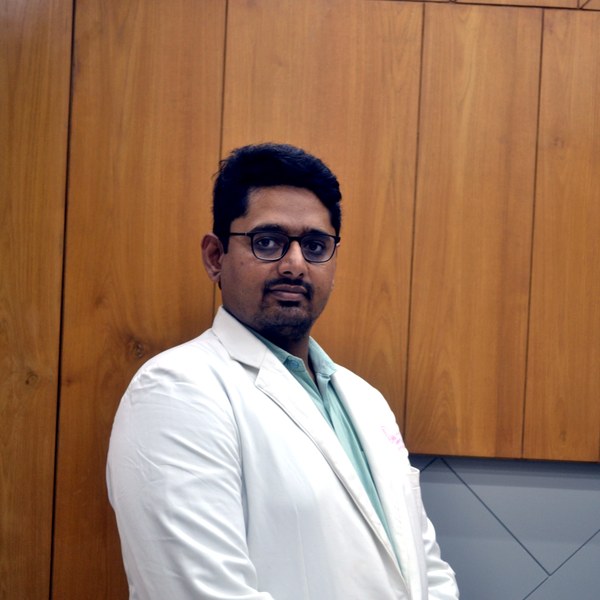
Dr Patel leads endometriosis diagnosis and surgery at Balaji Horizon with an evidence-based, ovarian-sparing philosophy aligned to ESHRE and ESGE — integrating pain, fertility and long-term disease control into a single plan, rather than treating the disease in isolation.
Imaging-led diagnosis, medical-first management, and precise surgery only when it is the right step — planned around your pain and fertility goals.
Why complete, careful excision matters more than how much is removed
The goal of excision surgery is to remove endometriosis at its root while protecting the organs around it — not to operate as extensively as possible. Excision (cutting disease away and sending it for histology) is generally preferred to ablation (burning the surface) for deep disease, because it treats the full thickness of a lesion and confirms the diagnosis under the microscope. Done well, it offers durable relief for the majority of women. The skill lies in respecting the tissue planes around the bowel, bladder and ureters, and — crucially — in protecting the ovaries.
Protecting ovarian reserve
When an ovarian endometrioma (“chocolate cyst”) is removed, the technique and the surgeon’s care directly affect how many eggs remain. Cystectomy gives lower recurrence and better pain relief than drainage or ablation, but can reduce ovarian reserve, particularly with bilateral or recurrent cysts. The decision is individualised: your age, AMH, fertility plans and whether both ovaries are involved all weigh in, and in selected cases a more conservative approach — or IVF before surgery — is the wiser path. This is exactly why surgery is planned around your fertility, not in isolation from it.
What to expect, and the question of repeat surgery
Laparoscopic excision is usually a day-case or short-stay procedure, with recovery over one to several weeks depending on complexity. The most reliable way to avoid a second operation is to get the first one right — accurate mapping beforehand and complete excision by an experienced team. Where disease is extensive, a planned multidisciplinary approach protects both outcomes and fertility. See also repeat surgery and recurrence.
Recovery and decision questions
How long is recovery after laparoscopic endometriosis excision surgery?
Most women go home within 24–48 hours and return to desk work in about 1–2 weeks; complete internal healing takes longer, and recovery varies with the extent of disease treated. Your team gives you an individualised plan at discharge.
Is excision better than ablation for endometriosis?
Excision removes disease tissue rather than burning its surface and allows histological confirmation; it is generally preferred for deep disease. The right technique depends on disease type, location and your fertility goals — an individualised surgical decision, not a one-size-fits-all rule.
Will excision surgery affect my fertility?
Protecting fertility is a core priority. Surgical planning weighs ovarian reserve, disease mapping and your family goals; where fertility matters, reserve-protecting techniques and coordination with fertility treatment are planned in advance.
Dr. Priyadatt Patel
Senior Gynecologist · Advanced Laparoscopic Surgeon · IVF and Endometriosis Programme Lead
MS OBGyn · Pregnancy Care · Advanced Gynaecological Ultrasound · Fertility Preservation
ESHRE / ESGE / AAGL / ASRM guideline-aligned practice. 3D Karl Storz precision technique. Fertility-preservation-first philosophy. Evidence-based decisions, honest counselling, long-term outcomes orientation.
323, Satyamev Eminence, Beside Saptak Bungalows & AUDA Water Tank, Science City Road, Sola, Ahmedabad 380060
Open 24 hours (emergencies & labour) · OPD Mon–Sat 11:00–20:00 · +91 97234 31544
Naranpura, Ahmedabad
Mon–Sat 08:30–10:30 · +91 70460 02566