
Endometriosis · Surgical care
Multidisciplinary surgery for endometriosis — team-based care
When endometriosis crosses organ systems, surgery is best performed by a team rather than by a single specialty. Advanced laparoscopic gynaecology, colorectal surgery, and urology often need to be coordinated in the same operating session. This page describes when an MDT approach is needed, who is on the team, how pre-operative planning runs, and what intra-operative and post-operative coordination looks like.
When MDT surgery is needed
Multidisciplinary surgery is indicated when the disease extends beyond what gynaecology alone can safely manage. Common triggers include:
- Deep infiltrating disease of the bowel wall (rectum, sigmoid, ileum, appendix)
- Bladder-wall disease requiring partial cystectomy
- Ureteric encasement or stenosis, particularly with associated hydronephrosis
- Multiple deep sites in the same patient
- Recurrent disease after prior surgery
- Frozen pelvis — complete obliteration of the pouch of Douglas
- Pelvic side-wall disease with proximity to major vessels or pelvic nerves
- Thoracic involvement requiring combined pelvic-thoracic planning
Patients with these features benefit from being operated on by a coordinated team in a single session, rather than referred sequentially.
Who is on the team
- Advanced laparoscopic gynaecologist — team lead for endometriosis surgery; manages pelvic dissection, ureterolysis, and gynaecological pathology
- Colorectal surgeon — engaged when bowel-wall disease is present; performs shaving, disc resection, or segmental resection as the situation demands
- Urologist — engaged for bladder-wall disease, segmental ureteric resection with re-implantation, or complex ureterolysis
- Thoracic surgeon — engaged for catamenial pneumothorax or diaphragmatic disease
- Anaesthesia — experienced in long laparoscopic surgery, with pain-management planning for the post-operative period
- Pelvic-floor physiotherapy — engaged pre-operatively where pelvic-floor dysfunction is part of the picture, and post-operatively for recovery
- Fertility specialist — engaged at the planning stage where conception is the goal, to integrate surgery with the IVF programme
- Pain specialist and mental-health support — where relevant
Pre-operative mapping
The most important pre-operative step is accurate mapping of the disease. The mapping pathway includes:
- Structured history and examination — documenting cyclical pattern, fertility goals, prior surgery
- ISUOG IDEA-protocol transvaginal ultrasound — identifying ovarian endometriomas, deep nodules, and bowel-wall disease
- MRI of the pelvis — mapping multifocal disease, particularly for the colorectal and urological surgeons
- Renal ultrasound and split renal function — where ureteric disease is suspected
- Cystoscopy and colonoscopy — in selected cases for direct visualisation
- Multidisciplinary case conference — the team reviews the imaging together and agrees the surgical plan before the day
- Structured consent — the patient is consented for the full range of possible operations (shaving, disc, segmental, ureterolysis, partial cystectomy, ureteric re-implantation, possible stoma) with explicit discussion of which is most likely and which are contingencies
Intra-operative coordination
The operating sequence is agreed in advance. A typical run begins with the gynaecological surgeon establishing the pneumoperitoneum, performing diagnostic survey, and beginning pelvic dissection. The colorectal and urological surgeons join as their part of the case is reached. Critical decisions — for example, whether to perform a disc excision or a segmental resection — are made jointly and documented in real time. The anaesthesia team coordinates fluid management and analgesia for what may be a 4 to 8 hour case.
Post-operative care
- Enhanced recovery after surgery (ERAS) protocol where applicable
- Multi-modal analgesia, opioid-sparing where possible, breastfeeding-compatible
- Early mobilisation and VTE prophylaxis
- Catheter management per the bladder repair
- Diet protocol per the bowel work
- Stoma care where a temporary stoma was sited
- Pelvic-floor physiotherapy from 6 weeks
- Structured follow-up at 6 weeks, 3 months, and 12 months
- Long-term hormonal suppression discussed for recurrence prevention
Surgical philosophy at this centre
- Excision, not ablation, for deep disease — per ESHRE and ESGE guidance
- Nerve-sparing dissection wherever feasible
- Anatomic planes rather than thermal destruction
- Minimum-effective technique — the team operates to the least invasive option that achieves clearance; segmental bowel resection is the contingency, not the default
- Ovarian preservation — particularly important in patients who have not yet completed family
- Honest consent — the patient is told the realistic range of possible findings and operations, not only the best-case scenario
- Recurrence prevention — hormonal suppression is discussed as part of the operative consent, not introduced as an afterthought
What patients should expect
- A pre-operative consultation with the lead surgeon and, where appropriate, the colorectal and urological members of the team
- An imaging review session where the maps are explained
- Structured written consent covering the full surgical range
- Hospital stay of 2 to 7 days depending on the operation
- A discharge summary, operative notes, and histopathology report
- Clear written instructions for the recovery period
- Scheduled follow-up rather than “come back if there’s a problem”
When to ask for an MDT opinion
- An imaging report mentions bowel-wall, bladder, or ureteric involvement
- Prior endometriosis surgery did not relieve symptoms or disease has recurred
- Symptoms suggest deep disease and surgery is being considered
- A clinician suggests a hysterectomy or major surgery for endometriosis without multidisciplinary mapping
- You would like a second opinion before planned surgery
Guidelines we follow on this topic
Updated 12 October 2026: we removed a quotation attributed to an “ESGE AAGL Joint Statement on Endometriosis Surgery, 2023”, because we could not trace this document to any published guideline. The guidance on this page is otherwise unchanged.
Updated 13 October 2026: we corrected the names of the guidance documents listed below to their published titles and removed one we could not trace to a published source.
- ESHRE Endometriosis Guideline 2022
- ESGE, ESHRE and WES recommendations for the surgical treatment of endometriosis, Part 2: deep endometriosis (2020)
- AAGL 2021 Endometriosis Classification
- BSGE endometriosis centre accreditation criteria
Related reading
CONTINUE READING
Explore the Endometriosis Programme
Multidisciplinary Surgery for Endometriosis is one part of the broader endometriosis programme led by Dr. Priyadatt Patel. The main endometriosis pillar covers diagnosis, individualised treatment, fertility implications, and long-term management. Related: Deep Infiltrating · 7-10 Year Diagnostic Delay · Multidisciplinary Surgery.
Free Patient Guide
The Endometriosis Decision Guide
A short clinical primer on diagnostic delay, the four decisions you may face, and what to bring to your specialist consultation. Aligned with ESHRE 2022, ASRM, FIGO guidance.
Reviewed by Dr. Priyadatt Patel — read in 20–25 minutes
Free — delivered to your inbox
The operating team for complex disease
| Specialist | Role |
|---|---|
| Gynaecological surgeon | Excision lead |
| Colorectal surgeon | Bowel involvement |
| Urologist | Bladder and ureter |
| Anaesthesia & pain | Peri-operative care |
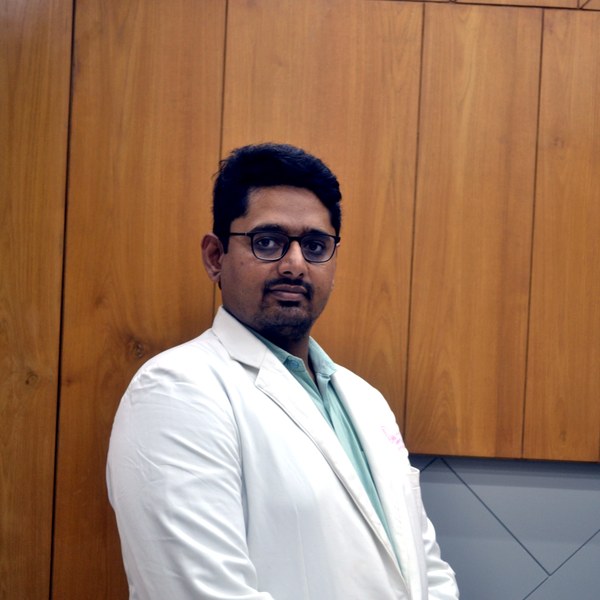
Dr Patel leads endometriosis diagnosis and surgery at Balaji Horizon with an evidence-based, ovarian-sparing philosophy aligned to ESHRE and ESGE — integrating pain, fertility and long-term disease control into a single plan, rather than treating the disease in isolation.
Imaging-led diagnosis, medical-first management, and precise surgery only when it is the right step — planned around your pain and fertility goals.
Dr. Priyadatt Patel
Senior Gynecologist · Advanced Laparoscopic Surgeon · IVF and Endometriosis Programme Lead
MS OBGyn · Pregnancy Care · Advanced Gynaecological Ultrasound · Fertility Preservation
ESHRE / ESGE / AAGL / ASRM guideline-aligned practice. 3D Karl Storz precision technique. Fertility-preservation-first philosophy. Evidence-based decisions, honest counselling, long-term outcomes orientation.
323, Satyamev Eminence, Beside Saptak Bungalows & AUDA Water Tank, Science City Road, Sola, Ahmedabad 380060
Open 24 hours (emergencies & labour) · OPD Mon–Sat 11:00–20:00 · +91 97234 31544
Naranpura, Ahmedabad
Mon–Sat 08:30–10:30 · +91 70460 02566