
Endometriosis · Diagnostic imaging
Imaging for endometriosis — transvaginal ultrasound and MRI standards
Imaging is the first non-invasive line of investigation for endometriosis. Modern transvaginal ultrasound performed to the ISUOG IDEA consensus protocol, supplemented by MRI for surgical mapping where indicated, can identify most ovarian and deep infiltrating disease before a laparoscopy is contemplated. This page describes the standards we follow and how to interpret a report.
Why imaging matters
Imaging answers three questions: is endometriosis present, where is it, and how severe is it? A structured report identifies ovarian endometriomas, deep infiltrating disease, and pouch-of-Douglas obliteration with reasonable accuracy. Imaging-negative superficial peritoneal disease is the main exception — it is sometimes diagnosed only at laparoscopy. The role of imaging is therefore not to “exclude endometriosis” but to map what is there and guide management.
The ISUOG IDEA protocol
The International Deep Endometriosis Analysis (IDEA) group consensus describes a systematic approach to transvaginal ultrasound for endometriosis. It examines four compartments in order:
- The uterus and adnexa — including features of adenomyosis and endometriomas
- Soft markers — site-specific tenderness, fixed or kissing ovaries
- The pouch of Douglas — tested by the sliding sign for adhesions and obliteration
- Anterior and posterior compartments — for deep infiltrating nodules in the bladder wall, uterosacral ligaments, recto-vaginal septum, and bowel
An IDEA-compliant report describes each compartment, the depth and length of any nodules, the level of any bowel involvement, and any associated findings. A generic “pelvic ultrasound” report that does not follow this structure is less useful for management decisions.
What transvaginal ultrasound can see
- Ovarian endometriomas — with high sensitivity and specificity
- Deep infiltrating nodules of the uterosacral ligaments, recto-vaginal septum, bladder, and bowel
- Adenomyosis (using MUSA criteria)
- Pouch-of-Douglas obliteration via the sliding sign
- Hydrosalpinx and other tubal abnormalities
- Site-specific tenderness during the examination
What MRI adds
- Mapping of multiple deep sites in one study
- Better visualisation of upper sigmoid and small-bowel disease
- Ureteric involvement and hydronephrosis
- Anterior abdominal wall and umbilical endometriosis
- Diaphragmatic disease (in selected protocols)
- Pre-operative surgical planning particularly for multifocal deep disease
MRI does not replace TVS — it complements it. The two modalities are most powerful when read together.
Limits of imaging
- Superficial peritoneal disease. Often not visible on imaging. A normal scan does not exclude endometriosis.
- Operator dependence. The accuracy of IDEA-protocol TVS depends on the sonographer’s training. An ordinary pelvic ultrasound will miss most deep disease.
- Cycle timing. Imaging is best performed in the proliferative phase for clearest visualisation, though emergency scans can be done at any time.
- Patient factors. Pelvic-floor tension, obesity, and intolerance of TVS can reduce diagnostic yield. Transrectal scanning or MRI is used as an alternative.
Reading an imaging report
A well-written endometriosis imaging report should answer:
- Is the uterus normal or are there features of adenomyosis (MUSA criteria)?
- Are there ovarian endometriomas? If yes, how many, which side, what size?
- Is the pouch of Douglas obliterated? Is the sliding sign positive?
- Are there deep nodules? Of which structures? What are the dimensions and depth?
- For bowel involvement: which segment, what level, what length, what depth (muscular only, or transmural), is there stenosis?
- For urinary tract: any bladder-wall disease, any ureteric encasement, any hydronephrosis?
- Any soft markers (site-specific tenderness, kissing ovaries)?
A report that does not address these does not have enough information to plan surgery against. Patients are welcome to ask for a structured re-report.
When imaging is indicated
- At first specialist consultation for suspected endometriosis
- Before any surgical decision
- For surveillance of an ovarian endometrioma on conservative management
- At 6 to 12 months after surgery as a baseline (when relevant)
- For new or changing symptoms during follow-up
Imaging at this centre
Pelvic ultrasound is performed in-house by clinicians trained in IDEA-protocol scanning. MRI is arranged through a partner radiology service with an established endometriosis-MRI protocol. Imaging is integrated with the clinical consultation rather than being a separate referral — the same clinician reads, discusses, and plans.
Guidelines we follow on this topic
- ISUOG IDEA consensus statement for sonographic assessment of endometriosis
- ESUR/ESGE consensus on MRI for endometriosis
- ESHRE Endometriosis Guideline 2022
- NICE NG73 Endometriosis
Related reading
A systematic ultrasound approach (per ISUOG IDEA consensus) should evaluate uterus, adnexa, anterior compartment, posterior compartment, soft markers (kissing ovaries, site-specific tenderness, sliding sign), and deep endometriotic lesions in a structured order.
CONTINUE READING
Explore the Endometriosis Programme
Endometriosis Imaging is one part of the broader endometriosis programme led by Dr. Priyadatt Patel. The main endometriosis pillar covers the full diagnostic and treatment framework.
Free Patient Guide
The Endometriosis Decision Guide
A short clinical primer on diagnostic delay, the four decisions you may face, and what to bring to your specialist consultation. Aligned with ESHRE 2022, ASRM, FIGO guidance.
Reviewed by Dr. Priyadatt Patel — read in 20–25 minutes
Free — delivered to your inbox
Imaging modalities for endometriosis
| Modality | Role |
|---|---|
| Transvaginal ultrasound (IDEA) | First-line mapping |
| MRI | Deep disease and surgical planning |
| CT urogram | Suspected ureteric involvement |
| Diagnostic laparoscopy | When it will change management |
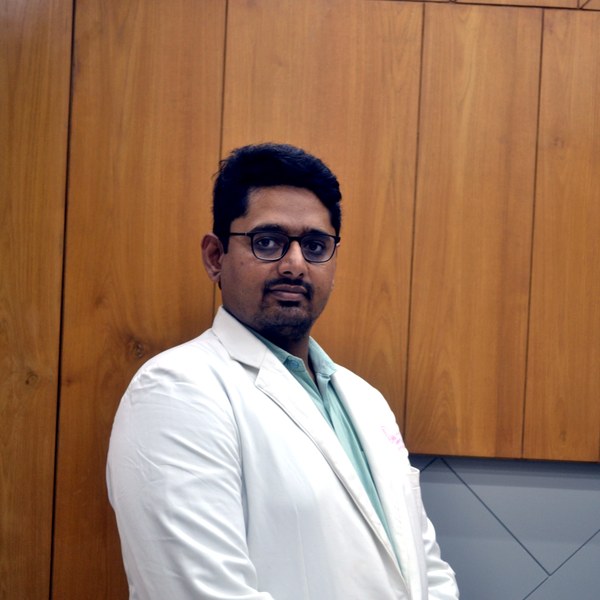
Dr Patel leads endometriosis diagnosis and surgery at Balaji Horizon with an evidence-based, ovarian-sparing philosophy aligned to ESHRE and ESGE — integrating pain, fertility and long-term disease control into a single plan, rather than treating the disease in isolation.
Imaging-led diagnosis, medical-first management, and precise surgery only when it is the right step — planned around your pain and fertility goals.
| Condition | What it is | Hallmark clues | Treatment focus |
|---|---|---|---|
| Endometriosis | Endometrial-like tissue outside the uterus | Period pain that disrupts life, deep pain with sex, cyclical bowel/bladder pain, sub-fertility | Individualised — medical, surgical, or IVF; fertility-first |
| Adenomyosis | Similar tissue within the uterine muscle | Heavy/flooding periods, an enlarged tender uterus; often coexists with endometriosis | Largely medical / fertility-focused; surgery rarely |
| PCOS | An endocrine-metabolic disorder | Irregular or absent periods, signs of excess androgens, metabolic features | Lifestyle, hormonal, metabolic, fertility planning |
| IBS | A functional bowel disorder | Bloating and bowel changes without a cyclical (period-linked) pattern | Dietary and gut-directed therapy |
Diagnostic-accuracy figures per Guerriero et al. / ISUOG IDEA consensus and ESHRE imaging guidance.
Dr. Priyadatt Patel
Senior Gynecologist · Advanced Laparoscopic Surgeon · IVF and Endometriosis Programme Lead
MS OBGyn · Pregnancy Care · Advanced Gynaecological Ultrasound · Fertility Preservation
ESHRE / ESGE / AAGL / ASRM guideline-aligned practice. 3D Karl Storz precision technique. Fertility-preservation-first philosophy. Evidence-based decisions, honest counselling, long-term outcomes orientation.
323, Satyamev Eminence, Beside Saptak Bungalows & AUDA Water Tank, Science City Road, Sola, Ahmedabad 380060
Open 24 hours (emergencies & labour) · OPD Mon–Sat 11:00–20:00 · +91 97234 31544
Naranpura, Ahmedabad
Mon–Sat 08:30–10:30 · +91 70460 02566