

IVF Cost in Ahmedabad — Understanding What You’re Paying For
IVF cost is one of the most opaque areas in reproductive medicine — and intentionally so by some clinics. At Balaji Horizon, we provide itemised, transparent quotes that show exactly what is included, what is optional, and what changes the price. This page explains the cost framework, not specific quotes — those are individualised at consultation based on your protocol, medications, and lab choices.
What Determines IVF Cost?
IVF is not one fixed package — it is a combination of services, each with its own cost. Your final price depends on six main variables.
Stimulation protocol
Drug type and dose. Recombinant FSH costs more than urinary preparations. Higher reserve → less medication. Lower reserve → may need more.
Lab procedures
Conventional IVF, ICSI, IMSI — each step adds cost. ICSI is roughly 15–25% extra over conventional fertilisation.
PGT (genetic testing)
PGT-A or PGT-M significantly add to cost — per-embryo biopsy and analysis. Recommended only when clinically indicated, not routinely.
Frozen vs fresh transfer
Freeze-all + FET adds vitrification and warming costs, but often outcomes are equivalent or better. Cycle-by-cycle decision.
Number of cycles
Cumulative success often comes across 2–3 cycles. Plan financially for the realistic likely path, not a single optimistic cycle.
Storage & future transfers
Annual cryostorage fee for surplus embryos. FET cycle costs less than a fresh retrieval — important for cumulative success.
What’s Typically Included
Base IVF cycle
Pre-cycle workup, stimulation monitoring, oocyte retrieval (theatre and short anaesthesia), embryology lab work (fertilisation, culture, blastocyst), fresh embryo transfer, basic luteal support medications, and beta-hCG with early viability scan.
Optional add-ons (priced separately)
ICSI · IMSI · PGT-A or PGT-M · assisted hatching · TESA/PESA · donor sperm/egg · surgical sperm retrieval · additional FET cycles · annual embryo storage. Each clearly itemised in your quote.
Medications (variable)
Gonadotropin injections are the single biggest variable cost. Drug brand, dose, and total days of stimulation all matter. We discuss generic vs branded options where clinically appropriate to optimise cost without compromising outcome.
How We Quote
Itemised written quote
Each line item shown — base cycle, medications (best-estimate), lab add-ons, OT charges, anaesthesia. No bundled obscurity.
Range, not single number
Medication costs are estimated as ranges based on baseline reserve — final actual usage may be slightly above or below estimate.
No upselling pressure
PGT, IMSI, and add-ons are recommended only when clinically appropriate. We will tell you when a procedure is unnecessary.
Cumulative planning
Budget for likely 2–3 cycles, not just 1. Counts FET costs and storage. Helps you plan financially for the realistic path.
IVF cost in Ahmedabad — the components
| Component | Note |
|---|---|
| Base cycle | Monitoring + retrieval + transfer |
| Medication | Varies with the dose needed |
| Add-ons | ICSI, PGT, freezing |
Our IVF practice follows international reproductive-medicine standards.
Frequently Asked Questions
Why don’t you list specific IVF prices on this page?
Because IVF cost depends on individual factors — your protocol, your medication needs, the lab procedures clinically appropriate for you, and whether PGT is indicated. A specific price quoted online would be misleading. Personalised quotes are given at consultation.
Does insurance cover IVF in India?
Most Indian health insurance policies do not cover IVF — though coverage is gradually improving. A few employer-sponsored policies include reproductive treatments. Check your specific policy for “infertility treatment” or “assisted reproduction” exclusions.
Are EMI / instalment options available?
Some medical loan and EMI options exist through partner financiers. We can discuss available options at consultation. Direct EMI arrangements vary by provider and credit profile.
Is cheap IVF a red flag?
Unusually low prices often hide undisclosed exclusions — medications quoted separately, ICSI counted extra, anaesthesia not included, storage fees hidden, or lower-quality lab. The total final cost matters, not the headline rate. Always demand an itemised quote and compare apples-to-apples.
What if my first cycle fails — do I pay full price again?
Subsequent cycles are priced individually. If embryos are frozen from your first cycle, FET cycles cost less than a fresh retrieval. We discuss the cumulative financial picture realistically at the outset.
Is fertility preservation (egg freezing) covered separately?
Yes. Egg freezing cycles are priced separately — typically less than a full IVF cycle because no fertilisation/culture/transfer is performed. Plus annual storage fees. See preservation guide →
Continue Reading
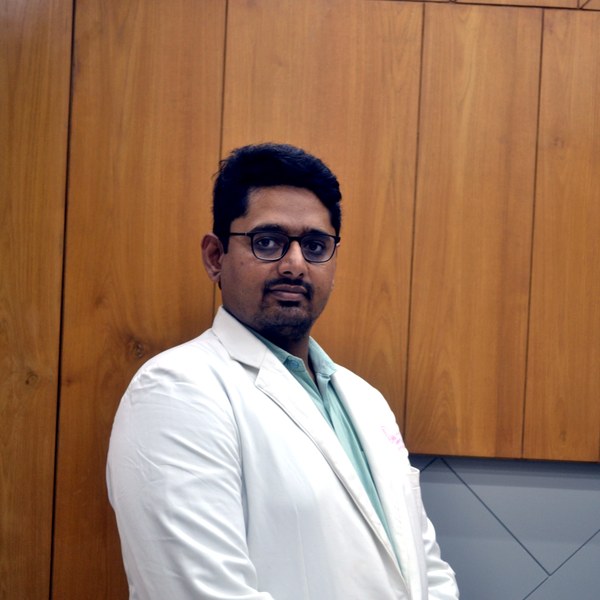
Dr Patel leads fertility care at Balaji Horizon, integrating reproductive surgery and IVF into a single plan — ethical, evidence-based and individualised, with realistic expectations and no overpromising of success.
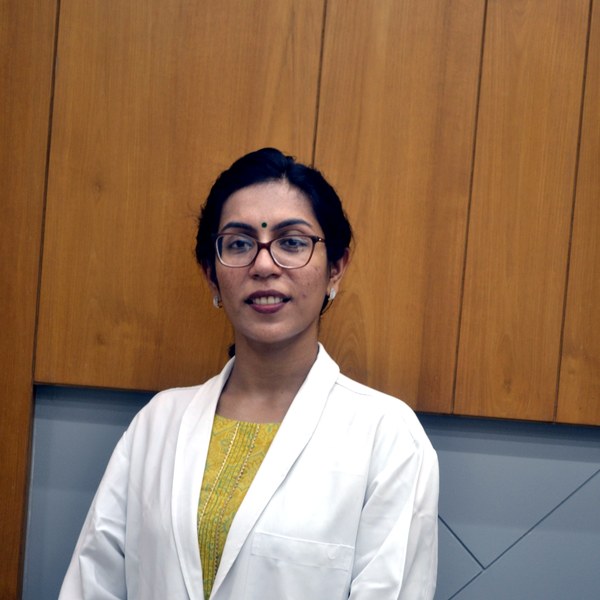
Individualised IVF and fertility planning with honest, evidence-based counselling — and realistic expectations from the very first consultation.
Dr. Priyadatt Patel
Senior Gynecologist · Advanced Laparoscopic Surgeon · IVF and Endometriosis Programme Lead
MS OBGyn · Pregnancy Care · Advanced Gynaecological Ultrasound · Fertility Preservation
ESHRE / ESGE / AAGL / ASRM guideline-aligned practice. 3D Karl Storz precision technique. Fertility-preservation-first philosophy. Evidence-based decisions, honest counselling, long-term outcomes orientation.
Science City Road, Ahmedabad 380060
Mon–Sat 11:00–20:00 · +91 97234 31544
Naranpura, Ahmedabad
Mon–Sat 08:30–10:30 · +91 70460 02566