
HOSPITALScience City Rd97234 31544
AEC CLINICNaranpura70460 02566
WhatsApp Hospital 11am-8pm | Clinic 8:30-10:30am

Balaji Horizon Women's Hospital

★ 5.0 · 282 Reviews · Reproductive Medicine

Female Infertility — Diagnosis & Treatment in Ahmedabad

Infertility is a clinical investigation, not a verdict. A structured, evidence-based workup identifies why conception is delayed — and only then does the right treatment plan become clear. Dr. Priyadatt Patel offers individualised diagnostic and treatment pathways under ESHRE and ASRM guidance, with the same long-term perspective that defines all of Balaji Horizon’s reproductive care.

When Is It Infertility?

The standard clinical definition: inability to conceive after 12 months of unprotected regular intercourse for women under 35, or 6 months for women 35 and over. These are evidence-based thresholds, not arbitrary numbers — they reflect the natural distribution of time-to-conception in fertile couples and the steeper age-related decline after 35.

Earlier evaluation is appropriate when there is a known risk factor: irregular cycles or absent ovulation, prior pelvic surgery, endometriosis, prior pelvic infection, severely low AMH for age, history of chemotherapy, recurrent miscarriage, or partner with known severe male factor. Don’t wait 12 months if any of these apply.

In India, approximately 10–15% of couples experience infertility at some point. The female partner is the sole identifiable factor in ~35%, male partner ~30%, both partners ~20%, and unexplained ~15%. This is why evaluation must always include both partners.

Structured Diagnostic Workup

A complete fertility workup follows a defined sequence. Skipping steps wastes cycles and money. Doing the wrong tests can be just as expensive as doing none.

1. Ovarian Reserve Assessment

AMH (anti-Müllerian hormone) — independent of cycle day. AFC (antral follicle count) on transvaginal ultrasound, day 2–3 of cycle. These two together give the best estimate of remaining ovarian reserve and likely response to stimulation. FSH may be ordered but is less reliable.

2. Ovulation Assessment

Menstrual history (cycle regularity), mid-luteal progesterone (day 21 of a 28-day cycle), and ultrasound follicular tracking when needed. PCOS workup if cycles are irregular — TSH, prolactin, androgens, fasting insulin.

3. Tubal Patency & Pelvic Anatomy

HSG (hysterosalpingogram) or HyCoSy (sono-hysterosalpingography) to check tubal patency and uterine cavity. Transvaginal ultrasound for fibroids, adenomyosis, endometriomas, hydrosalpinx. MRI in selected cases.

4. Uterine Cavity Assessment

Transvaginal ultrasound first; hysteroscopy when polyps, submucous fibroids, septum, or synechiae are suspected. Adenomyosis assessment via specialised ultrasound or MRI.

5. Endometriosis Suspicion

Targeted history (dysmenorrhoea, dyspareunia, dyschezia), clinical examination, and ultrasound mapping using IDEA consensus DIE protocols. Laparoscopy reserved for cases where it changes management.

6. Male Partner Evaluation

Semen analysis (counts, motility, morphology) — fundamental, not optional. Repeated if abnormal. DNA fragmentation index in selected cases. Hormonal and imaging workup when indicated. Male infertility guide →

The Major Causes of Female Infertility

Most causes fall into a small number of categories. Identifying which one applies to you is the foundation of any treatment plan.

Ovulatory disorders

PCOS (most common), hypothalamic dysfunction, premature ovarian insufficiency, hyperprolactinaemia, thyroid disorders. Many are treatable with structured ovulation induction.

Tubal factor

Bilateral tubal blockage, severe damage, hydrosalpinx, prior tubal surgery. Usually bypassed via IVF rather than tubal repair.

Endometriosis

Affects fertility through multiple mechanisms — anatomical, inflammatory, ovarian reserve. Sequencing surgery with IVF is critical. Endometriosis programme →

Uterine factors

Submucous fibroids, polyps, adhesions (Asherman), septum, adenomyosis. Most are treatable with hysteroscopic or laparoscopic surgery.

Diminished ovarian reserve

Low AMH, low AFC. May be age-related (after 35), prior surgery, prior chemotherapy, genetic, or autoimmune. Requires individualised IVF protocol and realistic counselling.

Age-related infertility

Oocyte quantity and quality both decline with age — accelerating after 35, steep after 40. Time-to-conception is the single most powerful prognostic factor.

Unexplained infertility

When workup is normal but conception does not occur. Often represents undiagnosed mild endometriosis, mild male factor, or oocyte quality issues. Empirical treatment ladder: lifestyle → IUI → IVF.

Recurrent pregnancy loss

≥2 consecutive losses requires specific workup — embryo karyotype, parental karyotype, thrombophilia screen, uterine assessment, immune evaluation in selected cases.

Meet Your Fertility Specialist

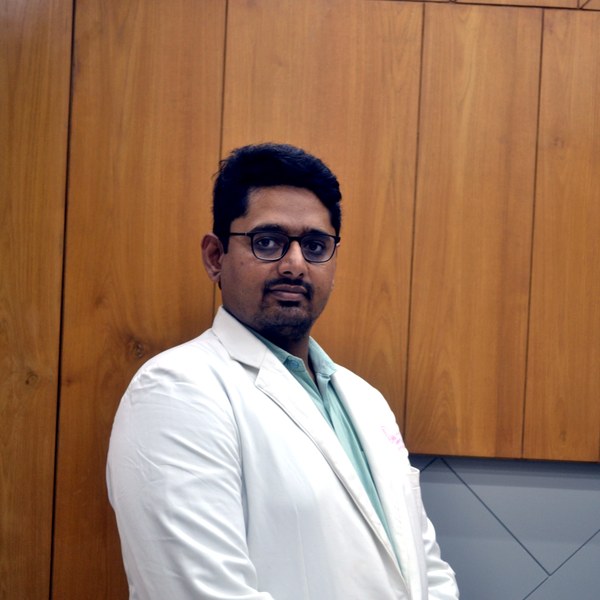
Dr. Priyadatt Patel — Diagnosis First, Treatment Second

Most couples who arrive at a fertility clinic are pushed toward IVF before a proper diagnosis is complete. Dr. Patel’s approach is different: the first job is to understand why conception is delayed, then choose the simplest effective treatment. IVF is recommended only when the workup demands it.

CredentialsSenior Gynaecologist · IVF Specialist · Advanced Laparoscopic Surgeon · Endometriosis Expert
Diagnostic DisciplineComplete workup before any treatment recommendation · evidence-based criteria · realistic counselling
Integrated PathwayLifestyle · ovulation induction · IUI · surgery · IVF — sequenced by clinical context, not by protocol
Complex CasesEndometriosis-related infertility · DOR · recurrent IVF failure · adenomyosis · PCOS-IVF coordination

“Infertility is rarely ‘unexplained’ — more often it is unfinished. A patient explanation requires a thorough investigation. We start there.” — Dr. Priyadatt Patel

Balaji Horizon Women’s HospitalSatyamev Eminence, Science City Road, Ahmedabad 380060
Mon–Sat · 11:00 AM – 8:00 PM · +91 97234 31544
Balaji Women’s Clinic (AEC)Vrundavan Enclave, 132 Ft Ring Rd, Naranpura, Ahmedabad 380013
Mon–Sat · 8:30 AM – 10:30 AM · +91 70460 02566

Treatment Pathway — From Simplest to Most Advanced

There is a clear evidence-based ladder. The right starting rung depends on age, diagnosis, ovarian reserve, prior history, and time pressure.

1. Lifestyle & Timing Optimisation

Weight optimisation (especially in PCOS), structured intercourse timing around ovulation, smoking and alcohol cessation, sleep, stress management, and Mediterranean-pattern dietary modification. Modest but real effect across the population.

2. Ovulation Induction

First-line for ovulatory disorders: letrozole (preferred for PCOS, ESHRE 2023), clomiphene citrate, or low-dose gonadotropins. Combined with structured timed intercourse. Monitored ultrasonographically to titrate dose and minimise multiple pregnancy.

3. Intrauterine Insemination (IUI)

Indicated for mild male factor, cervical factor, mild endometriosis, unexplained infertility, donor sperm cycles. Typically 3 cycles with ovulation induction; if no success, advance to IVF. IUI guide →

4. Reproductive Surgery

Laparoscopic correction of mechanical infertility — endometriosis excision, myomectomy, ovarian cystectomy, hydrosalpinx management, adhesiolysis, septum resection. Performed where surgery materially improves fertility outcome. Advanced laparoscopy →

5. In Vitro Fertilisation (IVF)

Indicated for tubal factor, severe male factor, advanced age, low ovarian reserve, endometriosis with fertility goals, failed simpler treatments. ICSI, PGT, FET added when specifically indicated. IVF programme →

6. Donor Gametes & Other Options

When own oocytes/sperm are not viable: donor eggs, donor sperm, or surrogacy (where legally applicable in India). Discussed transparently when clinical context warrants.

Choosing the Right Treatment

The same diagnosis can require different treatments for different women. Three variables dominate the choice:

Age

The most powerful determinant of treatment timeline. Younger patients have more cycles to try gentler treatments; older patients often need faster escalation.

Ovarian reserve

AMH and AFC dictate stimulation protocols and whether fertility preservation should precede treatment.

Cumulative cost & emotional load

Treatment ladder should respect both financial and emotional reserves. Endless cycles without progress are rarely the answer.

Frequently Asked Questions

How long should we try before seeing a fertility doctor?

12 months under 35; 6 months at 35 or over. Earlier if there are known risk factors — irregular cycles, prior pelvic surgery, endometriosis, severe male factor.

What is AMH and what does my value mean?

AMH estimates remaining ovarian reserve. Interpretation depends on age: a value of 1.5 ng/mL is low at 28 but adequate at 40. AMH does not predict natural fertility, only response to ovarian stimulation.

Do I really need IVF, or can simpler treatments work?

Many women conceive with ovulation induction, IUI, or appropriate surgery. IVF is for specific indications. A proper workup tells you which ladder rung is right for you. Do not start at the top.

Can I conceive after 40?

Yes, but biology is harder. Live birth per IVF cycle declines steeply after 40, and natural fertility is meaningfully reduced. Realistic counselling about own-egg vs donor-egg options is essential.

Will weight loss improve my fertility?

In PCOS and obesity, 5–10% weight loss often restores ovulation and meaningfully improves both natural conception and IVF response. The effect is real, evidence-supported, and time-efficient.

My periods are regular — does that mean my fertility is normal?

Not necessarily. Regular cycles suggest ovulation but don’t confirm tubal patency, uterine cavity normality, ovarian reserve, or absence of endometriosis. A full workup is still required after the appropriate waiting period.

Should both partners be evaluated?

Always. Male factor contributes to roughly half of all infertility cases. Evaluating only the woman wastes time and misses common causes.

What should I bring to my first fertility consultation?

Menstrual diary, prior ultrasound/imaging reports, any prior test results (AMH, hormones, semen analysis), prior treatment records, medical and surgical history, and a clear sense of your timeline and priorities.