

Fetal Heart Scan • 24–28 Weeks
Fetal Echocardiography — Dedicated Fetal Heart Assessment
Comprehensive fetal cardiac evaluation including 4-chamber view, outflow tracts, and RadiantFlow™ colour Doppler blood flow — performed at 24–28 weeks by an ISUOG-trained specialist. Science City, Ahmedabad.
What Is Fetal Echocardiography — and How Is It Different from a Routine Anomaly Scan?
A fetal echocardiogram is a dedicated, detailed assessment of the fetal heart using specialised ultrasound techniques including colour Doppler and spectral Doppler. It is fundamentally different — and significantly more comprehensive — than the cardiac views obtained during a routine anomaly scan.
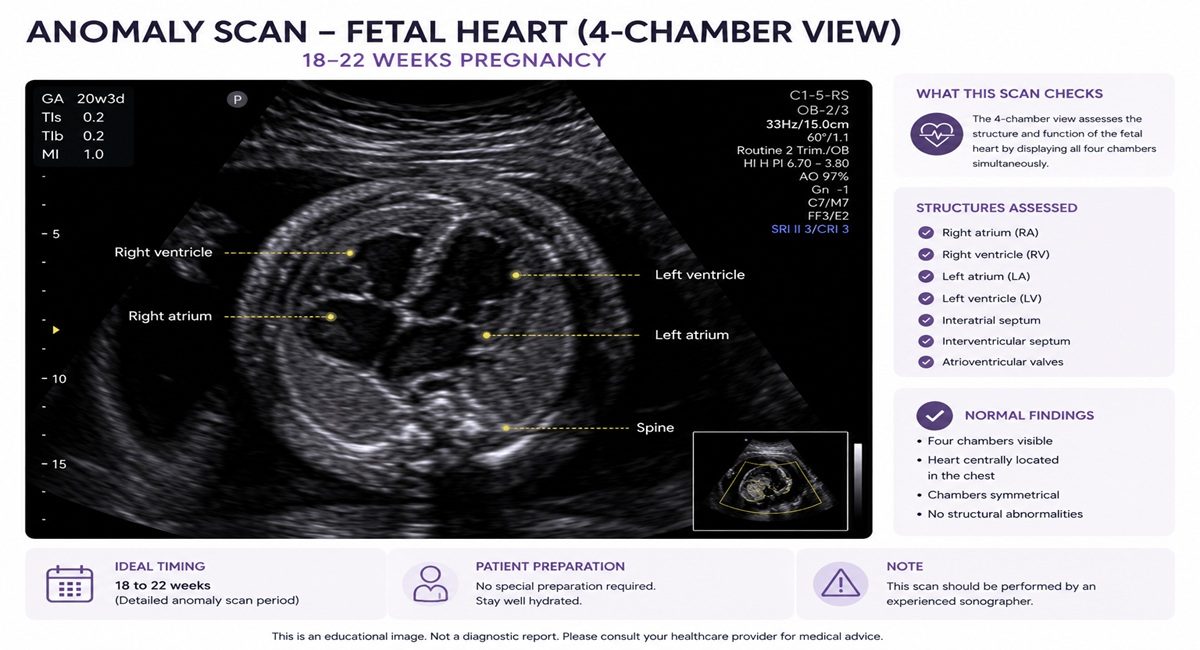
Routine Anomaly Scan (TIFFA) — Cardiac Views
- Basic 4-chamber view
- Presence/absence of outflow tracts
- Cardiac position and axis check
- Screening only — not diagnostic for all defects
Fetal Echocardiography — Complete Assessment
- 4-chamber view with quantitative measurements
- LVOT and RVOT — left and right ventricular outflow tracts
- Great vessel anatomy: aortic arch, ductus arteriosus, pulmonary artery
- Atrial and ventricular septal integrity
- All 4 valve morphology assessments
- Cardiac axis and situs assessment
- Pericardial effusion evaluation
- RadiantFlow™ Colour + spectral Doppler through all chambers
- Cardiac rhythm assessment
Optimal Timing — Why 24–28 Weeks?
The standard anomaly scan at 18–22 weeks includes basic cardiac screening. Dedicated fetal echocardiography is performed at 24–28 weeks because cardiac structures are more completely developed and technically accessible at this stage.
- Fetal cardiac structures are larger and more clearly visualised at 24–28 weeks
- Greater image resolution allows precise Doppler sampling through all valves and vessels
- Outflow tract views — technically demanding — are more consistently achievable
- Cardiac dimensions can be accurately measured against established growth curves
- Ductus arteriosus and aortic arch views are clearer in this window
- Cardiac rhythm assessment is more reliable with larger fetal heart structures
Who Should Have a Fetal Echocardiogram?
High-Risk Indications
- Family history of congenital heart disease (parent or previous sibling affected)
- Maternal pre-gestational diabetes mellitus
- Maternal teratogen exposure (medications, rubella infection)
- Suspected cardiac abnormality on anomaly scan (TIFFA)
- Abnormal NT ≥3.5 mm at first trimester scan
- Fetal chromosomal abnormality (Trisomy 21, 18, 13, 22q11)
- Fetal cardiac arrhythmia detected on Doppler
- Fetal hydrops on any scan
- Twin-to-twin transfusion syndrome (TTTS)
- Abnormal 3-vessel view or cardiac axis on anomaly scan
Can Be Offered to Any Pregnancy
- As part of comprehensive fetal medicine assessment
- When parents request detailed cardiac evaluation beyond routine screening
- Following any suboptimal cardiac views at routine anomaly scan
- Multiple pregnancy (twins or higher-order multiples)
- Maternal systemic lupus erythematosus (SLE) or anti-Ro/La antibodies
What Can Fetal Echocardiography Detect?
| Condition | Description |
|---|---|
| VSD — Ventricular Septal Defect | Hole in the wall between the lower chambers; most common congenital heart defect |
| ASD — Atrial Septal Defect | Hole in the wall between the upper chambers of the heart |
| Transposition of the Great Arteries | Aorta and pulmonary artery in switched positions — a critical CHD requiring immediate neonatal intervention |
| Tetralogy of Fallot | 4-component defect: VSD, right ventricular outflow tract obstruction, overriding aorta, and right ventricular hypertrophy |
| Coarctation of the Aorta | Narrowing of the main arterial arch supplying the body |
| Hypoplastic Left Heart Syndrome | Severely underdeveloped left-sided heart structures — requires staged neonatal surgical intervention |
| Pulmonary Stenosis / Atresia | Narrowed or absent pulmonary valve; variable severity |
| Ebstein Anomaly | Abnormal attachment and morphology of the tricuspid valve |
| Cardiac Arrhythmia | Abnormal rhythm patterns assessed by M-mode and Doppler; includes SVT and complete heart block |
Fetal Echocardiography at Balaji Horizon
- GE Voluson S10 Expert XD with RadiantFlow™ Colour Doppler: The S10 Expert XD at Science City provides the precise blood flow visualisation required for complete cardiac Doppler assessment — through valves, outflow tracts, and vessels.
- ISUOG-trained specialist: Dr. Mayank Chaudhary performs fetal echocardiography assessments to ISUOG and ISCA standards. All cardiac views are documented systematically.
- Detailed written report: Includes all cardiac views, Doppler flow measurements, cardiac dimensions, and rhythm assessment — provided at the same appointment.
- High-risk obstetric integration: Direct pathway to Dr. Priyadatt Patel for complex cases requiring obstetric planning or further specialist referral.
- Clear counselling: Findings are explained in plain language. For significant findings, paediatric cardiology referral and delivery planning at a centre with neonatal cardiac capability are arranged.
Images from our Voluson S10 Expert
Examples of the fetal cardiac imaging this system produces in everyday practice at Balaji Horizon:
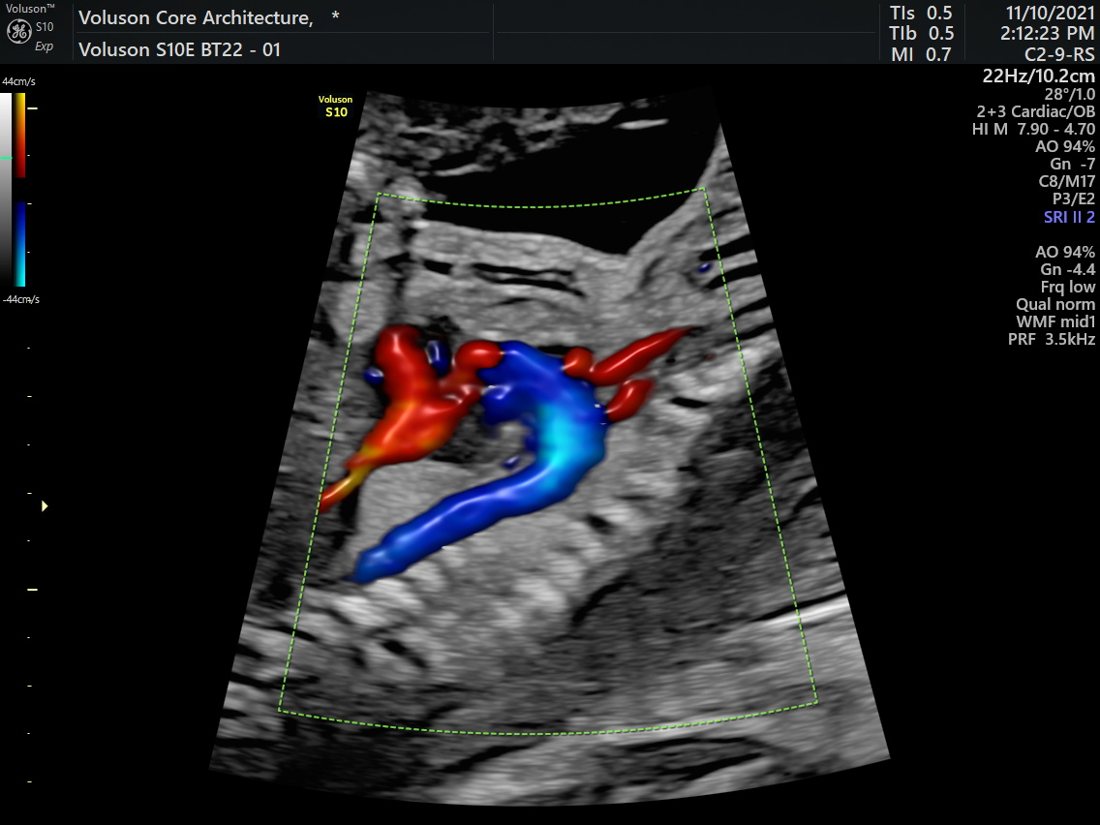
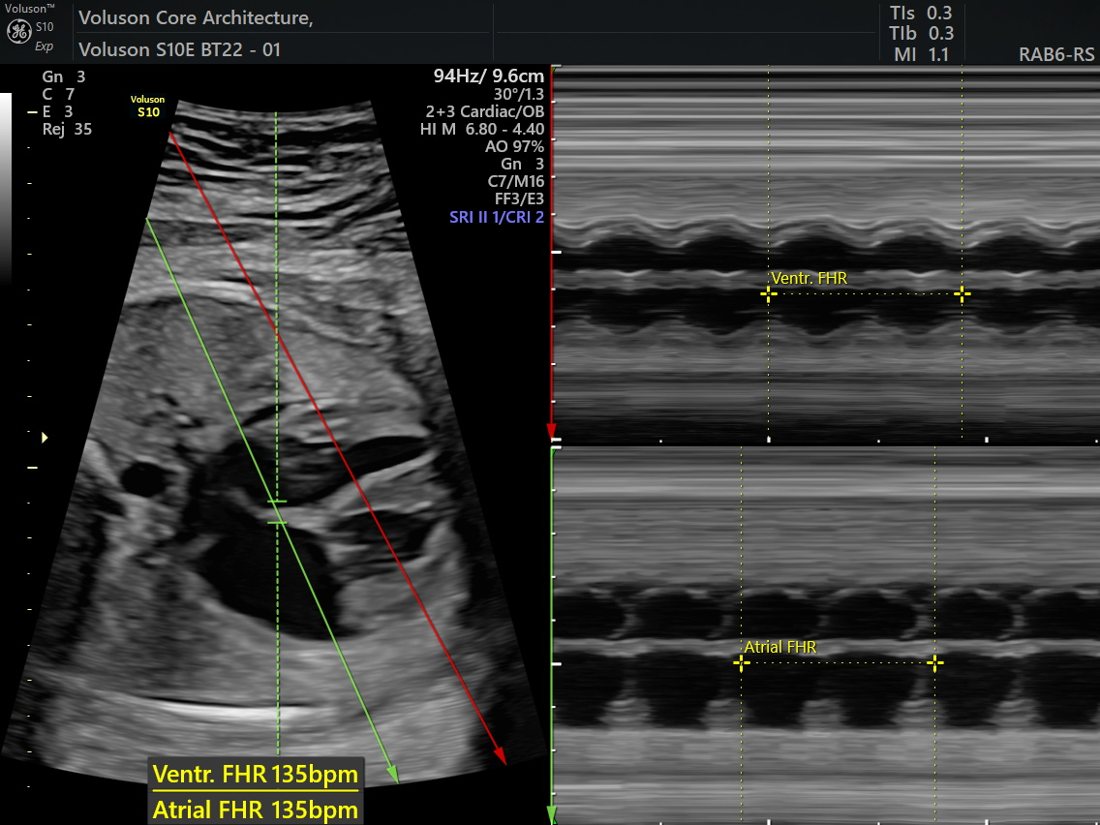
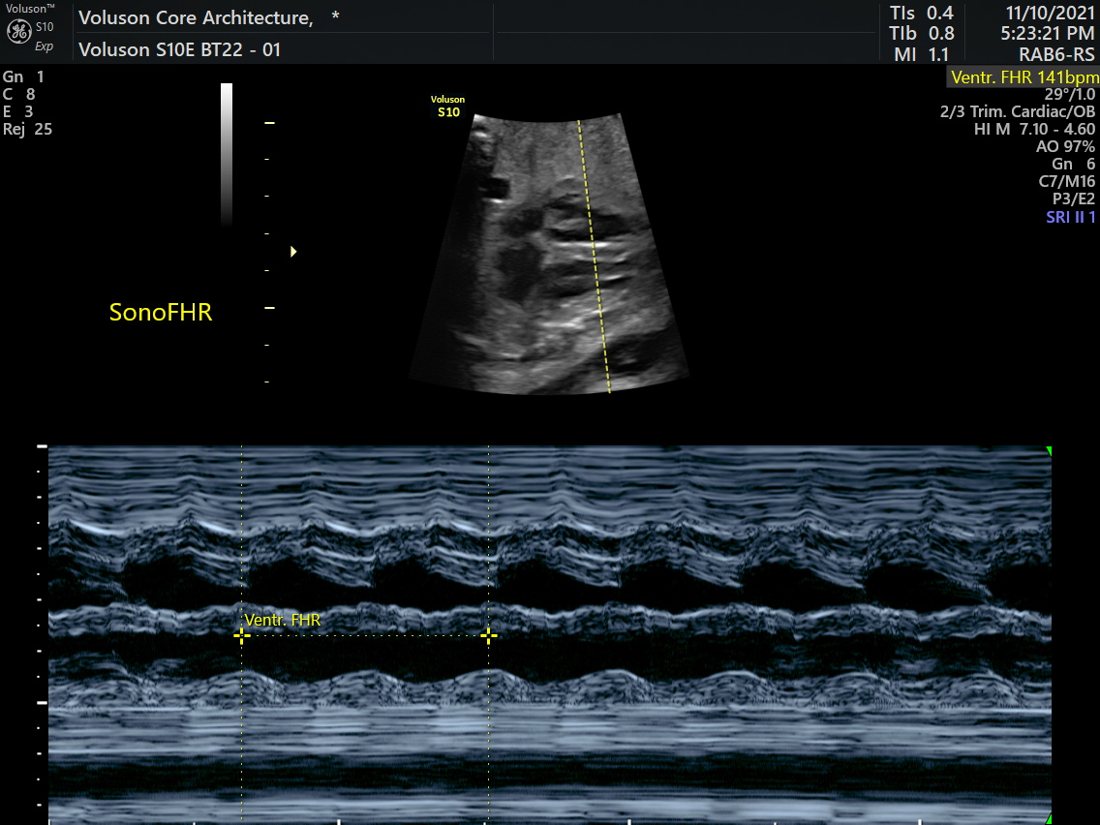
Actual images acquired on our GE Voluson™ S10 Expert. “GE”, “Voluson”, “HDlive” and “Radiantflow” are trademarks of GE HealthCare; shown with permission.
Your fetal-medicine specialist
Your fetal echocardiogram is performed and interpreted by a clinician dedicated to fetal medicine, with a direct pathway to senior gynaecologist Dr. Priyadatt Patel for any pregnancy that needs obstetric care.

Dr. Mayank Chaudhary
An ISUOG-trained fetal-medicine consultant who performs detailed fetal assessments to international standards.
Standards & further reading. Our protocol aligns with the ISUOG practice guidelines. For independent patient information see the NHS guide to pregnancy ultrasound.
Related fetal scans
Frequently Asked Questions
- Is fetal echo the same as the anomaly scan?No. The anomaly scan (TIFFA) at 18–22 weeks includes basic cardiac screening views. Fetal echocardiography at 24–28 weeks is a dedicated, detailed cardiac assessment using colour and spectral Doppler — a fundamentally different examination with significantly greater sensitivity for cardiac defects.
- Is fetal echocardiography safe?Yes. Diagnostic ultrasound with Doppler is safe for the fetus. GE Voluson systems are designed to comply with ALARA (As Low As Reasonably Achievable) principles for Doppler imaging, minimising acoustic exposure while delivering the image quality needed for accurate assessment.
- What happens if a heart defect is found?Findings are discussed with the patient and referring doctor during the appointment. For significant structural defects, a paediatric cardiology consultation is arranged. Delivery planning is coordinated to ensure birth occurs at a centre with appropriate neonatal cardiac care capability when required. Prenatal diagnosis allows parents time to prepare and medical teams to plan effectively.
- Can fetal echo detect all heart defects?Fetal echocardiography has a high detection rate for major structural defects but does not detect 100% of cardiac conditions. Small VSDs, minor valve abnormalities, and some functional conditions may only become apparent after birth. The examination is most reliable for major structural and outflow tract anomalies.
- I had the anomaly scan and everything looked fine. Do I still need fetal echo?If you are in a high-risk group (family history of CHD, maternal diabetes, abnormal NT, chromosomal findings), fetal echocardiography is recommended in addition to the anomaly scan — as the two examinations are not equivalent. For low-risk pregnancies with entirely normal anomaly scan cardiac views, fetal echo is optional. Your clinician can guide you based on your specific risk profile.
Book Fetal Echocardiography
The optimal window for fetal echocardiography is 24–28 weeks. Plan this scan as part of your second trimester fetal medicine assessment at Balaji Horizon Women’s Hospital.
Related scans:
Fetal echocardiography — also known as
Also known as: fetal echo · fetal heart scan. For who should consider a fetal echo and how heart screening fits the anomaly scan, see fetal heart screening.
Your fetal-medicine specialist
Fetal-medicine imaging at Balaji Horizon is led by Dr. Mayank Chaudhary, an ISUOG-trained fetal medicine specialist & sonologist — performing detailed anomaly (TIFFA) scanning, fetal echocardiography and high-risk pregnancy surveillance with the obstetric team. Meet the team →
Fetal echocardiography — frequently asked questions
What is a fetal echocardiogram?
When is a fetal echo usually performed?
Who should consider a fetal echo?
Can a fetal echo detect every heart problem?
What happens if a problem is found?
Reviewed by Dr. Priyadatt Patel, MBBS, MS (Obstetrics & Gynaecology). This information is general education and not a substitute for a personal consultation.
Dr. Priyadatt Patel
Senior Gynecologist · Advanced Laparoscopic Surgeon · IVF and Endometriosis Programme Lead
MS OBGyn · Pregnancy Care · Advanced Gynaecological Ultrasound · Fertility Preservation
ESHRE / ESGE / AAGL / ASRM guideline-aligned practice. 3D Karl Storz precision technique. Fertility-preservation-first philosophy. Evidence-based decisions, honest counselling, long-term outcomes orientation.
Science City Road, Ahmedabad 380060
Mon–Sat 11:00–20:00 · +91 97234 31544
Naranpura, Ahmedabad
Mon–Sat 08:30–10:30 · +91 70460 02566