

Invasive Prenatal Diagnostic Procedures — Amniocentesis & CVS
Ultrasound-guided diagnostic procedures for definitive chromosomal and genetic diagnosis — performed with precision by an ISUOG-trained fetal medicine specialist
Book a Consultation First
Call: +91 70460 02566 • Hospital: +91 97234 31544
Invasive Prenatal Testing — Why and When It Is Needed
Invasive prenatal procedures are performed when a definitive chromosomal or genetic diagnosis is required — as opposed to screening tests, which provide probabilities. They involve taking a sample of fetal or placental tissue under real-time ultrasound guidance, with laboratory analysis of the sample obtained.
The decision to proceed is always preceded by a formal counselling session. The indication must be clearly established, and the diagnostic question must be one that the specific procedure can actually answer.
Procedures Performed at Balaji Horizon
| Procedure | Timing | Sample | Purpose |
|---|---|---|---|
| CVS (Chorionic Villus Sampling) | 11–14 weeks | Placental villi | First trimester chromosomal diagnosis |
| Amniocentesis | 15–18 weeks | Amniotic fluid (fetal cells) | Second trimester chromosomal diagnosis |
| Cordocentesis | >18 weeks | Umbilical cord blood | Fetal blood analysis, rapid karyotype |
Common Clinical Indications
- High-risk combined first trimester screening result (>1:150)
- High-risk NIPT result — requires definitive confirmation before any management decision
- Abnormal nuchal translucency (≥3.5 mm), particularly with structural anomaly on scan
- Structural anomaly identified on anomaly scan
- Previous pregnancy affected by chromosomal abnormality
- Known parental chromosomal rearrangement
- Single gene disorder in family (thalassaemia, SMA, cystic fibrosis, sickle cell anaemia)
- Advanced maternal age with patient preference after counselling
Key principle: A positive screening test (including NIPT) provides a risk figure — not a diagnosis. A major clinical decision should never be based on screening alone. Invasive testing provides the definitive chromosomal result required.
CVS — First Trimester Diagnostic Testing (11–14 Weeks)
What Is CVS?
A small sample of chorionic villi (placental tissue) is obtained under continuous real-time ultrasound guidance. As the placenta shares the same chromosomal constitution as the fetus, CVS provides a definitive chromosomal diagnosis in the first trimester.
Route of Access
- Transabdominal (TA-CVS): Fine needle through the maternal abdomen — preferred route when placental position allows direct access
- Transcervical (TC-CVS): Flexible catheter through the cervix — used when a posterior fundal placenta makes the transabdominal approach technically difficult
Results Turnaround
- Rapid FISH: 48–72 hours (Trisomy 21, 18, 13, sex chromosomes)
- Full karyotype: 10–14 days
- Chromosomal microarray: 2–3 weeks
Key Advantage Over Amniocentesis
Results are available in the first trimester — allowing decision-making at an earlier gestation when management options are broader. This is the principal reason CVS is preferred when the gestational window permits.
Risk note: CVS-related pregnancy loss is approximately 0.5–1.0% above the background miscarriage rate at this gestation. This figure is operator-experience dependent and is lower in dedicated fetal medicine centres with established procedure volumes.
Amniocentesis — Second Trimester Diagnostic Testing (15–18 Weeks)
What Is Amniocentesis?
A fine needle is passed through the maternal abdomen under continuous real-time ultrasound guidance to withdraw a sample (approximately 15–20 ml) of amniotic fluid containing fetal cells. These cells are cultured for chromosomal analysis.
Amniocentesis is one of the most extensively studied obstetric procedures. In experienced hands, it carries a lower procedure-related loss rate than CVS and remains the most commonly performed invasive prenatal diagnostic test globally.
Technique at Balaji Horizon
- Performed under continuous real-time ultrasound guidance throughout
- Free-hand technique — real-time needle tip visualisation at all times
- Local anaesthetic applied to skin
- Outpatient procedure — no sedation required
- Duration: 20–30 minutes from preparation to completion
- Colour Doppler used to identify and avoid fetal and placental vessels
Results Turnaround
- QF-PCR / Rapid FISH: 48–72 hours (chromosomes 21, 18, 13, X, Y)
- Full karyotype: 14–21 days
- Chromosomal microarray: 2–3 weeks
- Specific gene mutation analysis: arranged per individual indication
Post-Procedure Instructions
- Rest for the remainder of the day following the procedure
- Avoid heavy lifting or vigorous physical activity for 48 hours
- Contact the unit immediately if: significant uterine cramping, fluid leakage, fever, or heavy bleeding
- Anti-D immunoglobulin administered post-procedure in Rh-negative women
Risk context: Modern studies with experienced operators report amniocentesis-related pregnancy loss of 0.1–0.2%. Rare additional complications include infection (<0.1%) and rhesus sensitisation (mitigated by anti-D administration in Rh-negative women).
Cordocentesis — Fetal Blood Sampling (Selected Cases)
What Is Cordocentesis?
Cordocentesis (percutaneous umbilical blood sampling — PUBS) involves ultrasound-guided sampling of fetal blood from the umbilical vein, typically at the placental cord insertion. It provides direct access to fetal blood for rapid analysis.
Indications (Selected Cases Only)
- Rapid fetal karyotype required after 20 weeks (results in 48 hours)
- Fetal anaemia assessment — alloimmune anaemia, parvovirus B19 hydrops
- Fetal platelet count in suspected alloimmune thrombocytopenia
- Intrauterine fetal transfusion in confirmed severe fetal anaemia
- Specific metabolic or infectious conditions requiring blood-based diagnosis
Cordocentesis is a technically more demanding procedure than amniocentesis and carries a higher procedure-related risk (approximately 0.5–2%, partly reflecting the background risk in the often-compromised fetuses for whom it is indicated). It is reserved for situations where the specific diagnostic or therapeutic question cannot be answered by amniocentesis.
Pre-Procedure Counselling — Non-Negotiable
All invasive procedures at Balaji Horizon are preceded by a formal counselling session. This is not a formality — it is a clinically essential component of safe and ethical invasive prenatal testing.
What Counselling Covers
- The specific indication for the procedure and whether it is appropriate
- The diagnostic question being asked — and whether this test can answer it
- All procedural options and their individual risk–benefit profiles
- Results timeline, what results will be available, and what they mean clinically
- Management options if an abnormal result is returned — presented without direction
- Right to decline testing at any stage without impact on care
- Written informed consent with adequate reflection time
Policy: No invasive procedure is performed on the same day as the initial counselling session unless there is a specific clinical urgency and patient preference is clearly documented. A minimum reflection period is provided as standard.
Precision Ultrasound Guidance — GE Voluson Technology
All invasive procedures at Balaji Horizon are performed under real-time continuous ultrasound guidance using the GE Voluson S10 Expert XD at our Science City facility.
- High-resolution real-time needle tip visualisation throughout the procedure
- Colour Doppler mapping to identify and avoid fetal and placental vessels before needle insertion
- Continuous fetal cardiac activity monitoring during the procedure
- Optimal needle entry point selected based on placental mapping and fetal position
- Anti-D immunoglobulin administered post-procedure in all Rh-negative women
Your fetal-medicine specialist
Your invasive procedure is performed under continuous, real-time ultrasound guidance by a clinician dedicated to fetal medicine, with a direct pathway to senior gynaecologist Dr. Priyadatt Patel for any pregnancy that needs obstetric care.
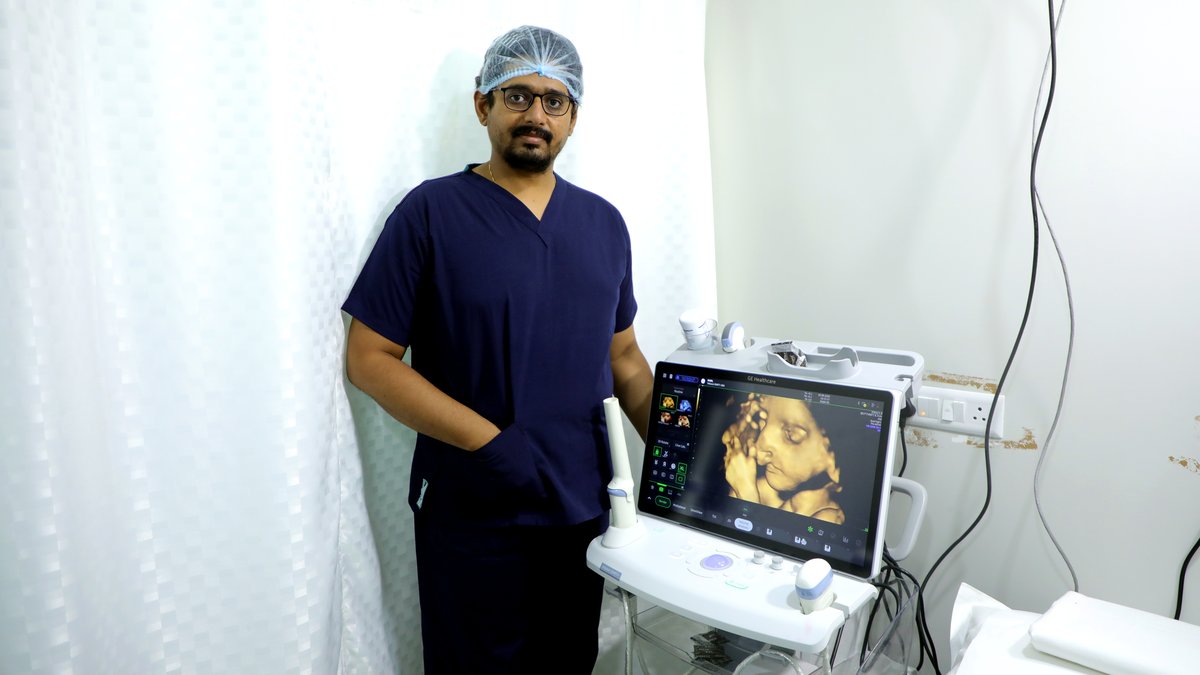

Dr. Mayank Chaudhary
An ISUOG-trained fetal-medicine consultant who performs amniocentesis, CVS and fetal blood sampling under continuous, precise ultrasound guidance.
Standards & further reading. Our approach aligns with the RCOG patient leaflet on amniocentesis & CVS and the ISUOG guidelines.
Related fetal-medicine pages
AmniocentesisCVSCVS vs AmniocentesisNIPTPrenatal GeneticsNT ScanAnomaly Scan (TIFFA)Fetal MedicinePregnancy Care
Frequently Asked Questions
Is amniocentesis painful?
Most patients experience mild pressure or brief sharp discomfort. Local anaesthetic is applied to the skin before the procedure. The actual needle insertion takes 3–5 minutes once preparations are complete. Most patients describe the experience as more manageable than they anticipated.
Can I drive home after amniocentesis?
Having a companion to drive home is strongly recommended. You should plan to rest for the remainder of the day. Most patients can resume normal routine activities within 48 hours, provided there are no symptoms of concern.
What happens if the result shows a chromosomal abnormality?
Results are reviewed in a dedicated counselling session — they are never given by telephone or without adequate support present. All management options are discussed in detail. No decision is directed — the choice remains entirely with the patient and her partner, with adequate time to reflect.
What is the difference between NIPT and amniocentesis?
NIPT analyses cell-free fetal DNA in maternal blood. It is non-invasive and highly sensitive but provides a probability, not a definitive result. Amniocentesis samples fetal cells directly and provides a definitive chromosomal result. A high-risk NIPT result always requires amniocentesis confirmation before any major clinical or personal decision is made.
Can a normal amniocentesis miss genetic conditions?
Standard karyotype detects large chromosomal abnormalities (aneuploidies and visible rearrangements). Chromosomal microarray additionally detects small copy number variants not visible on conventional karyotype. Neither test detects single gene disorders unless specifically analysed. Approximately 50% of fetuses with significant structural anomalies have a normal karyotype — microarray is recommended in this setting.
Is there an age cutoff for these procedures?
There is no age limit. Invasive testing is offered to any woman with an appropriate clinical indication, regardless of maternal age. The decision is based on the specific diagnostic question and individual clinical circumstances — not age alone.
Book a Fetal Medicine Consultation
The first step for any invasive procedure is a consultation and counselling session. All procedures require a formal pre-procedure assessment before scheduling.
Dr. Priyadatt Patel
Senior Gynecologist · Advanced Laparoscopic Surgeon · IVF and Endometriosis Programme Lead
MS OBGyn · Pregnancy Care · Advanced Gynaecological Ultrasound · Fertility Preservation
ESHRE / ESGE / AAGL / ASRM guideline-aligned practice. 3D Karl Storz precision technique. Fertility-preservation-first philosophy. Evidence-based decisions, honest counselling, long-term outcomes orientation.
Science City Road, Ahmedabad 380060
Mon–Sat 11:00–20:00 · +91 97234 31544
Naranpura, Ahmedabad
Mon–Sat 08:30–10:30 · +91 70460 02566