
Fetal medicine · Invasive testing
Chorionic villus sampling versus amniocentesis — what to know before deciding
In short
CVS samples placental tissue from about 11 to 14 weeks; amniocentesis samples amniotic fluid from about 15 weeks. Both give a diagnostic answer rather than a chance, and both carry a small procedure-related risk. The choice is usually decided by how many weeks pregnant you are. Fetal sex is neither determined nor disclosed, as per the PC-PNDT Act.
Chorionic villus sampling (CVS) and amniocentesis are the two invasive prenatal tests used when genetic information about the fetus is needed. Each samples a different tissue at a different gestational age and carries its own small procedural risks. This page describes both, when each is appropriate, what they can and cannot test for, and how the consent conversation is structured.
When invasive testing is offered
- High-risk result on combined first-trimester screening or NIPT
- Family history of a known monogenic disorder where testing is available
- Family history of a chromosomal rearrangement
- Anomaly identified on ultrasound where chromosomal explanation is being sought
- Parental balanced translocation
- Maternal request after structured counselling
Invasive testing is never imposed. It is a choice, made after the couple understands what it does and does not tell them.
CVS — chorionic villus sampling
- Gestation window: typically 11–13+6 weeks
- Tissue: chorionic villi (placental tissue of fetal origin)
- Approach: transabdominal or transcervical, under continuous ultrasound guidance
- Procedure risk: miscarriage risk in expert hands is approximately 0.1–0.5 per cent above background
- Result time: rapid result (QF-PCR for common aneuploidies) within 2–3 days; full karyotype or microarray within 2–3 weeks
- Limitation: confined placental mosaicism may give a result that does not reflect the fetus itself
Amniocentesis
- Gestation window: typically 16 weeks onwards
- Tissue: amniotic fluid containing fetal cells
- Approach: transabdominal, under continuous ultrasound guidance
- Procedure risk: miscarriage risk in expert hands is approximately 0.1–0.3 per cent above background
- Result time: rapid result (QF-PCR) within 2–3 days; full karyotype within 2–3 weeks; microarray within 2–4 weeks
- Advantage: directly samples fetal cells; no confined placental mosaicism issue
Choosing between the two
- CVS is earlier and gives earlier results — useful when timing matters (later termination is more complex)
- Amniocentesis is slightly lower-risk in some series and avoids the confined placental mosaicism issue
- If the indication arises after 14 weeks, amniocentesis is usually the only option
- Couples sometimes prefer earlier diagnosis; others prefer the lower-risk procedure
- The conversation respects the couple’s values
What the tests can detect
- Common aneuploidies (trisomies 13, 18, 21; sex chromosome anomalies) — via QF-PCR or FISH within days
- Full karyotype (numerical and major structural chromosomal abnormalities)
- Chromosomal microarray (sub-microscopic deletions and duplications)
- Specific monogenic disorders if a known parental mutation is being tested
- Whole exome sequencing in selected research/clinical contexts
What the tests cannot detect
- Many structural anomalies — ultrasound is the imaging tool for these
- Polygenic conditions (most birth defects in healthy-couple pregnancies)
- Late-onset adult disease risk
- Mosaicism that is below the threshold of the technique used
- Functional or behavioural outcomes
The consent conversation
Consent is taken without time pressure. The conversation covers: the indication, what the test will and will not tell, the procedural risk, the time to results, what the couple would do with a result (this matters because it shapes the test choice), the alternative of accepting screening risk without invasive confirmation, and the option of further imaging if anomaly is the concern.
Aftercare
- Light activity restriction for 24 hours post-procedure
- Anti-D prophylaxis where indicated
- Awareness of pain, bleeding, or amniotic fluid leak as reasons to call
- Follow-up appointment to discuss results
- Bereavement and counselling support if results indicate a difficult decision
When to refer
- High-risk combined first-trimester screening result
- High-risk NIPT result — with discussion that confirmation by CVS or amniocentesis remains standard before any major decision
- Anomaly identified on routine scan
- Family history requiring fetal genetic information
Guidelines we follow on this topic
- ISUOG Practice Guideline on Invasive Procedures
- RCOG Green-top on Amniocentesis and CVS
- SMFM Consult Series on Invasive Testing
Related reading
Chorionic villus sampling (10-13 weeks) and amniocentesis (15+ weeks) carry similar procedure-related miscarriage rates of approximately 0.1-0.3% when performed by experienced operators. Counselling should cover timing, accuracy, and recovery.
CONTINUE READING
Explore the Fetal Medicine Programme
CVS versus Amniocentesis is one element of the broader fetal medicine programme. The main fetal medicine pillar covers the complete pregnancy ultrasound schedule, anomaly screening, and Doppler protocols.
Your fetal-medicine specialist
Both procedures are performed under continuous ultrasound guidance by a clinician dedicated to fetal medicine, with a direct pathway to senior gynaecologist Dr. Priyadatt Patel for any pregnancy that needs obstetric care.
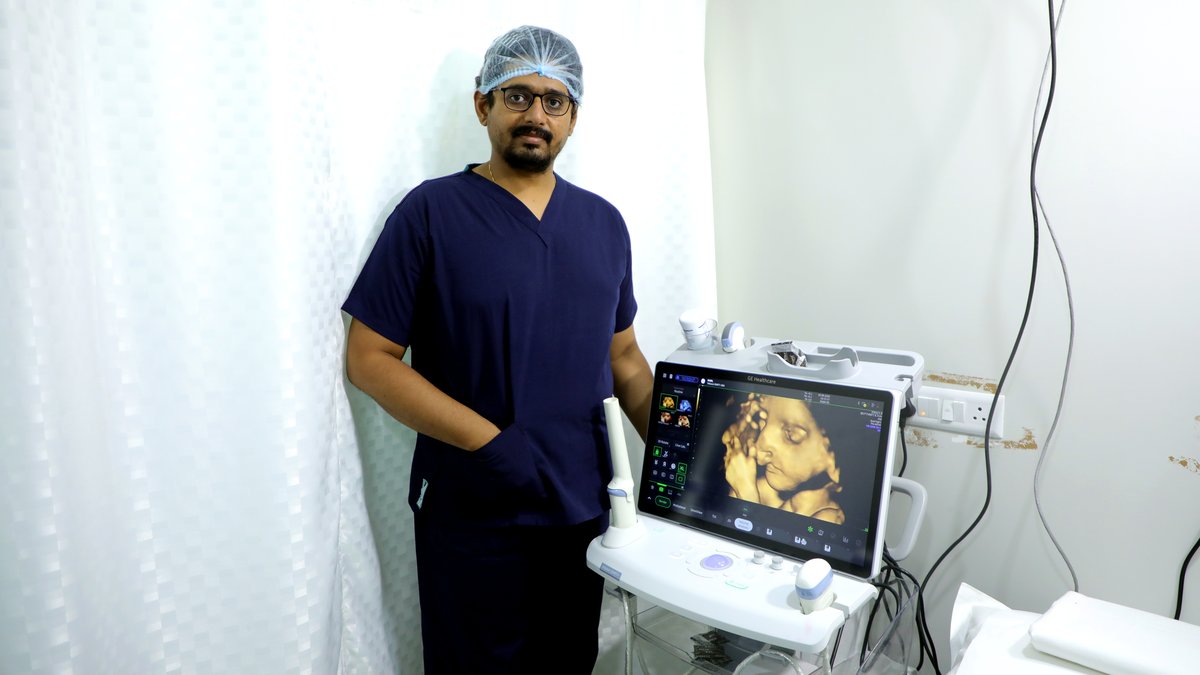

Dr. Mayank Chaudhary
An ISUOG-trained fetal-medicine consultant who performs both CVS and amniocentesis under continuous ultrasound guidance.
Standards & further reading. Our approach aligns with the RCOG amniocentesis & CVS leaflet and the ISUOG guidelines.
Related fetal-medicine pages
NT ScanAnomaly Scan (TIFFA)Doppler ScanNIPTPrenatal GeneticsAmniocentesisCVSFetal MedicinePregnancy Care
Dr. Priyadatt Patel
Senior Gynecologist · Advanced Laparoscopic Surgeon · IVF and Endometriosis Programme Lead
MS OBGyn · Pregnancy Care · Advanced Gynaecological Ultrasound · Fertility Preservation
ESHRE / ESGE / AAGL / ASRM guideline-aligned practice. 3D Karl Storz precision technique. Fertility-preservation-first philosophy. Evidence-based decisions, honest counselling, long-term outcomes orientation.
323, Satyamev Eminence, Beside Saptak Bungalows & AUDA Water Tank, Science City Road, Sola, Ahmedabad 380060
Open 24 hours (emergencies & labour) · OPD Mon–Sat 11:00–20:00 · +91 97234 31544
Naranpura, Ahmedabad
Mon–Sat 08:30–10:30 · +91 70460 02566