
NIPT – Non-Invasive Prenatal Testing
In short
NIPT analyses fragments of placental DNA in the mother’s blood from about 10 weeks. It screens for the common chromosomal trisomies with a high detection rate, but it remains a screening test: a high-chance result is confirmed by CVS or amniocentesis before any decision is made. Fetal sex is neither determined nor disclosed, as per the PC-PNDT Act.
A blood test that analyses cell-free fetal DNA in maternal circulation to screen for trisomies 21, 18, 13 and sex chromosome aneuploidies from 10 weeks of pregnancy.
Cell-free fetal DNA analysis
From around 10 weeks, fragments of placental DNA circulate in maternal blood. NIPT analyses this material to detect chromosomal abnormalities. Detection rates exceed 99 percent for Down syndrome with very low false positive rates.
Standard NIPT panel
Standard NIPT screens for trisomies 21, 18, 13 and sex chromosome conditions (Turner, Klinefelter, XYY, XXX). Expanded panels test for additional microdeletions but with progressively reducing positive predictive value.
What NIPT does not do
- Screens chromosomal conditions only – does not detect structural anomalies
- Is a screening test, not diagnostic – positive results need CVS or amniocentesis confirmation
- Can be inconclusive in cases of low fetal fraction
- Does not replace ultrasound scanning for structural assessment
Your fetal-medicine specialist
Your screening pathway is led by a clinician dedicated to fetal medicine, with a direct pathway to senior gynaecologist Dr. Priyadatt Patel for any pregnancy that needs obstetric care.
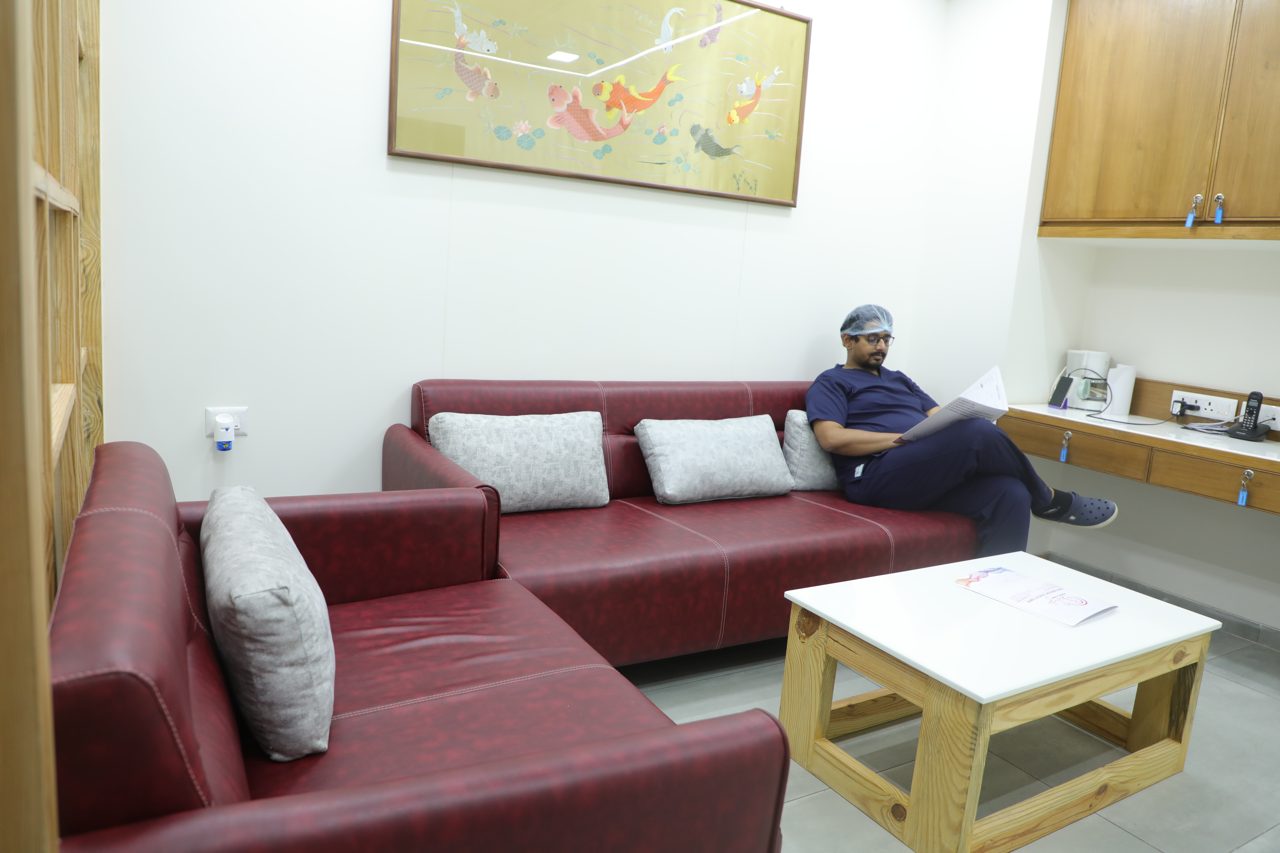

Dr. Mayank Chaudhary
An ISUOG-trained fetal-medicine consultant who guides NIPT and screening choices and explains results clearly so you can decide with confidence.
Standards & further reading. Our approach aligns with the NHS antenatal screening and the ISUOG guidelines.
Related fetal-medicine pages
NT ScanAnomaly Scan (TIFFA)Doppler ScanPrenatal GeneticsAmniocentesisCVSCVS vs AmniocentesisFetal MedicinePregnancy Care
Frequently asked
NIPT — what it is, and the one thing to remember
Non-invasive prenatal testing (NIPT) analyses tiny fragments of placental DNA in a maternal blood sample to estimate the chance of the common chromosomal conditions, chiefly Down syndrome. It is safe, can be done from 10 weeks, and is highly sensitive — but the one thing to remember is that it is a screening test, not a diagnosis.
Accuracy and its limits
NIPT detects the great majority of affected pregnancies for the main trisomies, with a low false-positive rate. However, a “high-chance” result must be confirmed by a diagnostic test (CVS or amniocentesis) before any irreversible decision, and NIPT does not screen for every condition or replace the anomaly scan.
Who it suits
NIPT is a good first-line option for many women, and particularly useful where an invasive test is best avoided unless truly necessary. Some panels also screen for additional conditions — we explain exactly what your chosen panel does and does not cover. Fetal sex is neither determined nor disclosed, as per the PC-PNDT Act.
Our approach
Screening is always your choice. We give balanced, non-directive counselling on what a result means and what the next step would be, so the decision reflects your values rather than pressure.
NIPT — also known as
Also known as: NIPT · non-invasive prenatal test · NIPT test in Ahmedabad · cell-free DNA screening. For how NIPT compares with the double marker test, see NIPT vs double marker test. NIPT is a screening test that complements the NT scan and the anomaly (TIFFA) scan.
Dr. Priyadatt Patel
Senior Gynecologist · Advanced Laparoscopic Surgeon · IVF and Endometriosis Programme Lead
MS OBGyn · Pregnancy Care · Advanced Gynaecological Ultrasound · Fertility Preservation
ESHRE / ESGE / AAGL / ASRM guideline-aligned practice. 3D Karl Storz precision technique. Fertility-preservation-first philosophy. Evidence-based decisions, honest counselling, long-term outcomes orientation.
323, Satyamev Eminence, Beside Saptak Bungalows & AUDA Water Tank, Science City Road, Sola, Ahmedabad 380060
Open 24 hours (emergencies & labour) · OPD Mon–Sat 11:00–20:00 · +91 97234 31544
Naranpura, Ahmedabad
Mon–Sat 08:30–10:30 · +91 70460 02566