
Laparoscopic Adhesiolysis
Surgical division of pelvic and abdominal adhesions that cause chronic pain, infertility, or bowel obstruction.
Common origins
Previous surgery, infections (PID, appendicitis), endometriosis, and inflammatory conditions. Adhesions can distort anatomy and cause pain, infertility, or bowel obstruction.
When adhesiolysis helps
Documented chronic pelvic pain with anatomical distortion, infertility with tubal adhesions, recurrent bowel obstruction, and severe dyspareunia. Adhesiolysis without clear indication often does not improve symptoms.
Realistic expectations
Symptom improvement in 60-80 percent of carefully selected patients. Recurrence of adhesions occurs in 30-50 percent. Anti-adhesive barriers may reduce recurrence rates. Realistic counselling is essential.
Is this page relevant to you?
This page is for women with pelvic adhesions — scar tissue from previous surgery, infection, or endometriosis — who are considering whether an operation to release them will actually help. The honest answer is: sometimes, and sometimes not. This page explains how we tell the difference.
Do the adhesions explain your symptoms?
Adhesions are common and do not always cause symptoms. Surgery to divide them (adhesiolysis) for chronic pain has a variable benefit, and adhesions can re-form afterwards. For that reason we do not operate simply because adhesions are seen on a scan or at a previous operation; we first make a careful, often multidisciplinary, assessment of whether they are genuinely responsible for your pain.
Clear indications for adhesiolysis
Adhesiolysis is clearly worthwhile in specific situations: bowel obstruction from adhesions (which needs prompt assessment), adhesions that distort pelvic anatomy and affect fertility, and dense adhesions that are convincingly the source of symptoms. In these cases, carefully restoring normal anatomy can make a real difference.
What laparoscopic adhesiolysis involves
Through keyhole incisions, adhesions are divided with precise sharp or energy dissection, freeing organs and restoring anatomy while protecting bowel, bladder and ureters. Meticulous technique and gentle tissue handling are used to reduce the chance of new adhesions forming. Where appropriate, anti-adhesion measures are considered.
Recovery after adhesiolysis
Most patients go home the same day or after one night, with light activity returning within a few days. Recovery depends on how extensive the adhesions were. We provide individualised guidance and a clear point of contact.
Guidelines we follow
- ESGE consensus on operative laparoscopy and adhesion prevention
- AAGL guidance on adhesiolysis
- RCOG guidance on chronic pelvic pain assessment
Laparoscopic adhesiolysis
| Aspect | Detail |
|---|---|
| What it does | Divides adhesions / scar tissue |
| For | Pain, infertility, obstruction |
| Note | Adhesions can recur |
Frequently asked
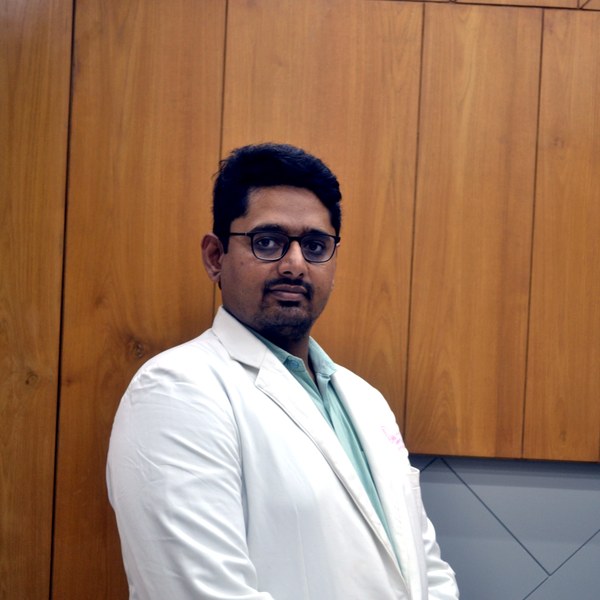
Dr Patel performs advanced minimal-access (laparoscopic and hysteroscopic) surgery at Balaji Horizon with a precision, organ- and fertility-sparing philosophy — operating when it is clearly indicated, and offering conservative options when it is not.
Minimal-access, organ-sparing surgery and evidence-based gynaecology — with a clear, honest plan built around your priorities.
Book a consultationRisks, realistic expectations & recovery
Adhesiolysis divides scar-tissue bands (adhesions) that form after previous surgery, infection or endometriosis and can tether organs together. It is considered for pain, for infertility caused by distorted tubo-ovarian anatomy, or for bowel obstruction.
An honest word on expectations
We are candid about the evidence: for chronic pelvic pain alone, dividing adhesions does not reliably relieve pain, and adhesions can re-form after surgery. We therefore recommend adhesiolysis when there is a clear mechanical problem to solve, and we set realistic expectations rather than promising a cure.
Possible risks
Because adhesions distort normal anatomy, the main risks are injury to bowel, bladder or blood vessels during dissection. Operating laparoscopically with meticulous, plane-by-plane dissection — and, where helpful, an anti-adhesion barrier — reduces both the risk and the chance of re-formation.
Recovery
Recovery depends on how extensive the adhesions are; most women return to normal activity within a week or two after straightforward laparoscopic adhesiolysis. We discuss what we expect to find and achieve before surgery, so the plan is shared.
Are pelvic adhesions the problem? — an honest orientation
Adhesions do not always cause symptoms, and surgery for them is selective. Educational only — not a diagnosis.
This interactive guide is educational and does not replace a clinical assessment or imaging review. It cannot diagnose your condition. Please discuss your situation with Dr. Priyadatt Patel at Balaji Horizon Women’s Hospital.
Related: When persistent or recurring pelvic pain is part of the picture, our Chronic Pelvic Pain Specialist in Ahmedabad explains the common causes, how the problem is evaluated, and the evidence-based treatment options.
Dr. Priyadatt Patel
Senior Gynecologist · Advanced Laparoscopic Surgeon · IVF and Endometriosis Programme Lead
MS OBGyn · Pregnancy Care · Advanced Gynaecological Ultrasound · Fertility Preservation
ESHRE / ESGE / AAGL / ASRM guideline-aligned practice. 3D Karl Storz precision technique. Fertility-preservation-first philosophy. Evidence-based decisions, honest counselling, long-term outcomes orientation.
323, Satyamev Eminence, Beside Saptak Bungalows & AUDA Water Tank, Science City Road, Sola, Ahmedabad 380060
Open 24 hours (emergencies & labour) · OPD Mon–Sat 11:00–20:00 · +91 97234 31544
Naranpura, Ahmedabad
Mon–Sat 08:30–10:30 · +91 70460 02566