
Laparoscopic Ovarian Cystectomy
Removal of ovarian cysts while preserving the ovary – the fertility-preserving approach for benign ovarian pathology.
Cystectomy vs observation
Persistent simple cysts over 6 cm, complex cysts with suspicious features, cysts causing pain or torsion, suspected endometriomas, or dermoid cysts (mature teratomas). A cyst that ruptures or twists is a different situation entirely — the emergency signs of a ruptured or twisted cyst covers what should not wait. Cysts are also routinely confused with fibroids, which fibroids and ovarian cysts separates.
Ovarian preservation
Stripping of the cyst wall with preservation of healthy ovarian cortex, careful haemostasis using minimal coagulation to preserve follicles, and specimen retrieval in protective bags to prevent peritoneal spillage.
Endometrioma and ovarian reserve
For endometriomas, the balance between thorough excision and ovarian reserve preservation matters. We use precise dissection, minimal energy use on the cortex, and consider AMH before and after surgery.
Is this page relevant to you?
This page is for women with an ovarian cyst who are weighing whether it needs surgery, and who want any operation to spare the ovary and protect their fertility. Many cysts never need surgery at all; the sections below explain how we decide, and how the operation is done when it is genuinely needed.
Working out which cysts actually need surgery
The first question is rarely “which operation?” but “does this cyst need treating at all?” We characterise the cyst on ultrasound — simple or complex, its size, and features that raise or lower concern — using structured risk assessment (IOTA/O-RADS), and we check ovarian reserve (AMH) where future fertility matters. Functional cysts commonly resolve on their own and are simply monitored; surgery is reserved for cysts that are large, complex, growing, symptomatic, or carry a meaningful risk. Which cysts meet that bar, and which are safe to monitor, is set out in ovarian cyst: when to watch and when to operate.
Ovary-sparing cystectomy, step by step
The technique is built around protecting healthy ovary. The cyst wall is carefully stripped from its capsule with minimal use of coagulation, because over-coagulation is what reduces ovarian reserve; the cyst is removed in a contained bag to avoid spillage. For endometriomas (chocolate cysts) this careful, reserve-sparing technique matters most, and the decision to operate at all is weighed against the impact on AMH and your fertility timeline.
Recovery after cystectomy
Laparoscopic cystectomy is usually a day-care procedure or a single overnight stay. Light activity returns within five to seven days, and full activity, exercise and intercourse at around four to six weeks. We arrange follow-up to confirm healing and to discuss histology where relevant.
Cystectomy, monitoring, or removing the ovary
In pre-menopausal women with a benign-appearing cyst, fertility-sparing cystectomy should almost always be attempted before removing the whole ovary. Small, simple, symptom-free cysts are usually monitored rather than operated on. Oophorectomy is appropriate in specific situations — for example some complex or post-menopausal cysts. If you have been advised to have an ovary removed and are pre-menopausal, a second surgical opinion is strongly worth seeking.
Guidelines we follow
- ESHRE guidance on management of ovarian endometrioma
- RCOG guidance on benign ovarian cysts
- IOTA / O-RADS ultrasound risk assessment
- AAGL / ESGE operative laparoscopy standards
Ovarian cystectomy
| Aspect | Detail |
|---|---|
| What it does | Removes the cyst, preserves the ovary |
| Ovarian reserve | Careful, reserve-sparing technique |
| Best for | Symptomatic, large or suspicious cysts |
Frequently asked
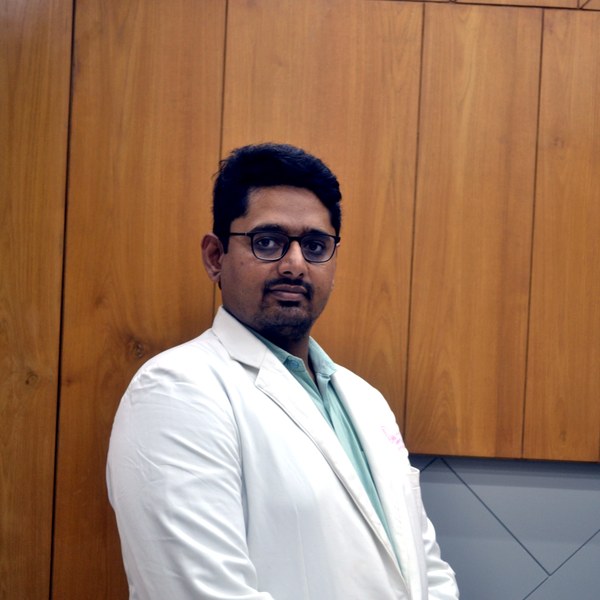
Dr Patel performs advanced minimal-access (laparoscopic and hysteroscopic) surgery at Balaji Horizon with a precision, organ- and fertility-sparing philosophy — operating when it is clearly indicated, and offering conservative options when it is not.
Minimal-access, organ-sparing surgery and evidence-based gynaecology — with a clear, honest plan built around your priorities.
Book a consultationProtecting your ovarian reserve — our first priority
Ovarian cystectomy removes a cyst while keeping the ovary itself. How the surgery is done matters as much as whether it is done, because the ovary holds your egg reserve.
Why technique matters
Removing a cyst — especially an endometrioma — can reduce the number of eggs the ovary holds, mainly when heat (cautery) is used to stop bleeding. We minimise this by stripping the cyst wall gently and controlling bleeding with fine sutures rather than extensive cautery wherever possible. For women planning pregnancy, this ovarian-reserve-first approach is central.
When surgery is and is not needed
Many simple cysts resolve on their own and can be watched safely with ultrasound rather than operated on. We recommend surgery for cysts that are large, persistent, causing symptoms, or where the appearance needs a definitive diagnosis — not for every cyst found on a scan.
Possible risks & alternatives
Risks include bleeding, the small chance that a cyst recurs, and, with repeated surgery, cumulative loss of ovarian tissue — which is why we avoid unnecessary repeat operations. Aspiration (draining a cyst) has a limited role because recurrence is high. For an endometrioma in a woman planning IVF, we weigh surgery against proceeding directly to treatment, individually.
Related: Laparoscopy vs open surgery
Patient guide: this page explains the surgical technique. For candidacy, decision-making and what to expect, see Ovarian cyst surgery in Ahmedabad — when surgery is needed.
Does this ovarian cyst need a cystectomy? — a starting point
A few questions to see where the evidence generally leans. Educational only — not a diagnosis.
This interactive guide is educational and does not replace a clinical assessment or imaging review. It cannot diagnose your condition. Please discuss your situation with Dr. Priyadatt Patel at Balaji Horizon Women’s Hospital.
Dr. Priyadatt Patel
Senior Gynecologist · Advanced Laparoscopic Surgeon · IVF and Endometriosis Programme Lead
MS OBGyn · Pregnancy Care · Advanced Gynaecological Ultrasound · Fertility Preservation
ESHRE / ESGE / AAGL / ASRM guideline-aligned practice. 3D Karl Storz precision technique. Fertility-preservation-first philosophy. Evidence-based decisions, honest counselling, long-term outcomes orientation.
323, Satyamev Eminence, Beside Saptak Bungalows & AUDA Water Tank, Science City Road, Sola, Ahmedabad 380060
Open 24 hours (emergencies & labour) · OPD Mon–Sat 11:00–20:00 · +91 97234 31544
Naranpura, Ahmedabad
Mon–Sat 08:30–10:30 · +91 70460 02566