
Dyspareunia in Endometriosis — Painful Intercourse
Deep dyspareunia (pain during deep penetration) is a common, distressing and often unmentioned endometriosis symptom. This page covers the mechanisms, evaluation, and multidisciplinary management of dyspareunia.
1. Why intercourse hurts in endometriosis
Deep penetration causes pressure on uterosacral ligaments, pouch of Douglas, posterior fornix, rectovaginal septum — common endometriosis lesion sites. Direct lesion contact during intercourse triggers pain. Adhesions limit pelvic organ mobility. Pelvic floor muscle hyperactivity (secondary to chronic pain) adds vaginal pain on entry. Multiple mechanisms can combine.
2. Pain characterisation
Deep dyspareunia — pain with deep penetration, location uterosacrals or posterior fornix. Entry dyspareunia (less typical of endometriosis — suggests vulvodynia, atrophy, infection, pelvic floor). Position-dependent (worse in deep penetration positions). Cyclical worsening around menstruation. Post-coital pain hours later. Each pattern guides evaluation.
3. Evaluation
Detailed history — pain location, depth, character, position-dependence, cyclical pattern, post-coital pain. Pelvic examination — gentle, with single-finger initial assessment, identifying tender nodules at uterosacral ligaments, posterior fornix, pelvic floor muscle tone. Expert ultrasound with IDEA protocol for deep endometriosis. MRI in selected cases.
4. Medical management
Hormonal suppression (continuous COCP, dienogest, Mirena, GnRH agonists/antagonists) reduces inflammation and lesion activity. Often improves dyspareunia substantially. NSAIDs around intercourse for short-term relief. Topical lidocaine in selected cases. Treatment depends on overall disease management strategy.
5. Pelvic floor physiotherapy
Often essential. Pelvic floor hyperactivity is a major contributor in chronic dyspareunia. Specialist physiotherapist assessment. Relaxation training, dilator therapy, biofeedback, trigger point release. 3-6 months of consistent therapy. Substantial improvement in most patients.
6. Surgical management
Excisional surgery for confirmed deep infiltrating endometriosis in characteristic locations. 3D Karl Storz precision approach. Removal of uterosacral nodules, rectovaginal disease. Often substantial dyspareunia improvement post-operatively. Multidisciplinary if bowel/rectum involved.
7. Couples considerations
Open partner communication essential. Non-penetrative intimacy preserved during painful phases. Couples therapy when chronic pain has affected relationship. Education for partner about endometriosis pain mechanisms. Many couples report stronger relationships after working through this together.
8. Living with chronic dyspareunia
Combination of strategies: hormonal optimisation, pelvic floor physiotherapy, surgical correction where indicated, partner communication, lubricants, position adjustment, timing intercourse outside symptomatic phases. Multidisciplinary approach delivers best outcomes. Most patients achieve meaningful improvement with comprehensive management.
Why intercourse hurts in endometriosis
| Pattern | Likely cause |
|---|---|
| Deep pain on thrusting | Uterosacral or rectovaginal nodules |
| Pain in specific positions | Fixed/retroverted uterus, adhesions |
| Lingering pain after sex | Pelvic-floor spasm, inflammation |
| Pain at entry | Often a pelvic-floor (non-endometriosis) cause |
Aligned with current international evidence, not habit.
Frequently Asked Questions
Is painful intercourse normal in endometriosis?
Where does the pain come from?
Will surgery fix dyspareunia?
What about pelvic floor physiotherapy?
How do I talk to my partner about this?
Will hormonal treatment help?
Is dyspareunia ever permanent?
Can I still enjoy intimacy with endometriosis?
Deep dyspareunia often overlaps with chronic pelvic pain, where identifying each contributing source — not just endometriosis — changes management.
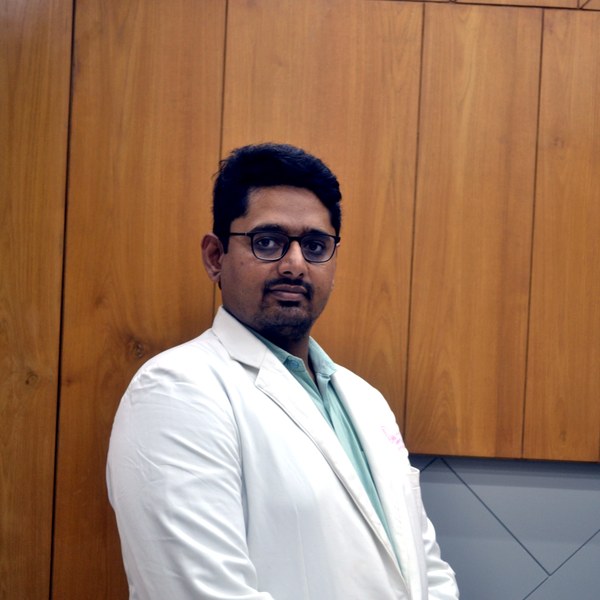
Dr Patel leads endometriosis diagnosis and surgery at Balaji Horizon with an evidence-based, ovarian-sparing philosophy aligned to ESHRE and ESGE — integrating pain, fertility and long-term disease control into a single plan, rather than treating the disease in isolation.
Imaging-led diagnosis, medical-first management, and precise surgery only when it is the right step — planned around your pain and fertility goals.
Entry pain and deep pain are not the same problem
Painful intercourse in endometriosis has more than one mechanism, and telling them apart guides treatment. Pain felt on entry often reflects pelvic-floor muscle guarding or vulvovaginal sensitivity, whereas deep pain on penetration typically points to disease on the uterosacral ligaments, behind the cervix or in the pouch of Douglas. Many women experience a combination, and long-standing pain can also recruit the nervous system itself, lowering the threshold at which discomfort is felt (central sensitisation). A careful, gentle examination that reproduces and localises the pain — alongside specialist ultrasound — is what separates these threads.
Why one treatment rarely fixes it alone
Because the causes overlap, the most effective plans usually combine approaches: hormonal therapy to quiet disease activity, pelvic-floor physiotherapy to release muscle guarding, and surgery only where deep disease is the clear driver and other measures have not been enough. Where the nervous system has become sensitised, pain-modifying strategies matter as much as treating the lesions themselves.
Intimacy, communication and a realistic path
Dyspareunia affects relationships, not just the body. Practical steps — positions that reduce deep contact, timing around the cycle, open communication with a partner, and where helpful psychosexual support — are a legitimate part of care, not an afterthought. The aim is to restore comfortable intimacy in a way that is realistic and paced, alongside treating the underlying disease. Related: deep infiltrating endometriosis, pain management, living with endometriosis.
Dr. Priyadatt Patel
Senior Gynecologist · Advanced Laparoscopic Surgeon · IVF and Endometriosis Programme Lead
MS OBGyn · Pregnancy Care · Advanced Gynaecological Ultrasound · Fertility Preservation
ESHRE / ESGE / AAGL / ASRM guideline-aligned practice. 3D Karl Storz precision technique. Fertility-preservation-first philosophy. Evidence-based decisions, honest counselling, long-term outcomes orientation.
323, Satyamev Eminence, Beside Saptak Bungalows & AUDA Water Tank, Science City Road, Sola, Ahmedabad 380060
Open 24 hours (emergencies & labour) · OPD Mon–Sat 11:00–20:00 · +91 97234 31544
Naranpura, Ahmedabad
Mon–Sat 08:30–10:30 · +91 70460 02566