

IUI — Intrauterine Insemination at Balaji Horizon
Intrauterine insemination is a precisely-timed, minimally invasive fertility treatment. We offer it where the evidence supports it — and recommend against it when it is not the right pathway for your situation.
How IUI works
IUI involves preparing and concentrating washed sperm and placing it directly into the uterine cavity around the time of ovulation. This bypasses the cervix and shortens the distance the sperm must travel to reach the egg in the fallopian tube.
Most cycles include controlled mild stimulation with oral or low-dose injectable medication to recruit one to three mature follicles, ovulation trigger when follicles reach optimal size on ultrasound, and the IUI procedure itself which takes around 10 minutes in the consulting room.
Who should consider IUI
IUI is best suited to specific clinical situations:
- Mild male factor infertility with adequate total motile sperm count after preparation
- Cervical factor infertility (rare today with modern diagnostics)
- Unexplained infertility in younger women with patent tubes — typically up to three cycles before moving to IVF
- Mild endometriosis in women with patent tubes and acceptable ovarian reserve
- Anovulation (especially PCOS) where ovulation induction alone has not produced pregnancy
- Same-sex couples and single women using donor sperm (ICMR ART Act-compliant pathway)
When we recommend against IUI
We will counsel against IUI and recommend moving directly to IVF when:
- Severe male factor infertility (total motile sperm count below 5 million after wash)
- Bilateral tubal blockage or significant tubal damage
- Advanced female age (≥38) with diminished ovarian reserve
- Severe endometriosis or stage III-IV disease
- Three failed appropriately-timed IUI cycles
Offering IUI in these situations wastes precious time and resources. Our priority is to get you to the right treatment at the right time.
Realistic success rates
Per-cycle success rates with IUI typically range from 8 to 18 percent depending on age, diagnosis, and male factor. Cumulative pregnancy rates after three cycles can reach 30 to 40 percent in carefully selected couples.
We share honest, age-stratified outcomes — not industry-best statistics from cherry-picked cohorts. If your individual factors predict low IUI success, we will tell you upfront and recommend IVF as the more appropriate next step.
The IUI cycle, step by step
- Day 2–3 baseline scan and bloods — assess ovarian reserve and rule out cyst
- Stimulation — 5 to 12 days of oral letrozole, clomiphene, or low-dose gonadotrophins
- Monitoring scans — track follicle growth and endometrial development
- Trigger — when one to three follicles reach 17–20 mm, hCG or GnRH agonist trigger
- Sperm sample — collected 2 hours before procedure, washed and prepared in the andrology lab
- The IUI — soft catheter through the cervix into the uterine cavity, takes minutes
- Two-week wait — luteal support if indicated, pregnancy test 14 days after IUI
IUI at a glance
| Step | What happens |
|---|---|
| Monitoring | Track follicle growth |
| Trigger | Time ovulation |
| Insemination | Washed sperm placed in the uterus |
| Test | Two weeks later |
Our IVF practice follows international reproductive-medicine standards — honest, individualised, no overpromising.
Frequently asked questions
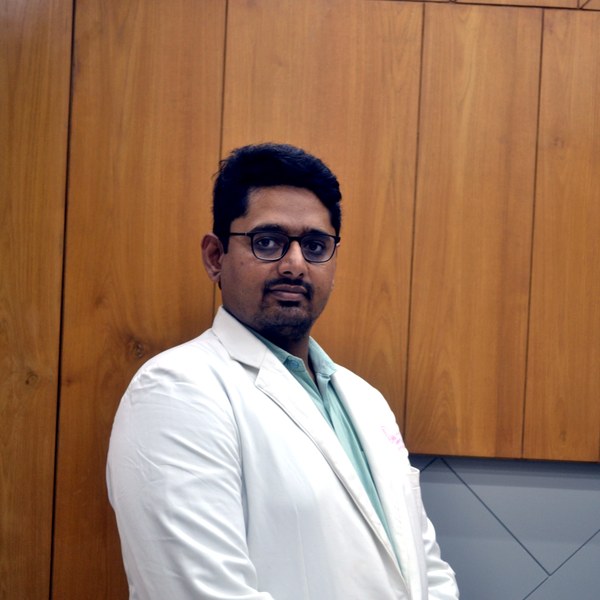
Dr Patel leads fertility care at Balaji Horizon, integrating reproductive surgery and IVF into a single plan — ethical, evidence-based and individualised, with realistic expectations and no overpromising of success.

Individualised IVF and fertility planning with honest, evidence-based counselling — and realistic expectations from the very first consultation.
IUI — a few more questions, answered
How much does IUI cost in Ahmedabad?
The cost of an IUI cycle depends mainly on the stimulation medication used, the number of monitoring scans and the laboratory sperm preparation, so it varies between patients and cycles. Rather than advertise a single headline price, we explain your likely costs transparently at consultation once we know which protocol suits you. IUI costs much less than IVF per cycle — but several unsuccessful IUI cycles in someone who really needs IVF can cost more overall, which is why honest counselling on the right pathway matters more than the per-cycle price.
Does the IUI success rate change with age?
Yes — age is one of the strongest factors. Per-cycle success is highest in younger women and declines through the thirties, falling more steeply beyond about 38. In older women, or where ovarian reserve is low, we often advise moving to IVF rather than spending months on IUI. We give you an estimate based on your age and diagnosis, not a population average.
How long does one IUI cycle take?
About two to three weeks from the day-2 baseline scan to the pregnancy test: a few days of stimulation, one or two monitoring scans, the timed insemination (around ten minutes), then the two-week wait. It fits into a normal routine with little disruption.
Should I choose IUI or IVF?
It depends on the cause of the difficulty. IUI is reasonable for mild or unexplained problems with open tubes and adequate sperm; IVF is wiser for blocked tubes, significant male factor, low ovarian reserve, advanced age or moderate-to-severe endometriosis. See our full comparison of IUI vs IVF — which should come first and our honest guide to what fertility success rates really mean.
Medically reviewed by Dr Priyadatt Patel, MBBS, MS (Obstetrics & Gynaecology) — Senior Gynecologist · Advanced Laparoscopic Surgeon · IVF and Endometriosis Programme Lead, IVF Specialist & Advanced Laparoscopic Surgeon, Balaji Horizon Women’s Hospital, Ahmedabad. Guidance on this page is aligned with ESHRE (2023) and NICE NG257 (2026). Last reviewed: June 2026.
- ESHRE Guideline Group on Unexplained Infertility. Evidence-based guideline: unexplained infertility. Human Reproduction 2023;38(10):1881 (PMID 37599566).
- NICE. Fertility problems: assessment and treatment. NICE guideline NG257 (2026).
- Cohlen B, et al. IUI: systematic assessment of the evidence supporting global recommendations. Human Reproduction Update 2018;24(3):300.
- Cochrane Database of Systematic Reviews — Intra-uterine insemination for unexplained subfertility (CD001838).
Dr. Priyadatt Patel
Senior Gynecologist · Advanced Laparoscopic Surgeon · IVF and Endometriosis Programme Lead
MS OBGyn · Pregnancy Care · Advanced Gynaecological Ultrasound · Fertility Preservation
ESHRE / ESGE / AAGL / ASRM guideline-aligned practice. 3D Karl Storz precision technique. Fertility-preservation-first philosophy. Evidence-based decisions, honest counselling, long-term outcomes orientation.
Science City Road, Ahmedabad 380060
Mon–Sat 11:00–20:00 · +91 97234 31544
Naranpura, Ahmedabad
Mon–Sat 08:30–10:30 · +91 70460 02566