
Laparoscopic Myomectomy
Surgical removal of uterine fibroids while preserving the uterus – the fertility-sparing option for women with symptomatic fibroids.
When myomectomy is appropriate
Symptomatic fibroids (heavy menstrual bleeding, pelvic pain, pressure symptoms) where uterine preservation is desired – particularly relevant for women planning future fertility.
Laparoscopic approach
Uterine wall incision, careful myoma enucleation, and meticulous closure of the uterine defect in multiple layers. Energy source selection minimises thermal damage. Specimen retrieval through extended port site or specimen bag.
Recovery and fertility
Heavy menstrual bleeding improves in over 90 percent. Pregnancy rates are favourable in women with prior infertility. Recurrence of new fibroids occurs in 15-30 percent over 5-10 years. Whether an operation is the right answer at all — against medication and against watchful waiting — is worked through in fibroids: surgery, medication or watchful waiting. Where pregnancy is the immediate question, fibroids and pregnancy covers the risks and how they are managed.
Is this page relevant to you?
This page is for women who have been told they have fibroids and are weighing whether surgery is truly necessary — particularly those who want to keep their uterus, protect their fertility, or avoid a hysterectomy they are not convinced they need. If your fibroids cause no symptoms, you may need no operation at all; the sections below explain how we tell the difference, and when a myomectomy genuinely helps.
How we decide whether surgery is needed
Good fibroid surgery begins with a map, not a scalpel. Before recommending a myomectomy we establish three things with imaging — transvaginal ultrasound, and MRI where the fibroid map is complex: the number, size and exact position of each fibroid; whether any distort the uterine cavity (the submucosal fibroids that most affect bleeding and fertility); and whether your symptoms genuinely correspond to the fibroids rather than to another cause. Heavy menstrual bleeding has its own structured assessment before it is attributed to a fibroid. Only when an identifiable fibroid is plausibly driving a real problem, and conservative options have been weighed, does removal earn its place.
What laparoscopic myomectomy involves, step by step
Under general anaesthesia, three to four keyhole incisions (5–10 mm) give access to the pelvis. The uterine wall is opened over the fibroid, the fibroid is enucleated from its capsule, and — the step that matters most for your future — the uterine wall is repaired in layers with careful suturing, because the strength of that scar is what carries a future pregnancy. Energy is used sparingly to protect healthy muscle, and the fibroid is removed through a contained retrieval system. Submucosal fibroids sitting inside the cavity need no abdominal incision at all and are resected hysteroscopically through the cervix. Where a fibroid map is genuinely unsuitable for keyhole surgery, we tell you beforehand and discuss an open approach honestly, rather than converting unexpectedly.
Recovery — a realistic timeline
Most women spend one to two nights in hospital and are walking the same evening. Light activity returns within days, and most desk-based work within one to two weeks; heavier work, intense exercise and swimming are best left for four to six weeks while the uterine repair heals internally — feeling well and being fully healed are not the same thing. Because the uterus has been sutured, we give a clear, individualised interval before trying to conceive and explain what it means for delivery planning. Every patient leaves with written recovery guidance and a direct line for questions.
Myomectomy, hysterectomy or non-surgical options
Myomectomy is the uterus-sparing operation, and our default when fertility or uterine preservation matters — but it is not the only path. Asymptomatic fibroids are usually monitored, not operated on. Bleeding can often be controlled medically, including with a hormonal intrauterine system, before surgery is considered. For a woman whose family is complete and whose uterus is extensively involved, a hysterectomy may be the more durable answer, and we will say so plainly; equally, if a hysterectomy has been offered to you as the first option for fibroids, a second opinion is a reasonable thing to seek. The right choice rests on your symptoms, fibroid map, age and plans — never on the size of the fibroid alone.
Guidelines we follow
- AAGL practice guidance on laparoscopic myomectomy and safe tissue extraction
- ESGE consensus on operative laparoscopy
- RCOG and NICE (NG88) guidance on heavy menstrual bleeding and uterine fibroids
- FIGO classification for fibroid mapping, from submucosal to subserosal
Laparoscopic myomectomy
| Aspect | Detail |
|---|---|
| What it does | Removes fibroids, keeps the uterus |
| Best for | Fertility wish, symptomatic fibroids |
| Recovery | 2–4 weeks |
Frequently asked
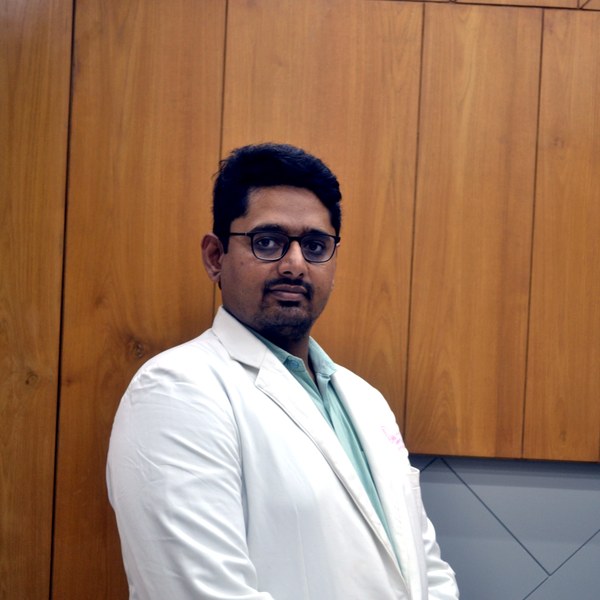
Dr Patel performs advanced minimal-access (laparoscopic and hysteroscopic) surgery at Balaji Horizon with a precision, organ- and fertility-sparing philosophy — operating when it is clearly indicated, and offering conservative options when it is not.
Minimal-access, organ-sparing surgery and evidence-based gynaecology — with a clear, honest plan built around your priorities.
Book a consultationRisks, alternatives & what we discuss before myomectomy
Myomectomy removes fibroids while preserving the uterus, so it is the procedure of choice when fertility matters. It is still major surgery, and the right decision depends on fibroid size, number and position, your symptoms, and your reproductive plans — not on the fibroids alone.
Possible risks
The main risks are bleeding (occasionally needing transfusion), the small chance of conversion to open surgery, and — rarely — the need for hysterectomy if bleeding cannot be controlled. Adhesions can form afterwards, and fibroids can recur over time, particularly when several are present. These risks are uncommon in experienced hands but are discussed honestly before any decision.
Future pregnancy & delivery
When the uterine cavity is opened or deep fibroids are removed, we counsel a planned interval before conception and often advise delivery by caesarean section because of a small risk of uterine rupture in labour. This planning is part of the consultation, not an afterthought.
Alternatives we consider first
Not every fibroid needs surgery. Depending on your situation we discuss medical therapy for symptom control, watchful waiting for small or asymptomatic fibroids, and — where fertility is not the priority — uterine artery embolisation. Myomectomy is recommended when it offers the clearest benefit for symptoms or fertility, not by default.
Unsure whether your fibroids need an operation at all? Start with when fibroids actually need treatment.
Related: Adenomyosis vs fibroids · Laparoscopy vs open surgery
Patient guide: this page explains the surgical technique. For candidacy, decision-making and what to expect, see Fibroid surgery in Ahmedabad — uterus-sparing options.
Do these fibroids need a myomectomy? — a quick orientation
A few questions to see where the evidence generally leans. Educational only — not a diagnosis.
This interactive guide is educational and does not replace a clinical assessment or imaging review. It cannot diagnose your condition. Please discuss your situation with Dr. Priyadatt Patel at Balaji Horizon Women’s Hospital.
Related: When persistent or recurring pelvic pain is part of the picture, our Chronic Pelvic Pain Specialist in Ahmedabad explains the common causes, how the problem is evaluated, and the evidence-based treatment options.
Related: For symptom management and what day-to-day life can look like, read our guide on living with uterine fibroids.
Dr. Priyadatt Patel
Senior Gynecologist · Advanced Laparoscopic Surgeon · IVF and Endometriosis Programme Lead
MS OBGyn · Pregnancy Care · Advanced Gynaecological Ultrasound · Fertility Preservation
ESHRE / ESGE / AAGL / ASRM guideline-aligned practice. 3D Karl Storz precision technique. Fertility-preservation-first philosophy. Evidence-based decisions, honest counselling, long-term outcomes orientation.
323, Satyamev Eminence, Beside Saptak Bungalows & AUDA Water Tank, Science City Road, Sola, Ahmedabad 380060
Open 24 hours (emergencies & labour) · OPD Mon–Sat 11:00–20:00 · +91 97234 31544
Naranpura, Ahmedabad
Mon–Sat 08:30–10:30 · +91 70460 02566