
Laparoscopic Salpingectomy
Surgical removal of the fallopian tubes – performed for ectopic pregnancy, hydrosalpinx, prophylactic ovarian cancer risk reduction, or tubal disease impairing fertility.
When salpingectomy is performed
- Tubal ectopic pregnancy
- Hydrosalpinx prior to IVF
- Recurrent or severe pelvic inflammatory disease
- Risk-reducing salpingectomy (RRSO)
- Tubal sterilisation (opportunistic during other surgery)
Decision factors
Unilateral salpingectomy preserves contralateral fertility. Bilateral salpingectomy is permanent sterilisation and is sometimes performed for prophylactic cancer risk reduction. Decisions are individualised with full counselling.
What about the ovaries
Salpingectomy alone does not significantly affect ovarian function or hormone production. Ovarian reserve and menopause timing are preserved.
Is this page relevant to you?
This page is for women who may need surgery on a fallopian tube — most often for an ectopic (tubal) pregnancy, or for a damaged, fluid-filled tube (hydrosalpinx) before IVF. It explains when removing a tube is the right step and what it means for future fertility.
Indications for salpingectomy
The two common reasons are an ectopic pregnancy that cannot be managed conservatively, and a hydrosalpinx, where a blocked, fluid-filled tube can sharply reduce IVF success and is often best removed or clipped before treatment. The decision always weighs the health of the tube, your symptoms, and your fertility plans.
What laparoscopic salpingectomy involves
Through keyhole incisions, the affected tube is removed (salpingectomy) — or, where the tube is salvageable and it is appropriate, the pregnancy alone is removed and the tube preserved (salpingostomy). In an ectopic pregnancy causing heavy internal bleeding, prompt surgery is a safety priority. We always consider the other tube and your overall fertility before deciding.
What it means for future fertility
Removing one tube does not, by itself, mean infertility — the other tube often functions normally, and IVF bypasses the tubes entirely. Where a hydrosalpinx is removed before IVF, success rates typically improve. We discuss your individual fertility outlook honestly rather than in generalities.
Guidelines we follow
- RCOG / NICE guidance on the management of ectopic pregnancy
- ESHRE guidance on hydrosalpinx and IVF
- AAGL / ESGE operative laparoscopy standards
Laparoscopic salpingectomy
| Indication | Why |
|---|---|
| Ectopic pregnancy | Removal of the affected tube |
| Hydrosalpinx | Before IVF to improve outcomes |
| Risk reduction | Selected cases |
Frequently asked
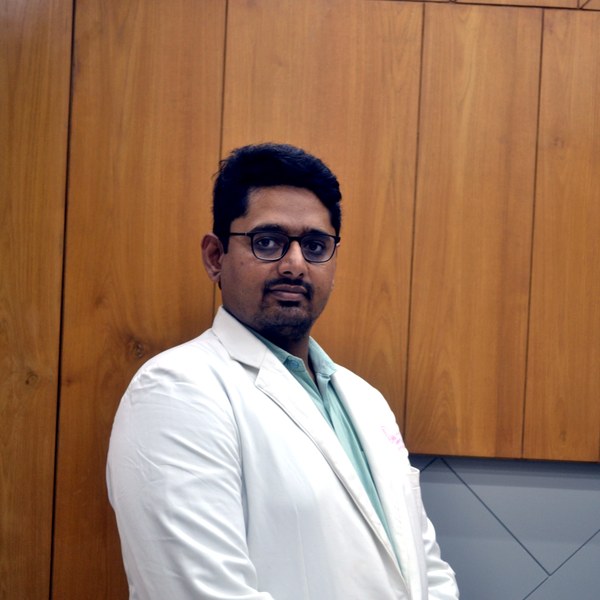
Dr Patel performs advanced minimal-access (laparoscopic and hysteroscopic) surgery at Balaji Horizon with a precision, organ- and fertility-sparing philosophy — operating when it is clearly indicated, and offering conservative options when it is not.
Minimal-access, organ-sparing surgery and evidence-based gynaecology — with a clear, honest plan built around your priorities.
Book a consultationAbout salpingectomy.
Salpingectomy is the surgical removal of the fallopian tube — most commonly for hydrosalpinx prior to IVF (because tubal fluid significantly reduces implantation), for ectopic pregnancy, or for tubal cancer risk reduction.
Fertility implications, ovarian reserve & alternatives
Salpingectomy removes a fallopian tube. It is most often advised for a tubal ectopic pregnancy, for a fluid-filled damaged tube (hydrosalpinx) before IVF, for sterilisation, or as opportunistic risk-reduction at the time of other pelvic surgery.
Why removing a hydrosalpinx can help IVF
Fluid from a hydrosalpinx can drain into the uterus and lower IVF success. Removing the affected tube before treatment is evidence-based and improves implantation and pregnancy rates — a clear example of surgery done to support fertility, not to replace it.
Ovarian reserve
A common concern is whether removing a tube harms the ovary. With careful technique that stays close to the tube and preserves the mesosalpinx blood supply, the impact on ovarian reserve is minimal. We operate deliberately to protect the ovarian blood supply.
What it means for conception, and alternatives
Removing one tube usually leaves natural conception possible through the other; removal of both means IVF is the route to pregnancy, which we discuss fully beforehand. For some early ectopic pregnancies, medical treatment or tube-conserving surgery (salpingostomy) may be appropriate — the choice depends on your future fertility plans and the condition of both tubes.
Hydrosalpinx and IVF: why removing a blocked tube can improve your chances
A hydrosalpinx is a fallopian tube that has become blocked and swollen with fluid, usually after past infection, endometriosis or surgery. When that fluid leaks back into the womb it can lower the chance that an embryo implants. For this reason, in women planning IVF, removing a hydrosalpinx by keyhole (laparoscopic) salpingectomy before the cycle is recommended: a Cochrane systematic review and UK NICE fertility guidance both show it improves clinical-pregnancy and live-birth rates compared with leaving the damaged tube in place. Where a tube is still salvageable we discuss tube-sparing alternatives; where it is not, removing it is a step that actively helps your IVF succeed rather than a loss.
Opportunistic salpingectomy: lowering future ovarian-cancer risk
Research over the last decade has shown that many high-grade ovarian cancers actually begin in the fallopian tube rather than the ovary itself. Because of this, when a woman is already undergoing pelvic surgery for another reason — or has completed her family and is choosing permanent contraception — removing both tubes while leaving the ovaries in place (“opportunistic salpingectomy”) may reduce her future risk of ovarian cancer without changing her hormones. The American College of Obstetricians and Gynecologists supports offering and discussing this option (Committee Opinion No. 774, 2019). It is always an individual, informed choice and never automatic — see our page on ovarian-cancer awareness.
Protecting your ovaries, hormones and reserve
Salpingectomy removes only the tube. The ovaries — and the hormones they produce — stay in place, so the procedure does not cause menopause or a sudden change in hormones. Technique still matters: we divide the tissue close to the tube to protect the delicate blood supply to the ovary and safeguard ovarian reserve, in keeping with our wider commitment to fertility-sparing surgery.
Ectopic pregnancy: removing versus repairing the tube
In an ectopic pregnancy, where a pregnancy has implanted in the tube, the affected tube is sometimes removed (salpingectomy) and sometimes opened and preserved (salpingotomy). NICE guidance helps us weigh this individually: when the other tube is healthy, removing the affected tube gives comparable future fertility with a lower chance of a repeat ectopic on that side; when the opposite tube is already damaged, we try to conserve tissue wherever it is safe to do so.
What salpingectomy means for natural fertility
Because the fallopian tubes carry the egg toward the womb, removing a tube reduces the natural routes to pregnancy; if both tubes are removed, conception is achieved through IVF, which bypasses the tubes entirely. We therefore make this decision with you — weighing your symptoms, the health of each tube, your age and your family plans — and we prefer to preserve a tube whenever it is safe and genuinely useful to do so. This mirrors how we approach all advanced laparoscopic surgery, including adhesiolysis for tubal and pelvic scarring.
Guidelines and evidence we follow
- ACOG Committee Opinion No. 774: Opportunistic Salpingectomy as a Strategy for Epithelial Ovarian Cancer Prevention. Obstet Gynecol. 2019;133(4):e279–e284.
- Melo P, et al. Surgical treatment for tubal disease in women due to undergo in vitro fertilisation. Cochrane Database Syst Rev. 2020;CD002125.
- NICE CG156: Fertility problems: assessment and treatment — management of hydrosalpinx before IVF.
- NICE NG126: Ectopic pregnancy and miscarriage: diagnosis and initial management.
Reviewed by Dr. Priyadatt Patel, MBBS, MS (Obstetrics & Gynaecology) — Senior Gynecologist · Advanced Laparoscopic Surgeon · IVF and Endometriosis Programme Lead. Educational information only; it does not replace an individual consultation. Last reviewed 1 July 2026.
Dr. Priyadatt Patel
Senior Gynecologist · Advanced Laparoscopic Surgeon · IVF and Endometriosis Programme Lead
MS OBGyn · Pregnancy Care · Advanced Gynaecological Ultrasound · Fertility Preservation
ESHRE / ESGE / AAGL / ASRM guideline-aligned practice. 3D Karl Storz precision technique. Fertility-preservation-first philosophy. Evidence-based decisions, honest counselling, long-term outcomes orientation.
323, Satyamev Eminence, Beside Saptak Bungalows & AUDA Water Tank, Science City Road, Sola, Ahmedabad 380060
Open 24 hours (emergencies & labour) · OPD Mon–Sat 11:00–20:00 · +91 97234 31544
Naranpura, Ahmedabad
Mon–Sat 08:30–10:30 · +91 70460 02566