
Patient Education · Balaji Horizon

Endometriosis and Weight Gain

Dr. Priyadatt Patel
Reviewed by Dr. Priyadatt PatelSenior Gynecologist · Advanced Laparoscopic Surgeon · IVF & Endometriosis Programme Lead
DPP
Reviewed by Dr. Priyadatt PatelSenior Gynecologist Β· Advanced Laparoscopic Surgeon Β· Last reviewed 25 May 2026

Endometriosis and Weight Gain: What You Need to Know – Insights from Dr. Priyadatt Patel

Understanding Endometriosis and Weight Gain

From my experience as a gynecologist, one of the most recurrent issues that patients suffering from endometriosis bring to me is whether this condition can lead to weight gain. Not all women with endometriosis have to deal with this issue; however, weight fluctuations tend to occur due to multiple reasons directly associated with the condition. In this article, I will discuss how endometriosis could lead to weight changes and most importantly, how those changes can be dealt with.

Can Endometriosis Cause Weight Gain?

Endometriosis is a multisystem disorder that can affect the body in varying ways, including disrupting the hormonal balance, affecting the gastrointestinal tract, and causing inflammation among other internal processes. While some women will struggle with weight gain, others may find themselves shedding pounds because of nausea and digestive distress. Because the symptoms may differ for each individual, finding the factors behind them is key.

Key Factors That May Contribute to Weight Changes

Endo Belly and Bloating Endometriosis has many symptoms, and bloating which is commonly called β€œendo belly” is one of the most common ones. This expansion is further enabled by the retention of fluids, inflammation, and even distension of the stomach wall. A symptom usually associated with endometriosis, bowel obstruction may also play a role in making bloating, which is usually the highest in severity just before one’s period, worse.

Hormonal Imbalances

People who have endometriosis have a hard time managing weight due to issues related to hormonal balance and chronic stress. They experience a rise in estrogen levels which leads to weight gain, particularly in the waist area. Obesity is also a problem as high levels of estrogen make it incredibly difficult to metabolize fat.

Medication Side Effects

Birth control pills, IUDs, and hormone therapy are the most common prescriptions for women suffering from endometriosis. These drugs tend to postpone a woman’s fertility as well as greatly change her appetite and weight. Discuss fluid retention and constant weight changes with your doctor to identify a different program that works best for you.

Managing Weight with Endometriosis

If you are afflicted with endometriosis and cannot manage your weight, consider these methods:

  1. Follow an Anti-Inflammatory Diet.

An endometriosis-afflicted patient can find relief by following a diet that counteracts inflammation. Such a diet should include:

Healthy Fats: Salmon, walnuts, and flax-seed provide omega-3 fatty acids that help get rid of inflammation.

Fiber Rich Foods: Leafy greens, beans, berries, and whole grains help with digestion and lessen bloating.

Avoid Processed Foods: Low sugar and processed foods help lessen weight gain and bloating.

  1. Exercise Regularly

Regular physical activity should be maintained to help regulate hormones, reduce weight, and manage inflammation. Walk, swim, cycle, do yoga, and engage in any other exercise that keeps the body moving for at least 150 minutes every week. If the user experiences pain while trying to do intensive workouts, they may opt for less strenuous exercises instead.

  1. Manage Stress and Mental Health

Chronic pain, combined with emotional distress invariably leads to weight gain. Controlling weight can be achieved through mindfulness and meditation, which in turn helps lower cortisol levels and improve one’s health.

  1. Consult Your Healthcare Provider

Effective management of endometriosis might require multispecialty treatment and lifestyle changes. Talk to a trusted physician to get any advanced treatment options and medications that may not be responding to lifestyle adjustments.

Conclusion

Endometriosis weight gain, like any other side effect, is not universal. Factors like bloating, hormonal shifts, and medications usually lead to increased weight. A good diet, along with consistent exercise and stress management can greatly enhance your life and make weight gain more manageable.

Weight gain concerns among women suffering from endometriosis is very common, that is why at Balaji Horizon Women’s Hospital, and we are always ready to help women.

For those living in Kutch or Bhuj, we recommend you take the special care and attention from our hospital in Ahmedabad.

Dr. Priyadatt Patel

Gynecologist

Balaji Horizon Women’s Hospital

Dr. Priyadatt Patel
About the Author
Dr. Priyadatt Patel
Senior Gynecologist · Advanced Laparoscopic Surgeon · IVF & Endometriosis Programme Lead
Founder of Balaji Horizon Women’s Hospital. ESHRE / ASRM / FIGO-aligned practice. ★ 5.0 on Google · 287 reviews.
View full profileBook consultation
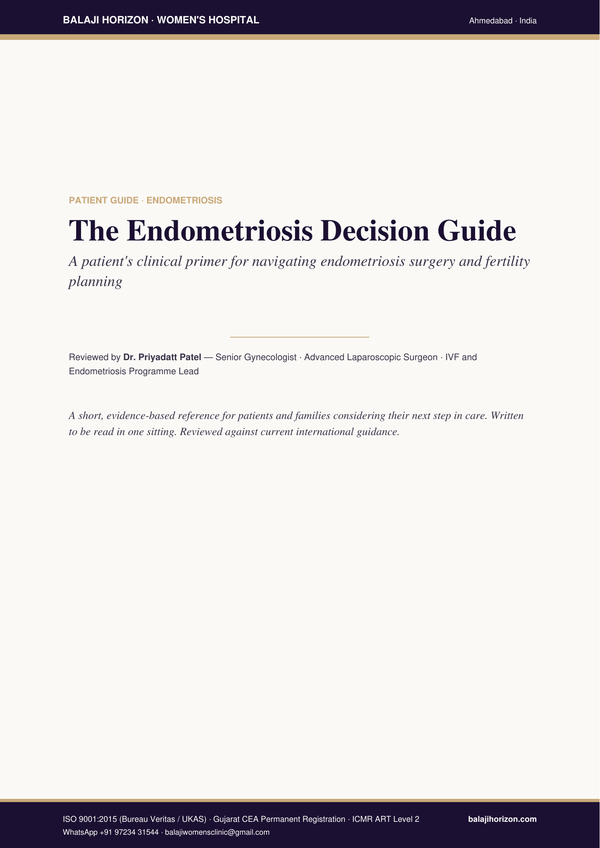
Endometriosis Decision Guide cover

Free Patient Guide

The Endometriosis Decision Guide

A short clinical primer on diagnostic delay, the four decisions you may face, and what to bring to your specialist consultation. Aligned with ESHRE 2022, ASRM, FIGO guidance.

Get the guide →

Frequently Asked Questions

Does endometriosis directly cause weight gain?
No. Endometriosis itself is not a cause of weight gain. Indirect factors β€” medication, reduced activity, mental health, inflammation β€” can contribute in some patients.
What is "endo belly"?
Severe abdominal bloating from bowel inflammation and pelvic congestion, typically tied to menstruation or flares. Not fat, not fluid retention; it resolves between flares.
Will hormonal medication for endometriosis make me gain weight?
Some agents (progestin-only methods, depot injections) cause weight gain in some users. Combined oral contraceptives generally have minimal effect. Effects vary; switching agents often helps.
Can I lose weight while having endometriosis?
Yes. Modest energy deficit, prioritising protein, anti-inflammatory eating, gentle consistent movement and good sleep all work. Crash diets typically worsen pain and energy.
Is weight loss going to cure my endometriosis?
No. Weight loss does not cure endometriosis. It can modestly reduce inflammation and improve some symptoms, but it does not treat the underlying disease.
Why does my belly look bigger during my period?
Bowel inflammation, peritoneal congestion and bowel-wall oedema from endometriosis cause visible distension. This is "endo belly" and is reversible between cycles.
Should I follow an anti-inflammatory diet for endometriosis?
Mediterranean-style anti-inflammatory eating is reasonable. Specific restrictive diets (gluten-free, dairy-free) help some patients but lack consistent evidence. Use food diary to identify personal trigger foods.
When should weight changes worry me?
Rapid unexplained weight gain or loss, persistent abdominal distension that does not resolve, early satiety or bowel habit change always merit evaluation β€” do not assume these are endometriosis without examination.
ISO 9001CEA RegisteredICMR ART (L2)ESHREASRMISUOG