
Day 5 Blastocyst Culture
In short — Blastocyst culture grows embryos to day five before transfer, allowing better selection and supporting single embryo transfer. It suits cycles with several good-quality embryos. Where very few embryos are available, transferring earlier is sometimes the safer choice.
Extending embryo culture from day 3 cleavage stage to day 5 blastocyst allows self-selection of the most developmentally competent embryos for transfer.
Self-selection of best embryos
Not all day 3 embryos progress to blastocyst. Extended culture reveals the embryos with the highest developmental competence and implantation potential. Transfer at blastocyst stage matches uterine receptivity better than earlier-stage transfer.
Patient selection
Patients with multiple good-quality day 3 embryos benefit most. For patients with few embryos, day 3 transfer may be preferred to avoid the risk of having no embryo to transfer if blastulation rates are low.
Implantation and pregnancy rates
Per-transfer implantation rates are higher with blastocyst transfer. Across all transfers from one egg collection, the difference is less certain. A 2026 Cochrane review found that the chance of having a baby within 12 months may be slightly higher with blastocyst transfer (low-certainty evidence), but the largest trial, in which most women had two or more transfers, found little or no difference, and the result may change once every frozen embryo has been used. Single embryo transfer is more feasible at blastocyst stage, reducing multiple pregnancy risk.
Blastocyst culture
| Aspect | Detail |
|---|---|
| Day | 5–6 |
| Benefit | Better embryo selection |
| Note | Not all embryos reach this stage |
Our IVF practice follows international reproductive-medicine standards.
Frequently asked
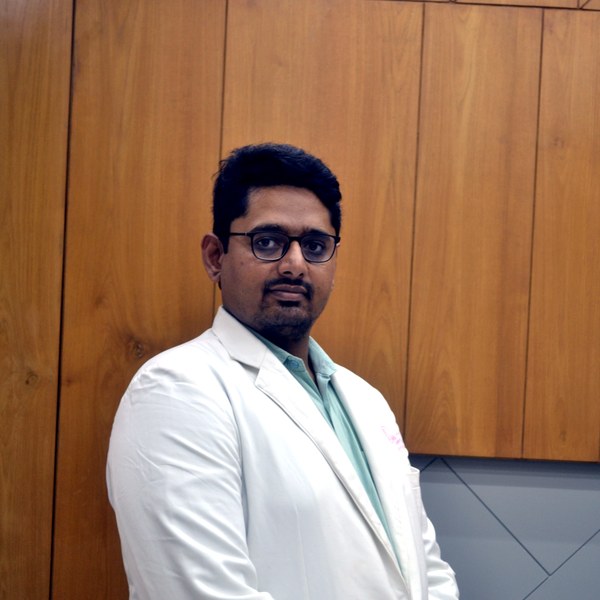
Dr Patel leads fertility care at Balaji Horizon, integrating reproductive surgery and IVF into a single plan — ethical, evidence-based and individualised, with realistic expectations and no overpromising of success.
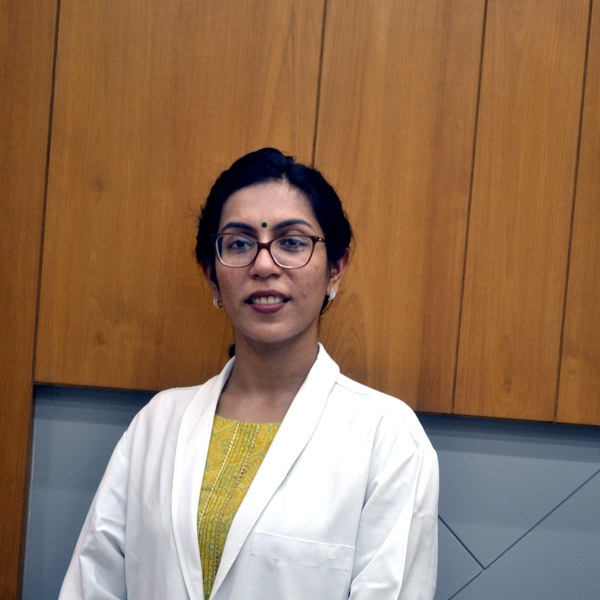
Individualised IVF and fertility planning with honest, evidence-based counselling — and realistic expectations from the very first consultation.
Day-5 blastocyst transfer — the rationale
Growing embryos to the blastocyst stage (day 5) before transfer lets the strongest embryos declare themselves. Only embryos with genuine developmental potential reach this stage, which improves selection and supports single-embryo transfer.
Why it helps
A day-5 transfer better matches the natural timing of implantation, tends to give higher implantation rates per embryo, and — crucially — lets us transfer one embryo while keeping a good chance of success, reducing the risks of twins.
When a day-3 transfer may be chosen instead
With only a few embryos, growing to day 5 carries a risk that none survive the extra days in culture — occasionally an earlier transfer is the safer plan. This is an individual judgement based on your embryo numbers and history, which we discuss openly rather than applying a blanket rule.
Honest framing
Extended culture is a selection tool, not a quality upgrade — it identifies the best embryos you have; it does not improve them. Laboratory quality matters greatly, which is why technique and conditions are central to outcomes.
Updated 13 October 2026: we corrected our description of cumulative live birth rates, removed an unsourced figure for embryos not reaching day 5, and added preterm birth to the risks answer, so that this page matches the 2026 Cochrane review of blastocyst versus cleavage-stage transfer.
Sources: Glujovsky D, et al. Blastocyst-stage versus cleavage-stage embryo transfer in assisted reproductive technology. Cochrane Database Syst Rev 2026 (doi:10.1002/14651858.CD002118.pub7) · Busnelli A, et al. Risk factors for monozygotic twinning after in vitro fertilization: a systematic review and meta-analysis. Fertil Steril 2019;111:302–17 (doi:10.1016/j.fertnstert.2018.10.025).
Dr. Priyadatt Patel
Senior Gynecologist · Advanced Laparoscopic Surgeon · IVF and Endometriosis Programme Lead
MS OBGyn · Pregnancy Care · Advanced Gynaecological Ultrasound · Fertility Preservation
ESHRE / ESGE / AAGL / ASRM guideline-aligned practice. 3D Karl Storz precision technique. Fertility-preservation-first philosophy. Evidence-based decisions, honest counselling, long-term outcomes orientation.
323, Satyamev Eminence, Beside Saptak Bungalows & AUDA Water Tank, Science City Road, Sola, Ahmedabad 380060
Open 24 hours (emergencies & labour) · OPD Mon–Sat 11:00–20:00 · +91 97234 31544
Naranpura, Ahmedabad
Mon–Sat 08:30–10:30 · +91 70460 02566