Prenatal Screening
In short
Prenatal screening tells you the chance of a condition, not whether it is present. The tests offered depend on how many weeks pregnant you are. Whichever is used, a high-chance result leads to a conversation about diagnostic testing; a low-chance result lowers but never removes the possibility. Fetal sex is neither determined nor disclosed, as per the PC-PNDT Act.
A structured screening pathway combining ultrasound and blood tests to identify pregnancies at increased risk of chromosomal, structural, or genetic conditions.
NT scan + combined biochemistry
NT scan at 11-13 weeks with PAPP-A and free beta-hCG provides individualised risk for trisomies 21, 18, 13. Most accurate screening pathway when both components are completed.
Non-invasive prenatal testing
Cell-free fetal DNA analysis in maternal blood from 10 weeks. Higher detection rates than combined screening for specific trisomies. Tests for fewer conditions but with higher accuracy.
Mid-trimester detailed scan
Comprehensive structural assessment at 20-22 weeks detecting most major anomalies. Performed using ISUOG-aligned protocols. Soft markers are interpreted in clinical context.
Prenatal screening options
| Option | Detects |
|---|---|
| Combined test | Down syndrome risk |
| NIPT | Trisomies (cell-free DNA) |
| Anomaly scan | Structural anomalies |
| CVS / amniocentesis | Confirmatory diagnosis |
Antenatal and fetal-medicine care aligned with international obstetric standards.
Frequently asked
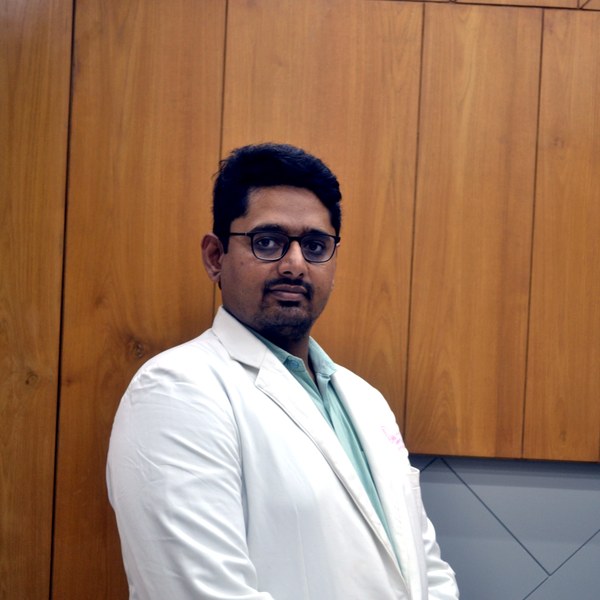
Dr Patel leads obstetric and high-risk pregnancy care at Balaji Horizon, combining advanced fetal-medicine imaging with evidence-based antenatal management — calm, vigilant care focused on the safest outcome for mother and baby.
Advanced fetal imaging and evidence-based antenatal care — calm, vigilant, and focused on the safest outcome for you and your baby.
Understanding your screening choices
Prenatal screening estimates the chance of certain conditions; it does not diagnose them. Understanding that distinction is the key to making calm, informed decisions — a high-chance result is not a diagnosis, and a low-chance result is not a guarantee.
The main options
These include the first-trimester combined test (scan plus blood test), NIPT (a highly sensitive screening blood test for the common chromosomal conditions), and the anomaly scan around 18–22 weeks. Each answers a different question at a different time.
Screening vs diagnosis
If a screening test raises the chance of a condition, the next step is a diagnostic test (CVS or amniocentesis) that gives a definitive answer. We make sure you understand what each result does and does not mean before you decide whether to take the next step.
Our approach
Screening is always your choice. We give you balanced, non-directive information — what each test detects, its accuracy, and what a result would lead to — so the decision reflects your own values, not pressure.
Reading screening results without panic
Screening tests estimate risk; they do not diagnose. A “screen positive” double marker or NIPT result means the chance is higher than a set cut-off — it does not mean the baby is affected, and many screen-positive pregnancies are entirely normal. The correct response is structured: review the exact numbers, repeat or upgrade the test where appropriate, and offer a diagnostic test (CVS or amniocentesis) only when the evidence justifies it. Equally, a reassuring screen is not a guarantee — which is why the anomaly scan remains essential for every pregnancy.
One practical rule
Never make a decision on a screening report alone, and never on the same day you receive it. Bring it to a consultation; fifteen minutes of explanation changes most conversations completely.
Dr. Priyadatt Patel
Senior Gynecologist · Advanced Laparoscopic Surgeon · IVF and Endometriosis Programme Lead
MS OBGyn · Pregnancy Care · Advanced Gynaecological Ultrasound · Fertility Preservation
ESHRE / ESGE / AAGL / ASRM guideline-aligned practice. 3D Karl Storz precision technique. Fertility-preservation-first philosophy. Evidence-based decisions, honest counselling, long-term outcomes orientation.
323, Satyamev Eminence, Beside Saptak Bungalows & AUDA Water Tank, Science City Road, Sola, Ahmedabad 380060
Open 24 hours (emergencies & labour) · OPD Mon–Sat 11:00–20:00 · +91 97234 31544
Naranpura, Ahmedabad
Mon–Sat 08:30–10:30 · +91 70460 02566
“Every screening result is a probability, not a verdict — interpreting it with your history is where the real medicine happens.”Dr. Priyadatt Patel, MBBS, MS (OBGYN)