
Types of Endometriosis — Disease Patterns That Guide Treatment
Endometriosis is not one disease — it is a spectrum. The type and depth of disease guide treatment more reliably than symptom severity alone. A patient with superficial peritoneal disease and a patient with deep infiltrating endometriosis of the rectovaginal septum may report similar pain on a numerical scale, but their surgical risk profile, fertility implications, recurrence risk, and management priorities differ substantially. Identifying the type at diagnosis is essential to making the right treatment decisions — and to avoiding the wrong ones.
Our approach to typing endometriosis
Type is determined by a combination of expert ultrasound (ISUOG IDEA protocol), MRI mapping where deep disease is suspected, AMH testing where surgery on the ovary is being considered, and intra-operative findings if surgery is indicated. Typing is never a single-test diagnosis. We classify by location, depth, and anatomical pattern — then build the treatment plan from there.
Superficial peritoneal endometriosis
The most common form. Endometrial-like implants are confined to the peritoneum (pelvic lining) without significant depth. Surgically accessible and usually responsive to careful excision. Symptoms may still be severe despite limited visible disease — reinforcing that severity does not equate to extent.
Ovarian endometrioma (chocolate cyst)
The cystic form on the ovary, filled with old blood. Visible on routine ultrasound, well characterised by IDEA-protocol imaging. Treatment decisions are nuanced: cystectomy can reduce ovarian reserve, while leaving large endometriomas affects fertility differently. Where fertility preservation matters, we discuss IVF before surgery and the trade-offs in detail.
Deep infiltrating endometriosis (DIE)
The form that infiltrates beyond 5 mm into peritoneum, bowel wall, bladder, ureter, or other structures. Requires specialised pre-operative MRI mapping and an experienced multidisciplinary surgical team. ESGE recommends DIE surgery is performed in centres with sufficient case-volume and the ability to involve colorectal and urological colleagues where indicated.
Adenomyosis
Endometrial-like tissue within the uterine muscle. Often co-exists with endometriosis. Causes heavy menstrual bleeding, dysmenorrhoea, and affects implantation and pregnancy outcomes. Adenomyosis has its own diagnostic pathway and treatment options ranging from levonorgestrel-IUS to focal management to hysterectomy when fertility is no longer a goal.
Why typing matters
Treatment is fundamentally different across types. Superficial disease often responds to hormonal management alone. Deep infiltrating endometriosis requires precision excision surgery, often involving bowel or urological collaboration. Endometrioma management balances pain control, fertility preservation, and ovarian reserve protection. Adenomyosis has its own pathway. Typing first — then individualising treatment — is what differentiates specialist endometriosis care from generic gynaecological surgery.
Types of endometriosis covered in this section
Endometrioma (Chocolate Cyst) Treatment in Ahmedabad
Explore →
Postmenopausal Endometriosis — When Disease Persists
Explore →
Guidelines we follow
- ESHRE 2022 Guideline on Endometriosis — disease classification
- AAGL classification of endometriosis severity
- ESGE consensus on deep infiltrating endometriosis surgery
- ISUOG-IDEA consensus on sonographic typing of pelvic endometriosis
Where this fits
Type informs treatment decisions and feeds directly into the diagnostic pathway. For fertility implications by type, see endometriosis and fertility.
For a specialist consultation, contact Balaji Horizon Women’s Hospital.
WhatsApp the hospital · +91 97234 31544 · Science City Road, Ahmedabad 380060
Free Patient Guide
The Endometriosis Decision Guide
A short clinical primer on diagnostic delay, the four decisions you may face, and what to bring to your specialist consultation. Aligned with ESHRE 2022, ASRM, FIGO guidance.
Reviewed by Dr. Priyadatt Patel — read in 20–25 minutes
Free — delivered to your inbox
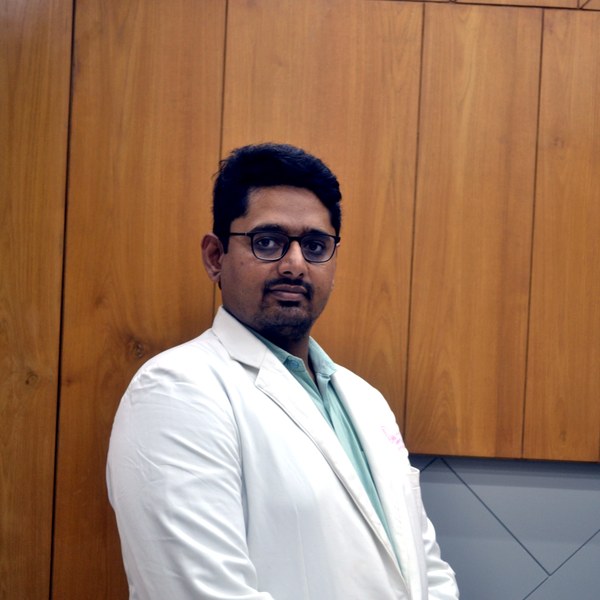
Dr Patel leads endometriosis diagnosis and surgery at Balaji Horizon with an evidence-based, ovarian-sparing philosophy aligned to ESHRE and ESGE — integrating pain, fertility and long-term disease control into a single plan, rather than treating the disease in isolation.
Imaging-led diagnosis, medical-first management, and precise surgery only when it is the right step — planned around your pain and fertility goals.
The four phenotypes at a glance
| Phenotype | Where it sits | Hallmark | Treatment focus |
|---|---|---|---|
| Superficial peritoneal | On the pelvic lining | Cyclical pelvic pain | Medical first; excise if it persists |
| Ovarian endometrioma | Within the ovary | Cyst, impact on reserve | Reserve-led: cystectomy vs IVF-first |
| Deep infiltrating (DIE) | >5 mm; bowel, bladder, ligaments | Severe pain, dyschezia, dyspareunia | Multidisciplinary excision when indicated |
| Adenomyosis-associated | Within the uterine muscle | Heavy bleeding, bulky uterus | Hormonal control; hysterectomy if family complete |
Dr. Priyadatt Patel
Senior Gynecologist · Advanced Laparoscopic Surgeon · IVF and Endometriosis Programme Lead
MS OBGyn · Pregnancy Care · Advanced Gynaecological Ultrasound · Fertility Preservation
ESHRE / ESGE / AAGL / ASRM guideline-aligned practice. 3D Karl Storz precision technique. Fertility-preservation-first philosophy. Evidence-based decisions, honest counselling, long-term outcomes orientation.
Science City Road, Ahmedabad 380060
Mon–Sat 11:00–20:00 · +91 97234 31544
Naranpura, Ahmedabad
Mon–Sat 08:30–10:30 · +91 70460 02566