
Chronic Pelvic Pain — Finding the Cause When Tests Are Normal
Chronic pelvic pain affects up to 15% of reproductive-age women. Standard tests often return normal despite significant symptoms. This page explains the modern approach to chronic pelvic pain when tests are normal, what less common causes to consider, and how to build a multimodal treatment plan.
1. Define the problem accurately
Chronic pelvic pain (CPP): non-cyclical pelvic pain for 6 months or more, sufficient to cause functional impairment. Distinguishes from acute pain, cyclical pain (more typical of endometriosis), and short-duration pain. Map pain location, character, triggers, relievers, time pattern.
2. Standard tests that are often normal
Basic pelvic ultrasound, urine culture, basic blood work, gynaecology examination. When these are normal, the answer is usually “more careful evaluation needed”, not “no cause exists”. Many causes of CPP are not visible on standard imaging.
3. Endometriosis — frequently missed
Deep infiltrating endometriosis often missed on standard ultrasound. Expert pelvic ultrasound using IDEA consensus protocol, or MRI, detects most cases. Laparoscopy may be needed for definitive diagnosis of superficial peritoneal disease. CPP is endometriosis until proven otherwise.
4. Adenomyosis
Endometrial tissue within the uterine muscle. Causes heavy painful periods, chronic pelvic pain, dyspareunia. Missed on routine ultrasound but visible on specialist transvaginal ultrasound or MRI with specific protocol. Often coexists with endometriosis.
5. Pelvic floor dysfunction
Overactive, tense pelvic floor muscles produce significant pain. Can develop secondary to endometriosis, after surgery, after childbirth, or independently. Diagnosed by examination by specialist pelvic floor physiotherapist. Highly treatable with targeted physiotherapy.
6. Interstitial cystitis / bladder pain syndrome
Chronic bladder pain syndrome — urinary frequency, urgency, suprapubic pain, sometimes coexisting with endometriosis or pelvic floor dysfunction. Diagnosed by symptom criteria, urodynamics and sometimes cystoscopy. Treatment includes dietary modification, bladder retraining, medications.
7. Neuropathic pain and central sensitisation
Long-standing pain rewires the nervous system. The pain may persist after the original cause is treated. Diagnosed by clinical pattern (allodynia, hyperalgesia, widespread sensitivity). Treated with neuropathic agents (gabapentin, pregabalin, low-dose tricyclics), pain rehabilitation, mindfulness-based pain programmes.
8. The multimodal treatment plan
Effective CPP management combines: specific diagnosis where possible; pelvic floor physiotherapy; hormonal management if endometriosis; neuropathic agents if central sensitisation; mental health support (often coexisting depression/anxiety); lifestyle modification; selective surgery only where indicated. Single-modality treatment rarely works.
Frequently Asked Questions
My tests are normal but I have pelvic pain — what now?
Could I have endometriosis even if ultrasound is normal?
What is pelvic floor dysfunction?
Should I see a specialist or my regular doctor?
Can stress cause pelvic pain?
Will surgery cure my chronic pelvic pain?
How long does multimodal treatment take to work?
Are pain rehabilitation programmes worth it?
When pelvic pain persists despite normal tests, the priority is an individualised, multidisciplinary assessment that maps every possible pain generator rather than rushing to surgery. You can read how this is approached at our chronic pelvic pain clinic in Ahmedabad.

Related care at Balaji Horizon
If your pelvic pain has lasted six months or more, a structured chronic pelvic pain evaluation in Ahmedabad looks for the underlying cause — including endometriosis and adenomyosis — before any treatment is advised.
Free Patient Guide
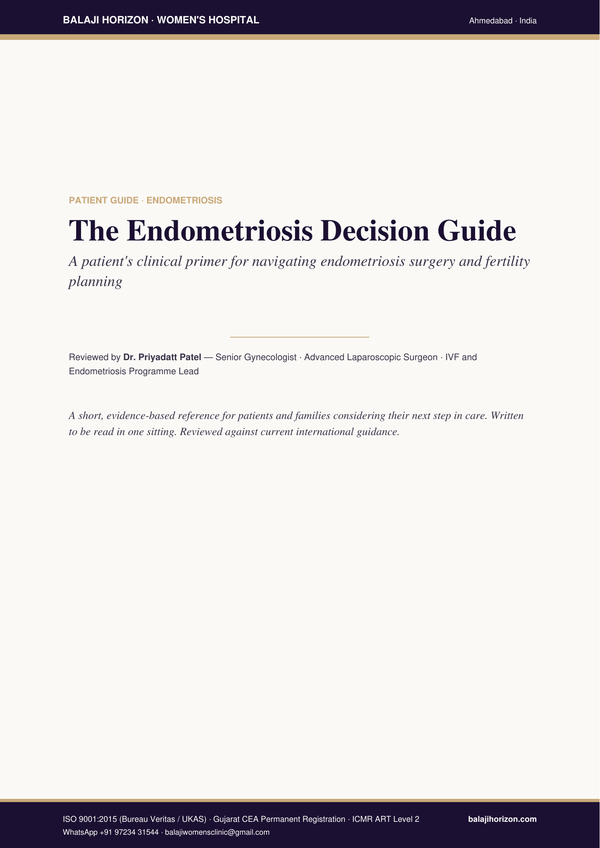
The Endometriosis Decision Guide
A short clinical primer on diagnostic delay, the four decisions you may face, and what to bring to your specialist consultation. Aligned with ESHRE 2022, ASRM, FIGO guidance.
Get the guide →