
Painful Bladder / Interstitial Cystitis vs Gynae Pain
Reading time: about 9 minutes. This article is educational and does not replace an individual consultation.
Pelvic pain and bladder discomfort often travel together, and it can be genuinely hard to know whether the source is gynaecological — such as endometriosis — or a bladder condition like interstitial cystitis (painful bladder syndrome). The two overlap, are frequently confused, and — the point most often missed — can be present at the same time. This guide explains how they differ, why one is so often mistaken for the other, and why a joined-up assessment matters.
In short: bladder-origin pain tends to build as the bladder fills and ease just after passing urine, with daytime frequency and urgency; gynaecological pain such as endometriosis tends to be cyclical, worse around periods, and linked to painful periods or pain during sex. But these patterns overlap, interstitial cystitis and endometriosis co-occur far more often than chance, and normal urine tests do not rule bladder pain out. When symptoms persist, both sources — plus the pelvic floor — deserve looking at together.
Who this article is for
This is for women in Ahmedabad and Gujarat living with pelvic pain and bladder symptoms — burning, pressure, frequency, urgency or pain that will not settle — who want to understand what might be driving it and what a thorough assessment involves. It sits alongside our pages on chronic pelvic pain and bladder endometriosis.
Two conditions that look alike
Interstitial cystitis / bladder pain syndrome (IC/BPS) is a chronic condition causing bladder pain, pressure or discomfort that is usually related to bladder filling, typically with urinary frequency and urgency, in the absence of infection or another identifiable cause. Endometriosis is the presence of endometrium-like tissue outside the uterus; it can cause pelvic and bladder-area pain, and when it involves the bladder or the tissue around it, urinary symptoms too — classically with a cyclical, period-linked rhythm.
Both are conditions of chronic pelvic pain. Both can cause urinary urgency, frequency and pain. Both are commonly missed or delayed for years. And a woman can have both at once — which is exactly why forcing a single label early can send treatment down the wrong track.
Why they are so often confused — and coexist
The overlap is not just superficial. Interstitial cystitis and endometriosis co-occur strikingly often: studies of women with chronic pelvic pain have found that a large share of those with one condition also have the other, a pairing sometimes called the “evil twins” of pelvic pain. Shared mechanisms — chronic pelvic inflammation, cross-talk between pelvic organs that share nerve pathways (“viscero-visceral” sensitisation), and a pelvic floor that tightens protectively in response to either — mean the body’s pain signals blur the boundary between bladder and reproductive organs. This is why treating only one condition sometimes leaves a woman still in pain: the other, or the pelvic floor, was contributing all along.
Clues that point towards a bladder cause
- Pain or pressure that builds as the bladder fills and eases soon after passing urine
- Frequent urination — often many times by day and waking at night — with a persistent sense of urgency
- Discomfort centred low, over the bladder or urethra
- Symptoms that are fairly constant rather than tightly tied to the menstrual cycle
- Flares after certain foods or drinks (for some, caffeine, acidic or spicy foods) — though triggers vary and are not universal
Clues that point towards a gynaecological cause
- Pain that is cyclical — clearly worse in the days around periods
- Painful periods (dysmenorrhoea) or deep pain during or after intercourse
- Bowel or bladder symptoms that flare specifically with the cycle
- Difficulty conceiving alongside the pain
- Cyclical blood in the urine (uncommon, but a strong pointer to bladder endometriosis)
A cyclical pattern raises the possibility of endometriosis in particular — and endometriosis is not always visible on an ultrasound, so a normal scan does not exclude it. This is a recurring theme on our endometriosis diagnosis page.
The overlap works both ways
It is worth stating plainly: the lists above are pointers, not proof. Plenty of women with endometriosis have non-cyclical, daily bladder discomfort; plenty with interstitial cystitis notice their symptoms worsen premenstrually because the pelvic floor and pain thresholds shift across the cycle. The value of the patterns is in raising the right questions — not in slotting a person into one box. When the story does not fit neatly, that is itself a reason to assess both sources rather than commit early to one.
The conditions that also need excluding first
Before either diagnosis is settled, some straightforward causes are ruled out, because they are common and treatable: a urinary tract infection (the first thing a urine test checks), bladder stones, and — where risk factors or warning signs exist — other bladder pathology. Blood in the urine, in particular, is always investigated properly rather than assumed to be benign. Only once infection and other identifiable causes are excluded does interstitial cystitis / bladder pain syndrome become the working diagnosis.
Why a careful, joined-up assessment matters
Because these conditions overlap and frequently coexist, an assessment that stops at the first plausible label risks leaving pain unresolved. A thorough evaluation deliberately considers the bladder, the gynaecological organs, and the pelvic floor — which is so often involved in both that it can become a pain source in its own right. This is the core argument for a multidisciplinary approach to chronic pelvic pain: the aim is to identify every contributing factor, not to win an argument about which single diagnosis is “correct.”
How they are evaluated
A sound assessment usually includes:
- A careful history — the timing, triggers and rhythm of the pain, its relationship to the cycle, to the bladder filling and emptying, to intercourse and to bowel habit; and the impact on daily life and sleep.
- Examination — including, where appropriate, a gentle assessment of the pelvic floor and of tenderness patterns that help localise the source.
- Urine tests — to exclude infection and check for blood; a normal result does not exclude interstitial cystitis but is an essential first step.
- Ultrasound — transvaginal scanning to look for gynaecological causes such as endometriomas or adenomyosis, while remembering that superficial and some deep endometriosis can be invisible on a scan.
- Further, targeted investigation — bladder-focused assessment (such as cystoscopy) or gynaecological evaluation (which may include diagnostic laparoscopy) only when the picture warrants it, not as a routine reflex.
How they are managed
Treatment follows the causes identified, and — because more than one is often at work — it is frequently combined and stepped:
- Pelvic floor physiotherapy is central for many women, because an overactive, tender pelvic floor commonly accompanies both conditions and responds to skilled treatment.
- Bladder-directed measures for interstitial cystitis may include trigger-food adjustment where a person notices a link, bladder-calming strategies, and specific medical therapies guided by a bladder specialist.
- Gynaecological treatment for confirmed or strongly suspected endometriosis follows an individualised plan — medical management, and surgery only where genuinely indicated — always weighing pain, fertility goals and the risk of unnecessary or repeat operations, in line with the fertility-preserving philosophy set out on our endometriosis treatment page.
- Pain and lifestyle support — because chronic pelvic pain has a real nervous-system component, approaches that address pain sensitisation, sleep and wellbeing genuinely help rather than being an afterthought.
The thread running through all of it: treat the contributors you find, review honestly if the first plan does not fully help, and avoid escalating to invasive treatment for a single presumed cause when another is quietly driving the pain.
Questions worth asking at your consultation
- Could my symptoms be coming from my bladder, a gynaecological cause, the pelvic floor — or a combination?
- Given my pattern of pain, should endometriosis be considered even if my scan is normal?
- Have infection and other bladder causes been properly excluded?
- Who should be involved in assessing me — and would pelvic floor physiotherapy help?
- What is the plan if the first treatment does not fully settle the pain?
Pelvic and bladder pain care in Ahmedabad
When pelvic and bladder pain overlap, a joined-up assessment is what avoids missing a contributing cause. At Balaji Horizon Women’s Hospital on Science City Road, Ahmedabad, pelvic pain is evaluated across gynaecological and bladder-related sources together — with attention to the pelvic floor and, where needed, a multidisciplinary plan — rather than being forced into a single label. Where endometriosis is confirmed, management follows the hospital’s fertility-preserving, evidence-based approach: our team weighs pain, fertility and long-term outcomes, and reserves surgery for clear indications.
When to seek advice
See a doctor if you have ongoing bladder discomfort with pelvic pain — especially if urine tests are clear but symptoms persist, if the pain is cyclical, or if there is blood in the urine. Persistent, unexplained pelvic-bladder pain deserves a thorough, unhurried look rather than repeated short courses of antibiotics for infections that are not there. You can read more on endometriosis and chronic pelvic pain, or reach us through the contact page.
References
- American College of Obstetricians and Gynecologists. Chronic Pelvic Pain. ACOG Practice Bulletin No. 218. Obstet Gynecol. 2020;135(3):e98–e109. doi:10.1097/AOG.0000000000003716
- Clemens JQ, Erickson DR, Varela NP, Lai HH. Diagnosis and Treatment of Interstitial Cystitis/Bladder Pain Syndrome. AUA Guideline. J Urol. 2022;208(1):34–42. doi:10.1097/JU.0000000000002756
- Becker CM, Bokor A, Heikinheimo O, et al. ESHRE guideline: endometriosis. Hum Reprod Open. 2022;2022(2):hoac009. doi:10.1093/hropen/hoac009
- Chung MK, Chung RP, Gordon D. Interstitial cystitis and endometriosis in patients with chronic pelvic pain: The “Evil Twins” syndrome. JSLS. 2005;9(1):25–29.
Frequently asked questions
How do I know if my pain is from my bladder or a gynaecological cause?
Bladder-origin pain tends to build as the bladder fills and ease after passing urine, with frequency and urgency; gynaecological causes such as endometriosis tend to be cyclical, worse around periods, and linked to painful periods or pain during sex. But the patterns overlap and the two frequently coexist, so a careful assessment — not a symptom checklist alone — is what tells them apart.
Can I have both interstitial cystitis and endometriosis?
Yes, and it is more common than chance — the two are so often paired in chronic pelvic pain that they have been nicknamed the “evil twins.” This is a key reason treating only one condition can leave pain unresolved, and why a joined-up assessment considers both together, along with the pelvic floor.
My urine tests are normal but my bladder still hurts — why?
Interstitial cystitis / bladder pain syndrome causes bladder pain, pressure and urgency without infection, so urine tests are typically clear. A normal test does not mean nothing is wrong — it means infection has been excluded and the symptoms deserve further bladder-focused assessment rather than repeated antibiotics.
Could endometriosis affect my bladder?
Yes. Endometriosis can involve the bladder or the tissue around it and cause urinary symptoms, often cyclical — occasionally including cyclical blood in the urine. Because superficial and some deep endometriosis are not visible on a scan, it should be considered when the pattern fits even if the ultrasound is normal.
Why is a multidisciplinary approach recommended?
Because pelvic-bladder pain usually has more than one contributor — bladder, gynaecological organs and the pelvic floor — addressing them together is more effective than treating one in isolation. Pelvic floor physiotherapy in particular helps many women, because an overactive pelvic floor commonly accompanies both conditions.
Reviewed by Dr. Priyadatt Patel, MBBS, MS — Balaji Horizon Women’s Hospital, Science City Road, Ahmedabad. Last reviewed: 19 July 2026.
Disclaimer: This article is for educational purposes only and does not replace a consultation with a qualified specialist. Care is always individualised.

Free Patient Guide
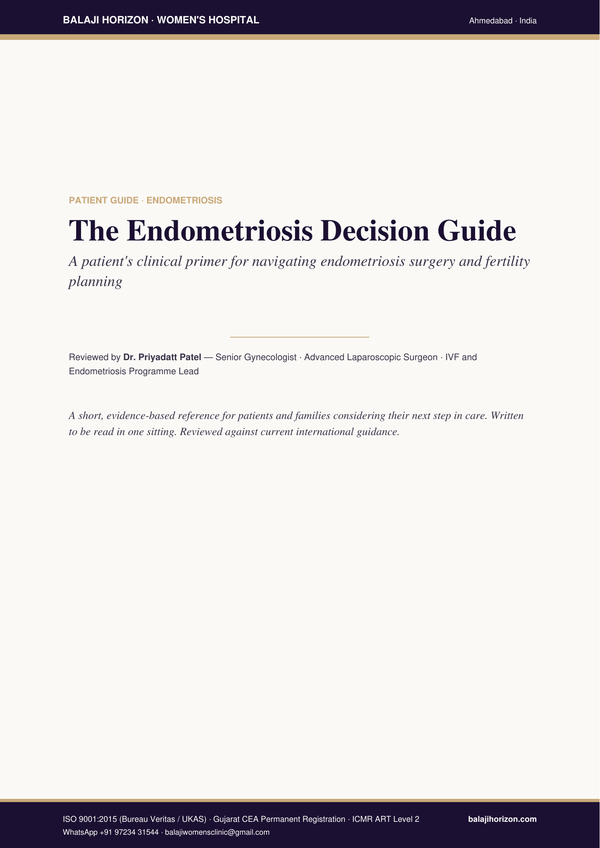
The Endometriosis Decision Guide
A short clinical primer on diagnostic delay, the four decisions you may face, and what to bring to your specialist consultation. Aligned with ESHRE 2022, ASRM, FIGO guidance.
Get the guide →