
Endometriosis Flare-Ups: Managing Pain and When to Seek Help
Reading time: about 6 minutes. This article is educational and does not replace an individual consultation.
Living with endometriosis means learning to manage flare-ups — episodes when pain intensifies. While ongoing care should be guided by your specialist, having practical strategies for difficult days, and knowing when a flare needs medical attention, can make a real difference. This article offers both.
Who this article is for
This is for women in Ahmedabad and Gujarat living with diagnosed or suspected endometriosis who want practical, safe guidance for flare-ups.
What a flare-up is
An endometriosis flare is a period of worsened pain, which may be triggered around menstruation or at other times. Flares are part of the condition’s long-term, fluctuating nature, and managing them is one reason endometriosis is best approached as a chronic condition with an ongoing plan, rather than a one-off problem [Source: ESHRE Endometriosis Guideline, 2022].
Practical strategies for difficult days
These general measures help many women, alongside the treatment your doctor has prescribed:
- Heat. A warm pack on the lower abdomen can ease cramping for many women.
- Pain relief as advised. Use the pain-relief approach your doctor has recommended, at the right time — often most effective when started early in a flare [Source: ESHRE Endometriosis Guideline, 2022].
- Gentle movement and rest. Light activity, stretching, or relaxation techniques help some women; others need rest. Listen to your body.
- Pelvic floor relaxation and breathing. These can reduce the muscle tension that often accompanies pain.
- Track your flares. Noting triggers and patterns helps you and your specialist refine your plan.
These are supportive measures, not a substitute for a proper treatment plan, and they should fit within the limits your doctor advises.
Working with your specialist
If flares are frequent or worsening, that is important information — it may mean your ongoing treatment needs reviewing rather than just managing each flare as it comes. Endometriosis care works best when the plan adapts over time [Source: ESHRE Endometriosis Guideline, 2022].
When a flare needs medical attention
Seek medical advice if:
- Pain is much more severe than your usual flares, or does not respond to your usual measures
- You have fever, vomiting, or feel very unwell
- You have sudden, severe, one-sided pain (which needs urgent assessment to exclude other causes such as ovarian torsion)
- You have heavy bleeding with dizziness or faintness
- New or changing symptoms appear
Severe or unusual pain should never simply be endured at home [Source: ESHRE Endometriosis Guideline, 2022].
What to ask
- What should my plan be for managing a flare at home?
- When should a flare prompt me to contact you or seek urgent care?
- Do my frequent flares mean my treatment should be reviewed?
Endometriosis care in Ahmedabad
Managing flares well is part of good long-term endometriosis care. Balaji Horizon Women’s Hospital, on Science City Road in Ahmedabad, supports women with endometriosis through individualised, adaptable plans — including clear guidance on managing flares and when to seek help.
When to seek advice
Contact your specialist if flares are becoming more frequent or severe, and seek urgent care for sudden severe pain, fever, or feeling very unwell. Worsening flares are a reason to review your plan, not to struggle on alone [Source: ESHRE Endometriosis Guideline, 2022].
A note on next steps
For a personalised endometriosis plan, our team can help. Read more on our living with endometriosis and treatment pages.
Frequently asked questions
What triggers an endometriosis flare?
Flares are often linked to menstruation but can occur at other times, and triggers vary between women. Tracking your flares helps identify patterns and refine your plan with your specialist [Source: ESHRE Endometriosis Guideline, 2022].
How can I manage a flare at home?
Heat, pain relief as advised (often most effective started early), gentle movement or rest, and relaxation techniques help many women. These supportive measures work alongside, not instead of, your prescribed treatment plan [Source: ESHRE Endometriosis Guideline, 2022].
When should I worry about a flare?
Seek advice if pain is much worse than usual or does not respond to your usual measures, or if you have fever, vomiting, sudden severe one-sided pain, or heavy bleeding with faintness. Severe or unusual pain needs assessment [Source: ESHRE Endometriosis Guideline, 2022].
Do frequent flares mean my endometriosis is getting worse?
Not necessarily, but frequent or worsening flares are important information that may mean your treatment plan needs reviewing. Endometriosis care works best when the plan adapts over time.
Should I avoid painkillers so I do not mask symptoms?
No — using the pain relief your doctor has recommended, at the right time, is part of managing the condition. Discuss your pain-relief plan with your specialist so it is both effective and safe for you.
Disclaimer: This article is for educational purposes only and does not replace a consultation with a qualified gynaecologist. Do not change prescribed treatment without medical advice.

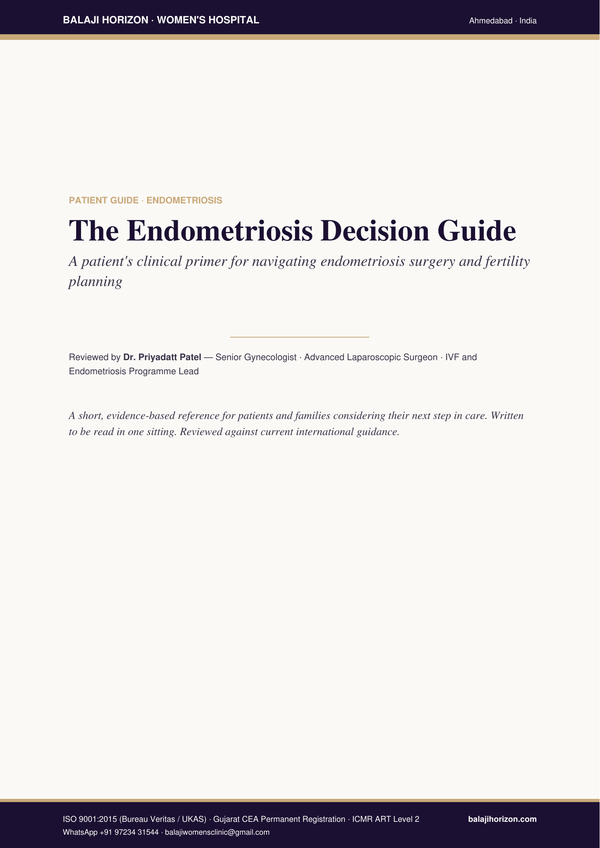
Free Patient Guide
The Endometriosis Decision Guide
A short clinical primer on diagnostic delay, the four decisions you may face, and what to bring to your specialist consultation. Aligned with ESHRE 2022, ASRM, FIGO guidance.
Get the guide →