
Outcomes Transparency — How We Report and Counsel
Responsible centres publish outcomes honestly. This page describes how we counsel patients on realistic prognoses, how we report surgical and IVF outcomes, and why honest counselling produces better long-term patient relationships than inflated success claims.
1. Why outcomes transparency matters
Patients deserve realistic prognosis to make informed decisions about surgery, IVF, donor gametes and life planning. Inflated success claims may convert short-term but destroy trust long-term. International specialist centres benchmark their outcomes against ESHRE, ASRM and national registries. Transparent reporting is a quality marker, not a marketing weakness.
2. Surgical outcomes — what we report
For endometriosis surgery patients: pain improvement at 6 and 12 months (using validated quality-of-life scores), recurrence rates over time, reoperation rates, fertility outcomes for those attempting conception. Complications honestly disclosed at consultation, not buried. Outcomes shared in writing.
3. IVF outcomes — the right metrics
Per-cycle live birth rate stratified by age (ESHRE-standard reporting). Cumulative live birth per egg retrieval — the metric that matters most for patient prognosis. Not per-transfer (which inflates by counting good prognosis cases only) or pregnancy rate (which obscures miscarriage rate). Honest age-stratified numbers given at counselling, not generic clinic averages.
4. What we do not report
We do not quote “98 percent success” or similar unverifiable single statistics. We do not cherry-pick favourable patient subsets. We do not exclude cases that did not reach embryo transfer from cycle counts. We do not promise specific outcomes — IVF involves biological uncertainty no clinic can override.
5. Honest counselling at consultation
Every patient receives an age-stratified, individualised prognosis at the consultation. AMH, AFC, age, prior history and any coexisting pathology are integrated into a personal probability range. Written summary provided. Decisions about treatment intensity, stopping rules and alternative options discussed proactively.
6. Realistic expectations for endometriosis surgery
Pain improvement after laparoscopic endometriosis excision: most patients experience significant improvement (60–80 percent reduction in symptom scores at 1 year in published series). Recurrence: documented at 20–40 percent over 5 years across literature, mitigated by post-operative hormonal suppression. Fertility outcomes vary with stage and other factors. Patients given honest range, not promises.
7. Realistic expectations for IVF
Per-cycle live birth: 40–50 percent for under 35, 30–40 percent for 35–37, 20–25 percent for 38–40, 10–15 percent for 41–42, under 5 percent over 42 with own eggs. Cumulative across 3 cycles approaches 70–80 percent in younger patients. Donor egg resets curve to donor age. These are honest population numbers; individual prognosis may vary.
8. Continuous improvement
Patient outcomes monitored for internal quality assurance. Cases that produced suboptimal outcomes reviewed for technical or planning factors that could be improved. Continuous learning from each case — not just successful ones. This is how specialist centres get better over time.
How we report and counsel on outcomes
| What | How |
|---|---|
| Realistic success rates | By your individual situation |
| Recurrence | Stated honestly up front |
| Complication rates | Discussed before surgery |
| Guarantees | None — ethical counselling only |
Aligned with current international evidence, not habit.
Frequently Asked Questions
Why no specific success-rate claim on your website?
Will you tell me my realistic chance of pregnancy?
How do I know your outcomes are honest?
Do you publish your success rates?
What if your honest counselling tells me IVF will probably not work?
Are surgical outcomes audited?
What pain improvement can I expect after endometriosis surgery?
How does this compare to other centres?
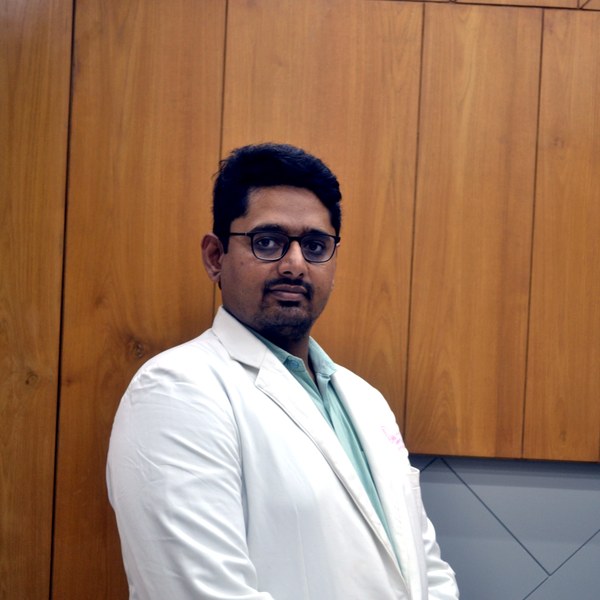
Dr Patel leads endometriosis diagnosis and surgery at Balaji Horizon with an evidence-based, ovarian-sparing philosophy aligned to ESHRE and ESGE — integrating pain, fertility and long-term disease control into a single plan, rather than treating the disease in isolation.
Imaging-led diagnosis, medical-first management, and precise surgery only when it is the right step — planned around your pain and fertility goals.
Free Patient Guide
The Endometriosis Decision Guide
A short clinical primer on diagnostic delay, the four decisions you may face, and what to bring to your specialist consultation. Aligned with ESHRE 2022, ASRM, FIGO guidance.
Reviewed by Dr. Priyadatt Patel — read in 20–25 minutes
Free — delivered to your inbox
Dr. Priyadatt Patel
Senior Gynecologist · Advanced Laparoscopic Surgeon · IVF and Endometriosis Programme Lead
MS OBGyn · Pregnancy Care · Advanced Gynaecological Ultrasound · Fertility Preservation
ESHRE / ESGE / AAGL / ASRM guideline-aligned practice. 3D Karl Storz precision technique. Fertility-preservation-first philosophy. Evidence-based decisions, honest counselling, long-term outcomes orientation.
323, Satyamev Eminence, Beside Saptak Bungalows & AUDA Water Tank, Science City Road, Sola, Ahmedabad 380060
Open 24 hours (emergencies & labour) · OPD Mon–Sat 11:00–20:00 · +91 97234 31544
Naranpura, Ahmedabad
Mon–Sat 08:30–10:30 · +91 70460 02566