
Our Approach to Endometriosis Care
Endometriosis is a chronic, individualised disease. Our approach prioritises early accurate diagnosis through expert imaging, evidence-based individualised treatment planning, fertility-preservation-first decisions, and long-term integrated care over reactive surgical episodes.
1. Accurate diagnosis through expert imaging
Average global diagnostic delay in endometriosis is 7–10 years. Our practice anchors early diagnosis on structured clinical assessment plus expert transvaginal ultrasound using the ISUOG IDEA consensus protocol — capable of detecting most deep infiltrating disease, endometriomas and ureteric/bowel/bladder involvement. MRI is added for complex deep disease and surgical planning. Laparoscopy is reserved for cases where it changes management, not for staging alone.
2. Individualised treatment planning
No two endometriosis patients are alike. Stage, symptom burden, fertility goals, age, ovarian reserve, prior surgery history and life context all weigh into the plan. ESHRE 2022 guideline framework provides the evidence base; individual judgement adapts it to the patient. One-size-fits-all algorithms are avoided.
3. Medical management as foundation
For most patients, hormonal medical management is the cornerstone — combined oral contraceptive (continuous), progestin-only therapy (especially dienogest), Mirena IUS, GnRH analogues with add-back, and newer GnRH antagonists. Choice tailored to age, contraception needs, tolerability and severity. Surgery becomes the right answer when medical management is insufficient — not before.
4. Surgery when warranted, done well once
When surgery is the right answer, it is excisional (not ablative), uses 3D Karl Storz precision, preserves ovarian reserve, and follows nerve-sparing principles. Repeat surgery is avoided where IVF-first is evidence-supported. The aim is the most complete and least damaging excision possible in a single procedure. The reasoning behind excision rather than ablation, and why lesion location dictates the operative plan, is set out in endometriosis treatment in Sola, Ahmedabad.
5. Fertility-first decisions
For any reproductive-age patient, fertility implications of each decision are considered explicitly. AMH measured before ovarian intervention. Egg freezing discussed before surgery where indicated. ESHRE 2022 framework on surgery-versus-IVF-first applied honestly to each case.
6. Multidisciplinary integration
Complex cases involve colorectal surgery, urology, fetal medicine, pain medicine, mental health and pelvic floor physiotherapy. The patient receives one coordinated plan from one team — not five conflicting opinions across fragmented referrals. What that looks like in practice — the presentations seen most often and how each is worked up — is described on endometriosis specialist in Ahmedabad.
7. Long-term follow-up
Endometriosis is chronic. Annual review is the minimum standard, regardless of symptom status. Recurrence monitoring, medication tolerance assessment, fertility planning updates, mental health screening, and quality-of-life check-ins are integral to the care relationship — not optional add-ons.
8. Patient education and autonomy
Patients are partners in decisions. Treatment options are explained with their evidence base. Uncertainty is shared honestly. Second opinions are welcomed. The aim is informed patient choice, not paternalistic prescription. This website itself reflects that philosophy — depth of public-facing education is part of how care is delivered.
What guides our decisions
| Principle | In practice |
|---|---|
| Individualised, not algorithmic | The plan fits the patient |
| Ovarian-sparing | Protect ovarian reserve |
| Conservative-first | Medical before surgery where appropriate |
| One team | Surgery and fertility planned together |
| Honest counselling | No overpromising of outcomes |
Aligned with current international evidence, not habit.
Frequently Asked Questions
Do you offer non-surgical management?
How do you avoid over-surgery?
How quickly can I be evaluated?
Will I always need the same doctor for follow-up?
What if surgery is recommended but I want to wait?
How do you handle patients with very severe disease?
Do you treat patients who have had failed prior surgery?
Where can I read more about your surgical principles?
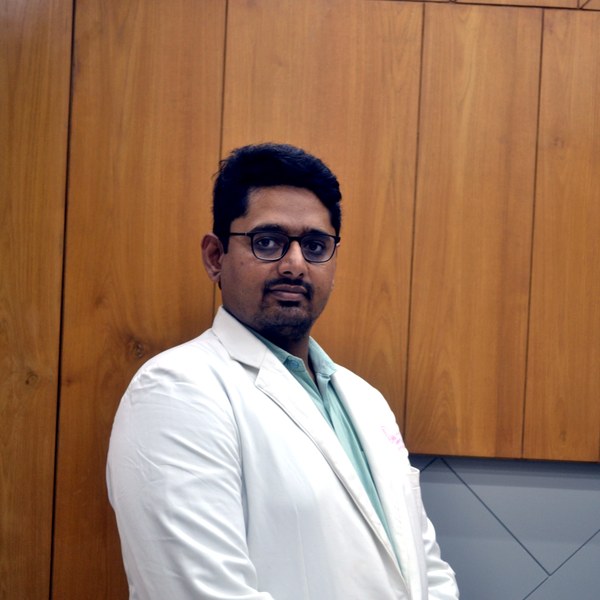
Dr Patel leads endometriosis diagnosis and surgery at Balaji Horizon with an evidence-based, ovarian-sparing philosophy aligned to ESHRE and ESGE — integrating pain, fertility and long-term disease control into a single plan, rather than treating the disease in isolation.
Imaging-led diagnosis, medical-first management, and precise surgery only when it is the right step — planned around your pain and fertility goals.
Dr. Priyadatt Patel
Senior Gynecologist · Advanced Laparoscopic Surgeon · IVF and Endometriosis Programme Lead
MS OBGyn · Pregnancy Care · Advanced Gynaecological Ultrasound · Fertility Preservation
ESHRE / ESGE / AAGL / ASRM guideline-aligned practice. 3D Karl Storz precision technique. Fertility-preservation-first philosophy. Evidence-based decisions, honest counselling, long-term outcomes orientation.
323, Satyamev Eminence, Beside Saptak Bungalows & AUDA Water Tank, Science City Road, Sola, Ahmedabad 380060
Open 24 hours (emergencies & labour) · OPD Mon–Sat 11:00–20:00 · +91 97234 31544
Naranpura, Ahmedabad
Mon–Sat 08:30–10:30 · +91 70460 02566