
Donor Egg IVF — When Own Eggs Are Not the Answer
Donor egg IVF removes the age-related aneuploidy barrier, restoring success rates to 50-60 percent regardless of recipient age. This page covers when donor egg is appropriate, the process, legal framework, and emotional considerations.
1. When donor egg is the right answer
Premature ovarian insufficiency. Age 43+ with very low ovarian reserve. Multiple failed own-egg cycles with poor embryo quality. Persistent aneuploidy on PGT-A despite good morphology. Genetic conditions transmissible through eggs. Recurrent miscarriage with chromosomal cause. AMH below 0.3 ng/ml with failed cycles. Patient preference after honest own-egg counselling.
2. Success rates
Per-cycle live birth: 50-60 percent (donor age determines, not recipient age). Cumulative success across 2 cycles approaches 80 percent. Substantially higher than own-egg IVF in indicated recipients. Restores age-appropriate outcomes from a younger donor.
3. ICMR ART Act 2021 framework
Regulates donor selection, anonymity, age range, compensation. Donors must be screened comprehensively. Recipient counselling required. Documentation extensive. Specific procedures for international patients. Compliance is mandatory; non-compliant programmes carry legal risk.
4. Donor selection
ICMR-compliant egg banks or known donors (within Act provisions). Comprehensive screening: genetic, infectious, hereditary, psychological. Donor characteristics matching where possible — physical features, education, ethnic background, blood group. Donor anonymity preserved. Synchronised or vitrified-thawed cycles available.
5. Cycle process
Recipient endometrial preparation with estradiol then progesterone. Synchronisation with donor cycle (fresh) or scheduled FET (vitrified). Embryo transfer at appropriate endometrial day. Luteal support through 10 weeks. Standard pregnancy testing and monitoring.
6. Psychological considerations
Significant emotional work — accepting loss of genetic motherhood, integrating new family-building model, disclosure decisions for future child. Multiple counselling sessions recommended. Partner alignment essential. Many recipients report initial grief then full acceptance and joy. Long-term outcomes for donor-conceived children excellent.
7. Legal and family aspects
Genetic mother (donor) has no legal rights to child per ICMR Act. Birth mother is legal mother. Adoption-type documentation not required. Donor anonymity preserves legal clarity. Future disclosure to child is recommended by modern psychological consensus but is the family choice.
8. Disclosure to children
Modern best practice favours age-appropriate disclosure from early childhood. Donor-conceived children fare better when told from early ages. Resources available for parents. Disclosure decision is yours but well-evidenced for child psychological welfare.
Donor-egg IVF — when it is considered
| Situation | Why |
|---|---|
| Very low ovarian reserve | Own eggs unlikely to succeed |
| Premature ovarian insufficiency | No available eggs |
| Repeated poor egg quality | Better chance with donor |
| Genetic condition | Avoid transmission |
Our IVF practice follows international reproductive-medicine standards — honest, individualised, no overpromising.
Frequently Asked Questions
When should I consider donor egg?
What are donor egg success rates?
Is donor egg legal in India?
How is the donor chosen?
Will the child be biologically mine?
Should I tell my child about donor conception?
What about pregnancy risks with donor egg?
How much does donor egg cost?
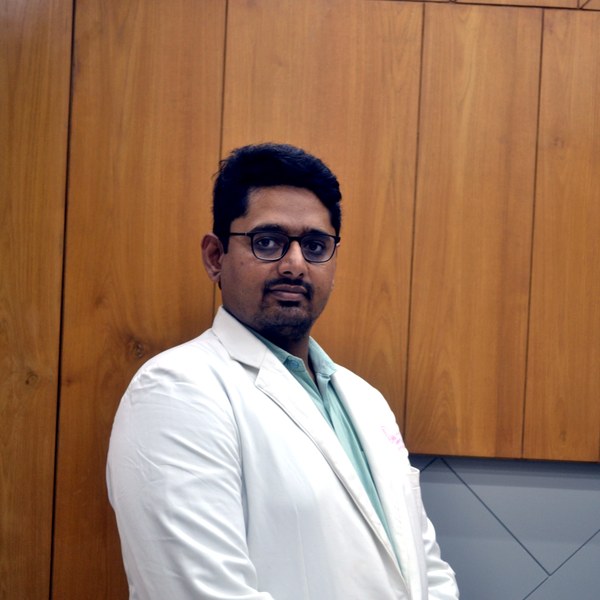
Dr Patel leads fertility care at Balaji Horizon, integrating reproductive surgery and IVF into a single plan — ethical, evidence-based and individualised, with realistic expectations and no overpromising of success.
Individualised IVF and fertility planning with honest, evidence-based counselling — and realistic expectations from the very first consultation.
Dr. Priyadatt Patel
Senior Gynecologist · Advanced Laparoscopic Surgeon · IVF and Endometriosis Programme Lead
MS OBGyn · Pregnancy Care · Advanced Gynaecological Ultrasound · Fertility Preservation
ESHRE / ESGE / AAGL / ASRM guideline-aligned practice. 3D Karl Storz precision technique. Fertility-preservation-first philosophy. Evidence-based decisions, honest counselling, long-term outcomes orientation.
323, Satyamev Eminence, Beside Saptak Bungalows & AUDA Water Tank, Science City Road, Sola, Ahmedabad 380060
Open 24 hours (emergencies & labour) · OPD Mon–Sat 11:00–20:00 · +91 97234 31544
Naranpura, Ahmedabad
Mon–Sat 08:30–10:30 · +91 70460 02566