

OHSS Prevention — Modern Protocols Make Severe OHSS Avoidable
In short — Ovarian hyperstimulation syndrome is an over-response to stimulation. With antagonist protocols, agonist triggers, dose adjustment and freezing all embryos where risk is high, severe OHSS is now largely avoidable. Prevention is built into how the cycle is planned, not managed only once symptoms appear.
Ovarian Hyperstimulation Syndrome (OHSS) is the most serious avoidable complication of IVF stimulation. Modern antagonist protocols with agonist trigger and freeze-all strategy have made severe OHSS rare. This page explains the risk factors, prevention strategy and management.
1. What OHSS is
An exaggerated response to ovarian stimulation. Multiple follicles develop simultaneously. After trigger and ovulation, the corpus luteum produces excessive VEGF (vascular endothelial growth factor), causing increased vascular permeability. Fluid shifts from blood into the abdomen and other spaces. Mild forms: bloating, discomfort. Severe forms: ascites, dehydration, thrombosis, respiratory compromise.
2. Severity grading
Mild — bloating, mild abdominal discomfort, ovaries enlarged 5–10 cm. Moderate — ascites on ultrasound, weight gain, more significant discomfort. Severe — clinical ascites, weight gain over 1 kg/day, decreased urine output, dehydration, abnormal blood tests. Critical — respiratory distress, renal failure, thrombosis, requiring intensive care.
3. Risk factors
PCOS — highest risk group. Young age. High AMH (above 3.5 ng/ml). High antral follicle count. Previous OHSS. Aggressive stimulation. hCG trigger. Pregnancy (hCG from placenta sustains OHSS). Lean body type. Many follicles developing (over 15–20). Rapid estradiol rise during stimulation.
4. Prevention — antagonist with agonist trigger
The single most important advance. Antagonist protocol allows use of GnRH agonist trigger (Lupride single dose) instead of hCG. Agonist trigger has very short half-life — induces final maturation but does not sustain corpus luteum. Severe OHSS becomes extremely rare with this approach. Standard for any OHSS-prone patient.
5. Freeze-all strategy
When agonist trigger is used, fresh embryo transfer is not optimal (luteal support insufficient). Solution: freeze all embryos, transfer in subsequent cycle with optimised endometrial preparation. Removes pregnancy from equation — prevents pregnancy-related OHSS exacerbation. Outcomes comparable to fresh transfer with much lower OHSS risk.
6. Other prevention measures
Individualised FSH dosing based on AMH and AFC — avoid over-stimulation. Lower starting doses in PCOS and high responders. Cabergoline 0.5 mg daily from trigger day for 7 days — reduces VEGF effect. Coasting (withholding FSH) in selected cases. Cycle cancellation if extreme response. Volume expansion (hydration) at retrieval.
7. Management of mild-moderate OHSS
Outpatient management. Adequate hydration. Avoid strenuous activity. Daily weight and abdominal girth monitoring. Diet — high protein, electrolyte balance. Monitor for severe symptoms. Most resolve within 1–2 weeks. Pregnancy may prolong; avoid fresh transfer if at moderate-severe risk.
8. Management of severe OHSS
Hospital admission required. IV fluid management. Albumin infusion. Thromboprophylaxis (low-molecular-weight heparin). Paracentesis for tense ascites. Monitor renal and respiratory function. Pregnancy from current cycle exacerbates and prolongs — freeze-all decision protects from this. Critical OHSS requires ICU. With modern prevention, severe OHSS is now rare.
Preventing OHSS
| Strategy | How it helps |
|---|---|
| Antagonist protocol | Controllable |
| GnRH-agonist trigger | Lowers OHSS risk |
| Freeze-all | Avoids late OHSS |
Our IVF practice follows international reproductive-medicine standards.
Frequently Asked Questions
How common is severe OHSS today?
Am I at risk for OHSS?
What is agonist trigger?
Will I need to freeze all embryos?
Is freeze-all transfer as effective?
What if I get OHSS?
Can OHSS happen weeks after retrieval?
Does cabergoline help prevent OHSS?
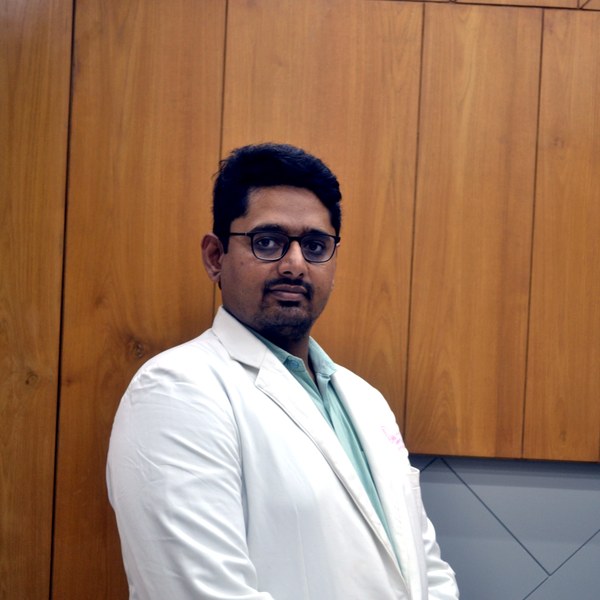
Dr Patel leads fertility care at Balaji Horizon, integrating reproductive surgery and IVF into a single plan — ethical, evidence-based and individualised, with realistic expectations and no overpromising of success.
Individualised IVF and fertility planning with honest, evidence-based counselling — and realistic expectations from the very first consultation.
Dr. Priyadatt Patel
Senior Gynecologist · Advanced Laparoscopic Surgeon · IVF and Endometriosis Programme Lead
MS OBGyn · Pregnancy Care · Advanced Gynaecological Ultrasound · Fertility Preservation
ESHRE / ESGE / AAGL / ASRM guideline-aligned practice. 3D Karl Storz precision technique. Fertility-preservation-first philosophy. Evidence-based decisions, honest counselling, long-term outcomes orientation.
Science City Road, Ahmedabad 380060
Mon–Sat 11:00–20:00 · +91 97234 31544
Naranpura, Ahmedabad
Mon–Sat 08:30–10:30 · +91 70460 02566