

Part of our Gynaecology Care · Ahmedabad
PCOS Treatment & Care
Not Just Your Periods. Your Whole Health.
PCOS — now increasingly known as PMOS (Polycystic Metabolic-Ovarian Syndrome) — affects hormones, metabolism, fertility, skin, and long-term health. Evidence-based, phenotype-aware care by Dr. Priyadatt Patel.
The Four Types (Phenotypes) of PCOS
At Balaji Horizon, Dr. Patel often frames this condition as PMOS — a poly-metabolic ovarian syndrome — to keep the focus on its metabolic core rather than the ovaries alone. PCOS is not one condition but a spectrum. International criteria recognise four phenotypes, based on the combination of three features — irregular ovulation, signs of raised androgens (such as acne or excess hair growth), and the characteristic ovarian appearance on ultrasound [Source: International Evidence-Based Guideline for PCOS, 2023]. Two women labelled “PCOS” can have very different pictures: one with irregular cycles and metabolic features, another with androgen symptoms but regular periods. This matters because the phenotype shapes the priorities of care — cycle regulation, androgen symptoms, metabolic health, or fertility. A precise diagnosis, with other causes excluded, is the foundation of a plan that fits you rather than a generic “PCOS protocol.” Read more about menstrual health and irregular cycles.
Lean PCOS — When You’re Not Overweight
A common myth is that PCOS only affects women who are overweight. In reality, PCOS occurs across all body types, and “lean PCOS” is well recognised [Source: International PCOS Guideline, 2023]. Many slim women with PCOS still have a degree of insulin resistance contributing to the hormonal picture — which is why metabolic health matters even at a normal weight, and why “just lose weight” is the wrong advice for them. Care for lean PCOS focuses on supporting how the body handles insulin and on the symptoms and goals that matter to you, using the same evidence-based options as for anyone with PCOS. Lean PCOS covers how the presentation differs and why a normal BMI does not make the diagnosis less real.
PCOS and Your Long-Term Health
PCOS — or PMOS — is a lifelong condition that deserves attention beyond periods and fertility. It is associated with longer-term considerations including insulin resistance, a higher risk of type 2 diabetes, and cardiovascular and metabolic health [Source: International PCOS Guideline, 2023]. Where cycles are very infrequent, the lining of the uterus also needs periodic attention. None of this is cause for alarm — it is the reason ongoing, periodic review is valuable rather than one-off treatment. A long-term plan lets us monitor what matters and adjust care as your priorities change across life stages, from the reproductive years through to menopause. Our broader women’s health care supports this continuity.
Common PCOS Myths, Cleared Up
“PCOS can be cured.” No — but it is very manageable, and symptoms and long-term risks improve with the right plan. “The cysts are dangerous and must be removed.” The appearance described in PCOS reflects many small follicles, not cysts that need surgery. “PCOS means I can’t have children.” Many women with PCOS conceive, often with simple ovulation support when needed — see PCOS and fertility care. “It’s just a period problem.” PCOS is a metabolic and hormonal condition that happens to involve the ovaries — which is exactly why we treat the whole picture, not only the cycle. More of the misconceptions patients arrive with are addressed in PCOS myths and misconceptions.
PCOS is a Metabolic Condition That Happens to Involve the Ovaries
PCOS is a hormonal and metabolic condition, not just an ovarian problem. The “cysts” seen on ultrasound are actually small immature follicles, and many women with PCOS do not have polycystic ovaries on scan at all.
International expert groups now propose renaming PCOS as PMOS — Polycystic Metabolic-Ovarian Syndrome. The new name better reflects what we have learned: this is a metabolic condition that happens to involve the ovaries, not the other way around. What that means day to day — diet, movement, sleep and weight — is set out in lifestyle management in PCOS.
Symptoms — Beyond Irregular Periods
PCOS rarely shows up the same way in two women. Personalised assessment matters.
Irregular cycles
Cycles longer than 35 days, fewer than 8 periods/year, or skipped months.
Acne & oily skin
Persistent jawline acne, often resistant to topical treatment.
Hirsutism
Unwanted hair growth on face, chin, chest, abdomen or thighs.
Weight gain
Especially central abdominal weight that is difficult to lose.
Difficulty conceiving
Anovulation is the most common cause of PCOS-related subfertility.
Mood & anxiety
PCOS is independently linked to higher rates of anxiety and depression.
Three Pillars of PCOS Care
Every plan is built on these three pillars — the proportion is what changes between patients.
Sustainable nutrition, resistance training, sleep, stress. 5-10% weight reduction is often transformative.
OCPs, metformin, inositols, anti-androgens, GLP-1 — matched to your phenotype and goals.
Pre-conception counselling, letrozole ovulation induction, IVF with OHSS-aware protocols when needed.
PCOS is lifelong. Diabetes, NAFLD, cardiovascular, endometrial — surveilled per ESHRE 2023.
Dr. Priyadatt Patel
Senior Gynecologist · IVF Programme Lead · Advanced Laparoscopic Surgeon · Endometriosis Programme Lead
“Most PCOS patients I see have been treated for years without ever being phenotyped or screened for metabolic risk. PCOS care is not just about restoring a period — it is about protecting fertility now, and metabolic health for the next 30 years.”
Frequently Asked Questions
Is PCOS the same as PCOD?
No. PCOS is a hormonal-metabolic syndrome diagnosed by Rotterdam criteria. PCOD is an older term that often refers only to an ultrasound finding — not sufficient for diagnosis.
Can I get pregnant naturally with PCOS?
Many women with PCOS conceive naturally. When ovulation is irregular, letrozole is highly effective. IVF is reserved for cases where it is clinically indicated.
Will birth control pills affect my future fertility?
There is no reliable evidence that combined oral contraceptives cause future infertility.
I am not overweight — can I still have PCOS?
Yes. “Lean PCOS” is well-recognised. Insulin resistance and hormonal features can be present in normal-BMI women.
Can PCOS be cured?
PCOS cannot be cured but can be very well managed. With the right plan, symptoms can be controlled and long-term risks substantially reduced.
How do I book a PCOS consultation?
Call +91 97234 31544, WhatsApp, or book online. Bring any previous reports to your first visit.
Latest from the Blog
Evidence-based articles, written for patients.
Get an Honest, Individualised PCOS Plan
No generic prescriptions. A precise diagnosis, the right tests, and a plan built around your goals.
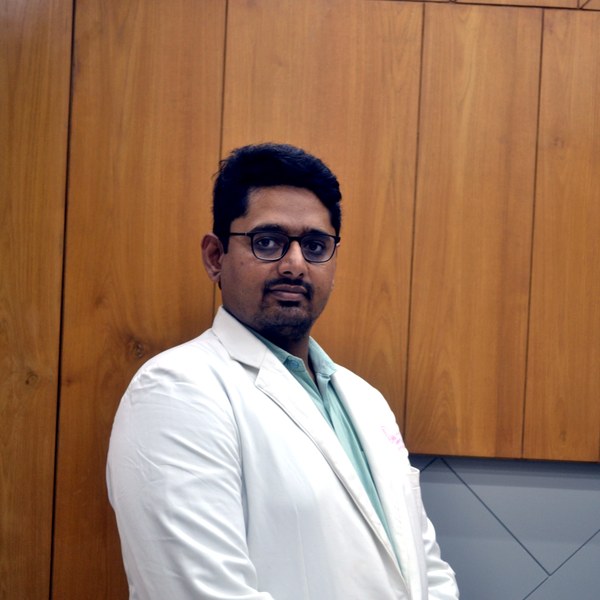
Dr Patel provides evidence-based gynaecological care at Balaji Horizon — from medical management to advanced minimal-access surgery — with a precision, organ- and fertility-sparing philosophy and honest counselling on every option.
Evidence-based gynaecology and minimal-access surgery — with a clear, honest plan built around your priorities.
Comparison
PCOS phenotypes at a glance
| Phenotype | Features | Metabolic risk | Fertility impact |
|---|---|---|---|
| A – Classic | Anovulation + hyperandrogenism + PCO on US | High | Highest impact |
| B – Anovulatory | Anovulation + hyperandrogenism (no PCO) | Moderate | High impact |
| C – Ovulatory | Hyperandrogenism + PCO (regular cycles) | Lower | Lower impact |
| D – Non-hyperandrogenic | Anovulation + PCO (no hyperandrogenism) | Lower | Variable |
Decision Tree
First-line PCOS care – which path?
PCOS treatment depends on what you most want to address right now.
A
Cycle regulation, no fertility goal
Lifestyle modification + combined contraceptive pill OR progestin IUD. Protects endometrium, manages androgenic symptoms.
B
Fertility is the priority
Lifestyle 3–6 months → Letrozole (first-line per 2023 guideline) → Metformin if insulin resistance → Gonadotropins → Ovarian drilling/IVF as third-line.
C
Metabolic burden is the priority
Lifestyle + metformin + screening for diabetes, lipids, hypertension. Consider inositol. Annual surveillance is non-negotiable.
Free Patient Guide
The PCOS Decision Guide
A clinical primer on PCOS diagnosis (Rotterdam), the four phenotypes, the four decisions in care, treatment ladder for fertility, and long-term metabolic surveillance. Aligned with 2023 International PCOS Guideline.
Reviewed by Dr. Priyadatt Patel — read in 20–25 minutes
Free — delivered to your inbox
Could this be PCOS?
PCOS is diagnosed (Rotterdam, 2023 international guideline) when 2 of 3 features are present, and other causes are excluded. Tick what applies — this explains where you stand. It is education, not a diagnosis.
Dr. Priyadatt Patel
Senior Gynecologist · Advanced Laparoscopic Surgeon · IVF and Endometriosis Programme Lead
MS OBGyn · Pregnancy Care · Advanced Gynaecological Ultrasound · Fertility Preservation
ESHRE / ESGE / AAGL / ASRM guideline-aligned practice. 3D Karl Storz precision technique. Fertility-preservation-first philosophy. Evidence-based decisions, honest counselling, long-term outcomes orientation.
Science City Road, Ahmedabad 380060
Mon–Sat 11:00–20:00 · +91 97234 31544
Naranpura, Ahmedabad
Mon–Sat 08:30–10:30 · +91 70460 02566