
Endometriosis Stages – What They Mean and Do Not Mean
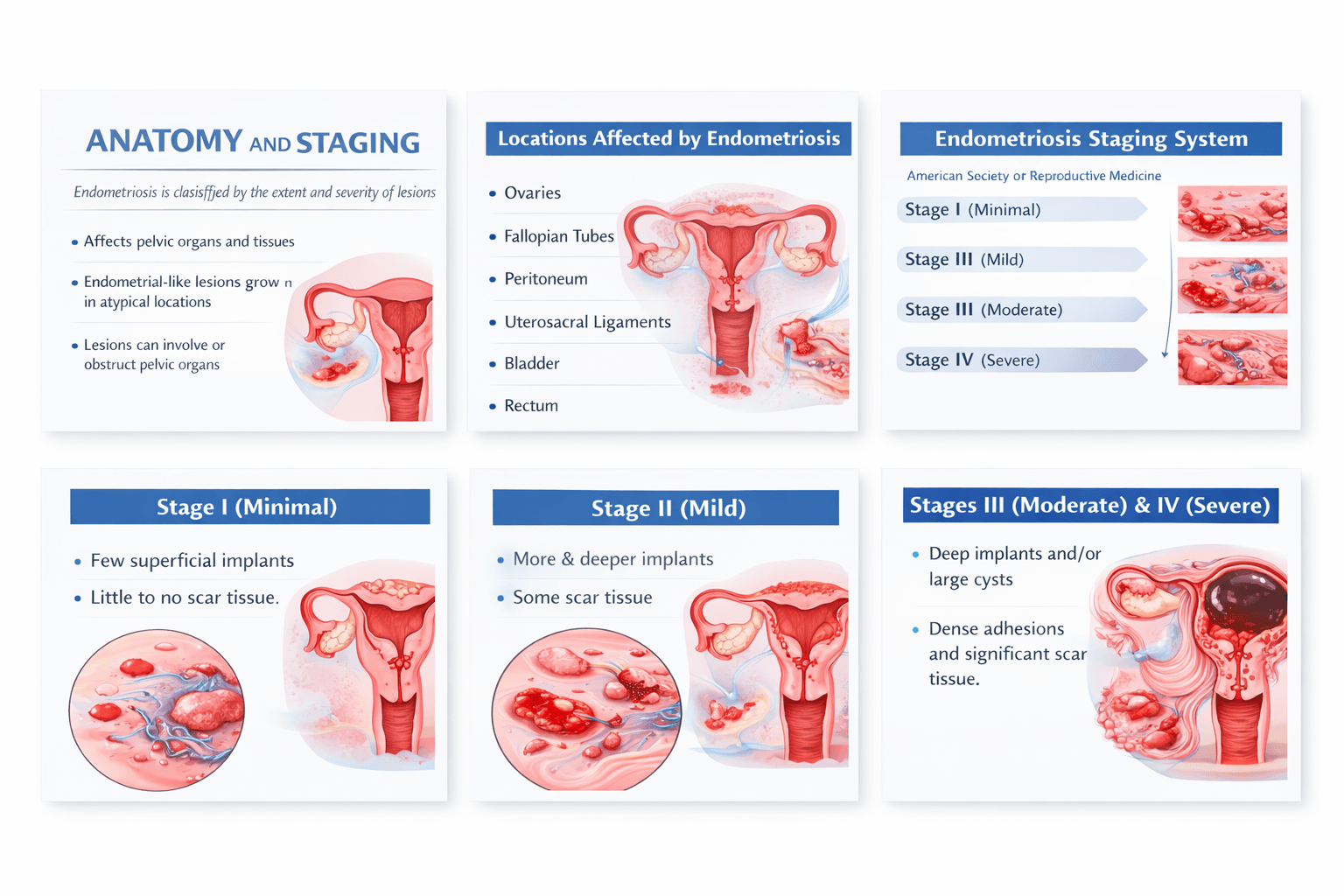
Endometriosis is staged I-IV based on lesion size, location, and adhesions per the ASRM scoring system. Importantly, stage does not always correlate with symptom severity or pain.
The classification system
Stage I (minimal): superficial implants, mild adhesions. Stage II (mild): more extensive superficial lesions. Stage III (moderate): deep implants, mild adhesions, ovarian involvement. Stage IV (severe): deep implants, dense adhesions, large endometriomas.
What ASRM does not capture
Pain severity does not correlate with stage – a woman with stage I disease can have severe pain. Bowel and bladder involvement are not well captured. Fertility impact varies independently of stage. Newer #Enzian system better captures deep disease.
Clinical use
Standardised communication between specialists. Surgical planning. Research and outcome comparison. Counselling about overall disease burden. Useful but not the only metric for treatment decisions.
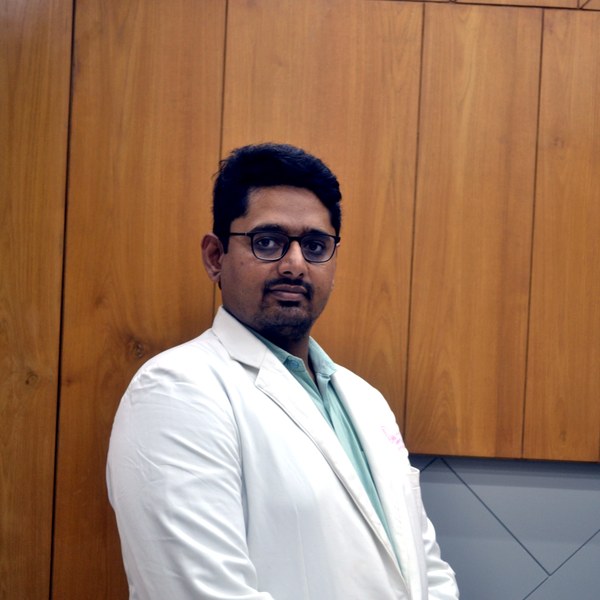
Dr Patel maps and, where indicated, stages disease at surgery — but counsels on your symptoms, fertility and ovarian reserve, never on the stage number alone.
Explore related topics
Frequently asked
A staging result is only useful alongside your symptoms, fertility goals and reserve. We put it in context.
What the endometriosis stages do — and do not — tell you
Endometriosis is commonly classified into four stages (minimal, mild, moderate, severe), most often using the revised ASRM system. The stage describes how much disease is seen and where, scored at surgery — but it is widely misunderstood, so it is worth being clear about its limits.
Stage does not equal symptoms
Crucially, the stage correlates poorly with pain. Women with minimal (stage I) disease can have severe pain, while some with extensive disease have few symptoms. A “low” stage never means your pain is not real or not worth treating.
Stage and fertility
Staging gives only a rough guide to fertility impact. Other tools — such as the endometriosis fertility index — combine disease findings with your age and history to estimate the chance of conception more usefully than stage alone.
How we use it
We use staging as one input among several, alongside symptom burden, fertility goals, ovarian reserve and disease mapping, to plan individualised care. The number is a description, not a destiny, and never the sole basis for a treatment decision.
Why stage does not predict pain or fertility
The most important thing to understand about endometriosis “stages” is that they describe how much disease is visible and where — not how much it hurts or what it will do to fertility. The revised ASRM (rASRM) system assigns points for the type, location and depth of lesions and for adhesions, sorting disease into Stage I (minimal) through Stage IV (severe). It is useful shorthand between clinicians, but it correlates poorly with symptoms: a woman with Stage I disease can have disabling pain, while extensive Stage IV disease is sometimes found incidentally with few symptoms. Treatment is therefore planned around your symptoms, fertility goals and disease map — never around the stage number alone.
Two systems that add what rASRM leaves out
Because rASRM was not designed to map deep disease or to predict fertility, two complementary tools are increasingly used alongside it. The #Enzian classification (endorsed by ESHRE and ESGE) systematically describes deep infiltrating endometriosis by compartment — the rectovaginal septum and vagina, the uterosacral ligaments and pelvic side wall, the rectum and bowel, and additional sites such as the bladder, ureter and diaphragm. It gives the surgeon a precise pre-operative road map. The Endometriosis Fertility Index (EFI) is a validated 0–10 score, calculated after surgery, that estimates the chance of conceiving without IVF using factors such as age, years of infertility, prior pregnancies and the function of the tubes and ovaries found at operation. Together these turn a single stage number into an individualised picture that actually guides decisions.
What this means for your plan
Staging is a starting point, not a verdict. A careful map of where disease sits — often with expert ultrasound and MRI — and an honest discussion of your fertility goals matter far more than the Roman numeral. See how staging informs individualised treatment and fertility planning.
Dr. Priyadatt Patel
Senior Gynecologist · Advanced Laparoscopic Surgeon · IVF and Endometriosis Programme Lead
MS OBGyn · Pregnancy Care · Advanced Gynaecological Ultrasound · Fertility Preservation
ESHRE / ESGE / AAGL / ASRM guideline-aligned practice. 3D Karl Storz precision technique. Fertility-preservation-first philosophy. Evidence-based decisions, honest counselling, long-term outcomes orientation.
323, Satyamev Eminence, Beside Saptak Bungalows & AUDA Water Tank, Science City Road, Sola, Ahmedabad 380060
Open 24 hours (emergencies & labour) · OPD Mon–Sat 11:00–20:00 · +91 97234 31544
Naranpura, Ahmedabad
Mon–Sat 08:30–10:30 · +91 70460 02566