
When to Get a Second Opinion for Endometriosis
Endometriosis diagnosis delays average 7–10 years. Once diagnosed, treatment recommendations vary widely between centres. Knowing when to seek a second opinion can change your outcome. This page identifies the situations where a second specialist view is justified.
1. You have severe pain that is not being investigated
If your gynaecologist attributes severe period pain to “normal” or “just bad periods” without expert pelvic ultrasound looking specifically for endometriosis, seek another opinion. An early specialist opinion can spare years of unrecognised disease.
2. You have been told you need a hysterectomy
Hysterectomy for endometriosis has very specific indications. If recommended, verify: have all other options been considered (medical management, alternative surgical approaches, fertility preservation)? Are ovaries being preserved? What is the surgeon’s endometriosis experience? A second opinion is mandatory before any planned hysterectomy in a woman under 45.
3. Recommendation for ovarian surgery
Ovarian endometrioma surgery can reduce ovarian reserve. Second opinion from a specialist who: routinely measures AMH before surgery; uses precise stripping technique; considers IVF-first strategy where appropriate; has volume in endometrioma surgery. Surgery on the ovary should never be a casual decision.
4. Failed previous endometriosis surgery
If pain has returned after prior surgery, the question is not “more surgery” by default. Second opinion at a specialist endometriosis centre: is recurrent disease the actual cause of pain? Could repeat surgery do more harm? Is medical management or pain rehabilitation now appropriate? Repeat surgery without new indications often disappoints.
5. Conflicting recommendations from doctors
If you have received conflicting recommendations (surgery vs IVF first, hormonal vs surgical), a third independent specialist opinion clarifies. Endometriosis decision-making is genuinely complex; conflict often reflects valid differences in approach.
6. Diagnostic uncertainty
If pelvic pain has been investigated incompletely (no expert ultrasound, no MRI, no laparoscopy when warranted), second opinion at a specialist centre with expert imaging often resolves the question. Many “unexplained pelvic pain” cases have undiagnosed endometriosis.
7. Fertility decisions in endometriosis
The surgery-vs-IVF-first decision in endometriosis fertility is high-stakes and individualised. If your current team makes this decision without explicit reference to AMH, AFC, age, prior surgery and disease stage, a second opinion at an integrated endometriosis-fertility centre is justified.
8. What to bring to a second opinion
All prior imaging (ultrasounds, MRI), prior operation notes, histology reports, hormonal results, current medications, symptom diary. Specific questions you want answered. Be honest about what your current team has said — this helps the new specialist add value rather than repeat.
Frequently Asked Questions
When should I seek a second opinion for endometriosis?
Is it disrespectful to my current doctor to seek a second opinion?
How do I find an endometriosis specialist?
Will I need to repeat all my tests?
Does a second opinion delay treatment?
Should I tell my current doctor I am seeking a second opinion?
How many opinions should I get?
What if the second opinion conflicts with the first?

Related: A meaningful second opinion usually starts with a thorough pelvic-pain evaluation — learn more about chronic pelvic pain assessment in Ahmedabad.
Free Patient Guide
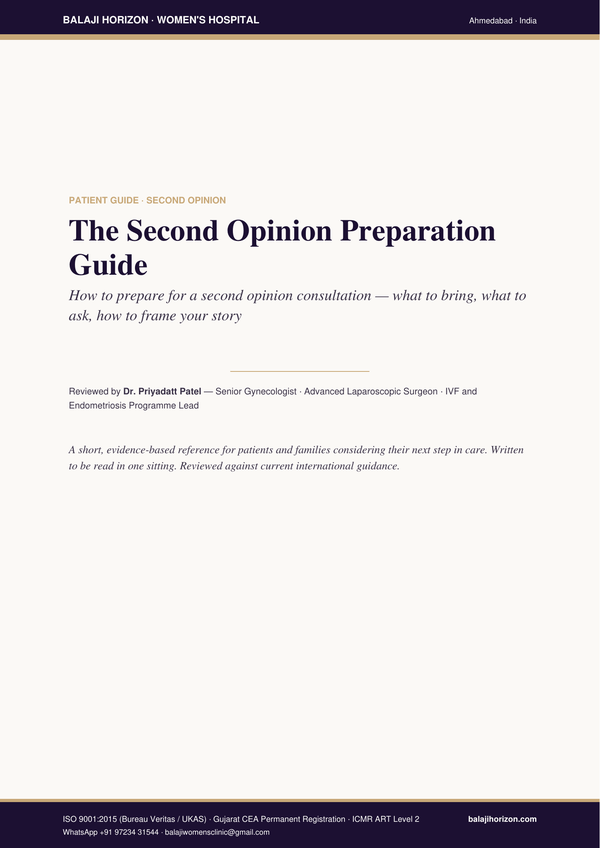
The Second Opinion Preparation Guide
When a second opinion is most useful, what to bring, how to frame your story, ten questions worth asking, and what to do after the opinion.
Get the guide →