
Total Laparoscopic Hysterectomy (TLH): A Complete Guide for Women Considering Surgery
Total laparoscopic hysterectomy (TLH) removes the uterus entirely through keyhole surgery, with no abdominal incision. For most women who genuinely need a hysterectomy for benign disease, it means a shorter hospital stay, faster recovery and a low complication rate in experienced hands than open surgery. It is never the first option offered — uterus-sparing treatment is always considered first, and fertility is protected whenever a woman still wants children.
Introduction
Hysterectomy is one of the most commonly performed operations in gynaecology, and for many women it is also one of the most anxiety-provoking words they will hear in a consultation room. The anxiety usually has less to do with the operation itself and more to do with the picture in a woman’s head: a long abdominal cut, a week in hospital, and a month of being unable to lift her own child.
That picture is now decades out of date for most patients.
Total laparoscopic hysterectomy, usually shortened to TLH, is a keyhole operation in which the entire uterus is removed through a few small incisions using a camera and fine instruments. There is no long abdominal incision. The uterus is separated from its attachments from inside the abdomen, delivered through the vagina, and the vaginal vault is closed. For a large proportion of women who genuinely need a hysterectomy, this is now the standard of care rather than the exception.
This article explains what TLH actually involves, who it suits, what the published evidence says about safety and recovery, and, just as importantly, when a hysterectomy is not the right answer at all. For an overview of how we perform the procedure itself, see our laparoscopic hysterectomy page.
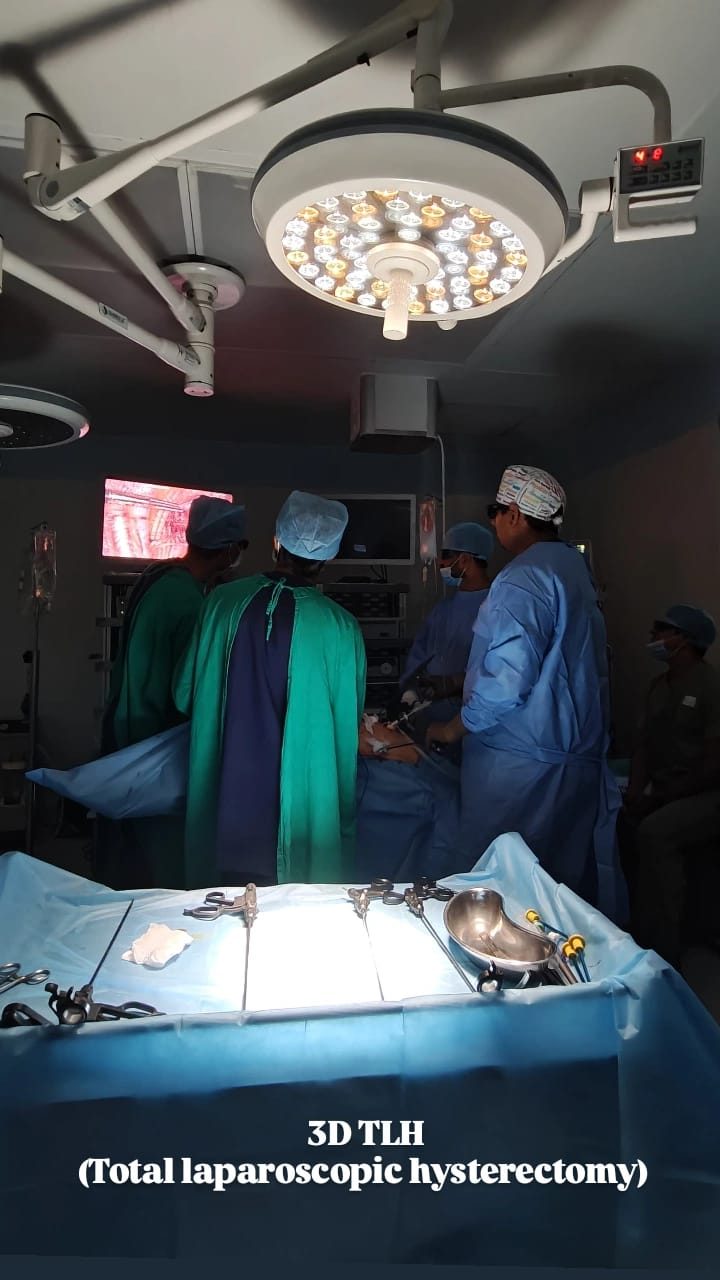
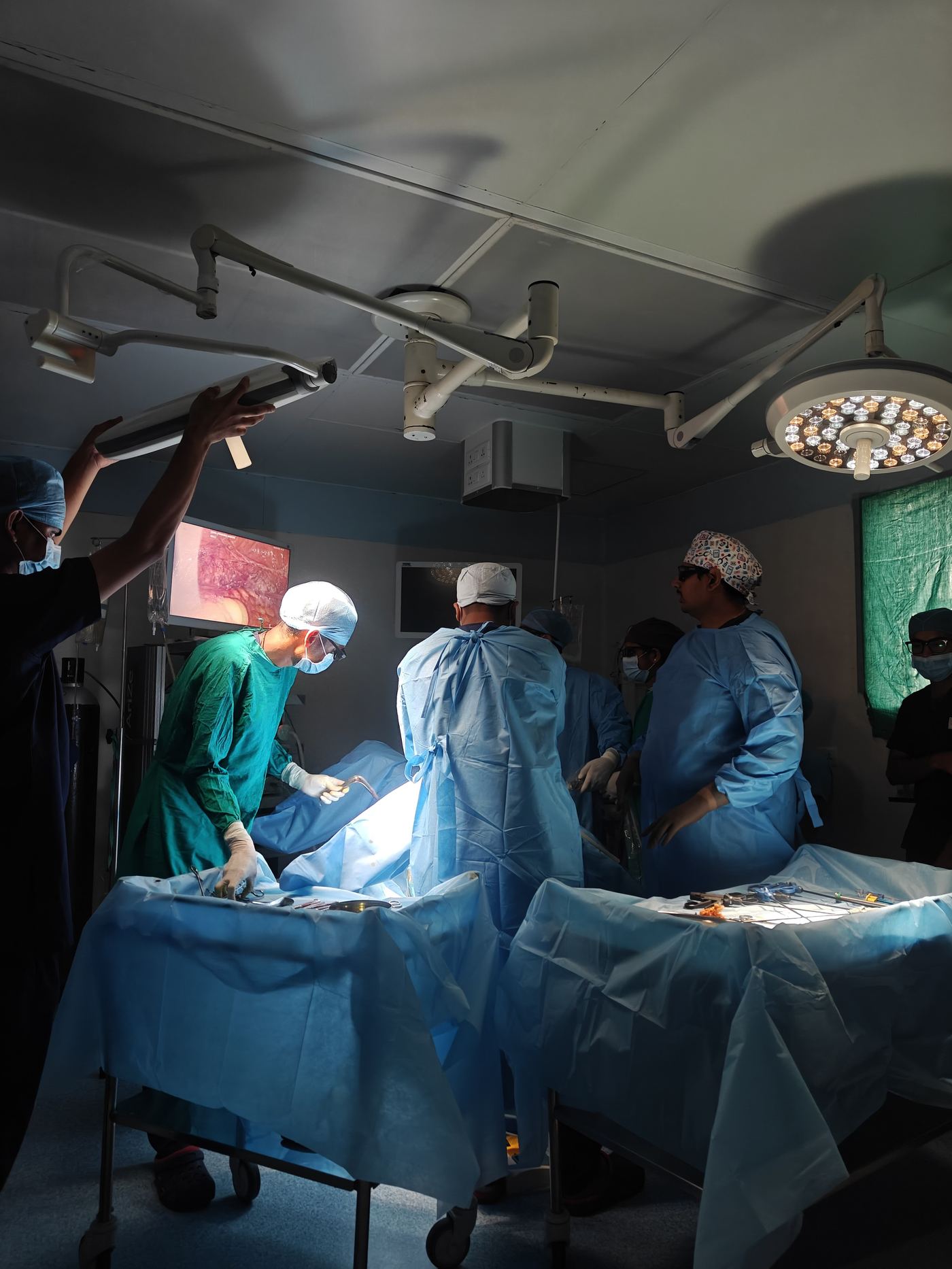
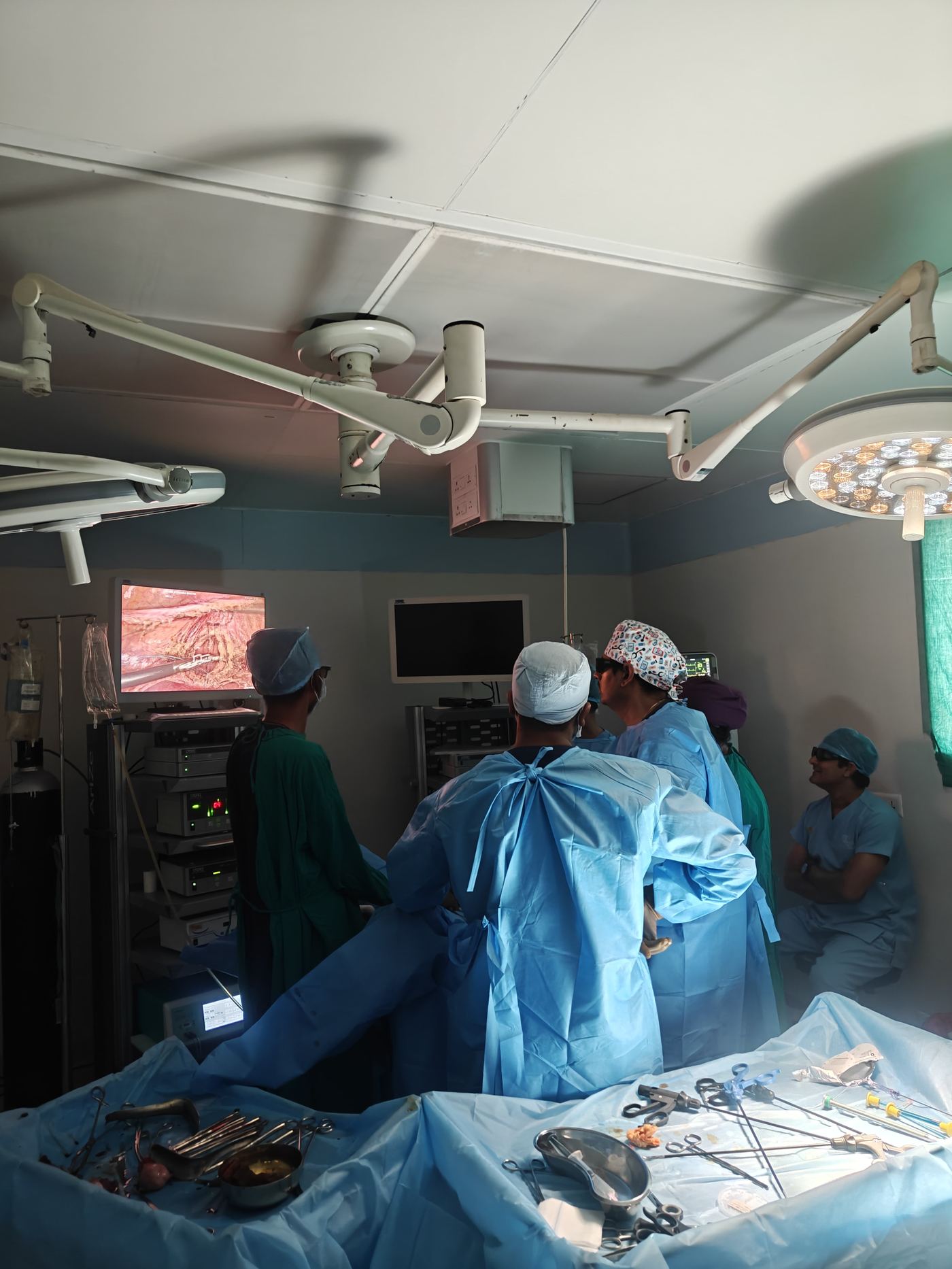
Swipe to see more →
What exactly is a total laparoscopic hysterectomy?
Three words, three pieces of information.
Total means the whole uterus is removed, including the cervix. This is different from a subtotal or supracervical hysterectomy, in which the cervix is left behind.
Laparoscopic means the surgery is performed through keyhole ports rather than an open cut. Carbon dioxide gas is used to create working space, a camera is introduced through a small port near the navel, and two or three additional 5 mm ports allow the surgeon to work.
Hysterectomy means removal of the uterus. It does not automatically mean removal of the ovaries. Whether the ovaries and tubes are removed is a separate decision, based on age, the underlying diagnosis, and the woman’s own preference after counselling. In younger women the ovaries are usually preserved so that natural hormone production continues.
In a true TLH, every step including the closure of the vaginal vault can be completed laparoscopically. That distinguishes it from laparoscopic assisted vaginal hysterectomy (LAVH), where the later part of the operation is finished through the vagina.
How TLH compares with the other routes
There are four broad ways a uterus can be removed, and a good surgeon is comfortable with more than one of them.
| Route | How it is done | Typically suited to |
|---|---|---|
| Vaginal hysterectomy | Entirely through the vagina, no abdominal incision | Prolapse, mobile uterus, good vaginal access, women who have delivered vaginally |
| Total laparoscopic hysterectomy (TLH) | Keyhole ports, camera guided, vault closed laparoscopically | Fibroids, adenomyosis, endometriosis, previous caesareans, nulliparous women, when the ovaries also need attention |
| vNOTES | Endoscopic surgery through a vaginal entry, no abdominal ports | Selected cases with favourable vaginal access; an emerging technique with a defined learning curve |
| Open abdominal hysterectomy | Conventional incision | Very large uteri, suspected advanced malignancy, dense adhesions, or when minimally invasive access is unsafe |
International guidance from the American College of Obstetricians and Gynecologists places vaginal hysterectomy first when it is feasible, and positions laparoscopic hysterectomy as the preferred alternative to an open abdominal operation when the vaginal route is not appropriate.4 That order matters. The goal is not to perform laparoscopy for its own sake. The goal is to avoid an unnecessary abdominal incision.
A useful real-world illustration comes from a three-year tertiary-centre review of 769 hysterectomies published in 2026. Open surgery was used in roughly 47% of women under 50 but only about 15% of women aged 60 and above, while vaginal hysterectomy rose from around 4% to over 52% across the same age bands.1 The reason was not that older women tolerate keyhole surgery better. It was that the reason for surgery changes with age: bleeding problems and fibroids dominate in younger women, prolapse dominates later, and prolapse lends itself naturally to a vaginal approach. Route selection follows the diagnosis and the anatomy, not the calendar.
Why a woman might need a hysterectomy
TLH is offered for benign and pre-malignant conditions such as:
- Heavy or abnormal uterine bleeding that has not responded to medical treatment, a hormonal intrauterine device, or endometrial ablation
- Fibroids (leiomyoma) causing bleeding, pressure symptoms, or bulk-related discomfort in a woman who has completed her family
- Adenomyosis, where the endometrial tissue grows into the muscle wall, causing severe pain and heavy periods — in several published TLH series, adenomyosis alone accounts for around a quarter of cases2
- Endometriosis and chronic pelvic pain, usually when the disease is extensive and other treatment has failed
- Endometrial hyperplasia, particularly atypical hyperplasia which carries a risk of progression
- Uterovaginal prolapse, in selected cases
- Selected early gynaecological cancers, managed by a trained surgeon within an oncology pathway
Note what is not on that list: a fibroid that is causing no symptoms, a single episode of heavy bleeding that has never been investigated, or period pain that has not yet been properly worked up for endometriosis or adenomyosis. A hysterectomy should always be the considered end point of a diagnostic pathway, never the first suggestion.
What the published evidence shows
Three findings come through consistently in the surgical literature.
Blood loss is low. Single-centre Indian series report average blood loss in the range of tens of millilitres rather than hundreds. A 2025 study of 150 consecutive TLH cases from a North Indian tertiary centre reported an average of about 25 mL, with larger published series in India reporting comparable figures.2 Advanced energy devices and meticulous pedicle control account for much of this.
Hospital stay is short. The same series reported an average stay of roughly two days, which sits within the 1.5 to 3 day range described across the wider literature. Early mobilisation within a few hours of surgery and early removal of the catheter are the main drivers.
Complications are uncommon but real. In that 150-case series, ureteric stricture, bowel injury, bladder injury and conversion to open surgery each occurred once, at well under 1% apiece, with readmission in 4% of patients.2 An older American series of 208 laparoscopic hysterectomies performed for oncological indications reported an overall complication rate of 7.7% with a reoperation rate of 2.8%, and, importantly, no increase in complications in the oldest patients — age alone was not found to be a barrier to keyhole surgery.3
Two caveats deserve honesty. First, these are single-centre, single-surgeon or single-unit series, so they describe what is achievable in experienced hands rather than a universal guarantee. Second, the literature is unanimous that TLH has a meaningful learning curve — operating time, blood loss and complication rates all improve as a surgeon accumulates cases.5 The single most useful question a patient can ask is not “is this surgery safe” but “how many of these do you do, and what are your outcomes.”
What happens on the day of surgery
- Anaesthesia and positioning. The procedure is performed under general anaesthesia. The patient is placed in a low lithotomy position and later tilted head-down so the bowel falls away from the pelvis.
- Port placement. A primary port is placed for the camera, with two or three additional 5 mm working ports. In women with previous vertical scars, an alternative safer entry point is chosen to avoid adhesions.
- Securing the blood supply. The upper pedicles are sealed and divided, the bladder is carefully dissected downward off the cervix, and the uterine arteries are sealed and cut.
- Detaching the uterus. The uterosacral ligaments are divided and the vaginal vault is opened circumferentially.
- Specimen removal. The uterus is delivered through the vagina.
- Vault closure. The vaginal vault is closed securely, and haemostasis is confirmed under low pressure before the ports are removed.
Most uncomplicated cases are completed in well under two hours. Operative time varies widely with uterine size, adhesions from previous caesareans, and the severity of endometriosis, and a longer operation is often a sign of careful dissection rather than difficulty.
Recovery: a realistic timeline
- Day 0: Sips of fluids within a few hours. Walking to the bathroom the same evening in most cases.
- Day 1: Urinary catheter removed. Normal diet. Discharge is often possible at this point.
- Week 1: Light household activity. Mild shoulder-tip discomfort from residual gas is common and settles quickly.
- Weeks 2–3: Most women with desk-based work return around this time.
- Weeks 6–8: Vaginal vault healing is checked. Intercourse, swimming and heavy lifting are cleared only after this review. This restriction is not optional — the vault is a healing suture line, and premature strain is the main avoidable cause of vault-related complications.
Light vaginal spotting for a few weeks is expected. Fever, heavy bleeding, worsening abdominal pain, or foul-smelling discharge are not, and need same-day review.
Frequently asked questions
Will I go into menopause after a hysterectomy?
Not if your ovaries are preserved. Your periods stop, but the ovaries continue producing hormones and menopause arrives at its natural time. If both ovaries are removed, surgical menopause follows immediately and should be discussed and planned for in advance.
Can I still have children?
No. Hysterectomy is permanent and irreversible. This is precisely why it must never be offered to a woman who has not completed her family without first exhausting uterus-sparing options such as myomectomy, hormonal management, a levonorgestrel intrauterine system, or laparoscopic excision of endometriosis.
Will my sex life change?
For most women it improves, because the pain and bleeding that prompted surgery are gone. The cervix’s removal does not remove sexual sensation. Give the vault the full healing period first.
Does previous caesarean section rule out keyhole surgery?
No. A significant proportion of women in published TLH series have had one or more previous caesareans. It makes the bladder dissection more demanding, which is a reason to choose an experienced laparoscopic surgeon, not a reason to accept an open incision.
Is a large fibroid uterus a problem?
Size influences the decision but rarely decides it alone. Uterine size, mobility, adhesions and the surgeon’s experience are weighed together. Published series include uteri well beyond 20 cm managed laparoscopically.
Will I have a scar?
Only three or four small marks, each roughly the width of a pencil, which fade substantially over the first year.
The principle we practise by
At Balaji Horizon Women’s Hospital, our approach to hysterectomy rests on three commitments.
Surgery is the last step, not the first. A great many women referred to us for hysterectomy leave with a different plan altogether: medical management, a hormonal device, a myomectomy, or excision of endometriosis with the uterus preserved. Removing a uterus is easy. Deciding correctly whether it should come out is the harder skill.
The route is chosen for the patient, not for the surgeon’s convenience. Vaginal, laparoscopic and open routes each have their place, and being genuinely capable in all of them is what allows an honest recommendation.
Fertility comes first for women who still want it. For younger women with fibroids, adenomyosis or endometriosis, the entire plan is built around preserving reproductive potential wherever it is medically sound to do so.
Speak to a specialist
If you have been advised a hysterectomy and want a clear second opinion, or if you are living with heavy bleeding, severe period pain, fibroids, adenomyosis or endometriosis and want to understand every option before deciding, we would be glad to see you.
Balaji Horizon Women’s Hospital
Science City Road, Ahmedabad 380060
Phone: +91 99094 96027
Email: balajiwomensclinic@gmail.com
This article is intended for general education and does not replace an individual consultation. Surgical decisions depend on your diagnosis, imaging, examination findings and personal priorities.
References
- Bacak HB, Coşkun ES. Age-related patterns in hysterectomy: indications and surgical route selection in a three-year tertiary-center cohort. Ann Saudi Med. 2026;46(3):178-187. PMID 42251518; doi:10.5144/0256-4947.2026.178.
- Mishra D, Singh E, Shubham S. Outcomes of total laparoscopic hysterectomy: a single-surgeon experience at a tertiary care hospital in North India. Cureus. 2025;17(2):e79675. PMID 40161168; doi:10.7759/cureus.79675.
- O’Hanlan KA, Huang GS, Lopez L, Garnier AC. Total laparoscopic hysterectomy for oncological indications with outcomes stratified by age. Gynecol Oncol. 2004;95(1):196-203. PMID 15385132; doi:10.1016/j.ygyno.2004.07.023.
- Committee Opinion No. 701: Choosing the Route of Hysterectomy for Benign Disease. Obstet Gynecol. 2017;129(6):1149-1150. PMID 28538491; doi:10.1097/AOG.0000000000002108.
- Pickett CM, Seeratan DD, Mol BWJ, et al. Surgical approach to hysterectomy for benign gynaecological disease. Cochrane Database Syst Rev. 2023;8:CD003677. PMID 37642285; doi:10.1002/14651858.CD003677.pub6.